
Venetian Ducat
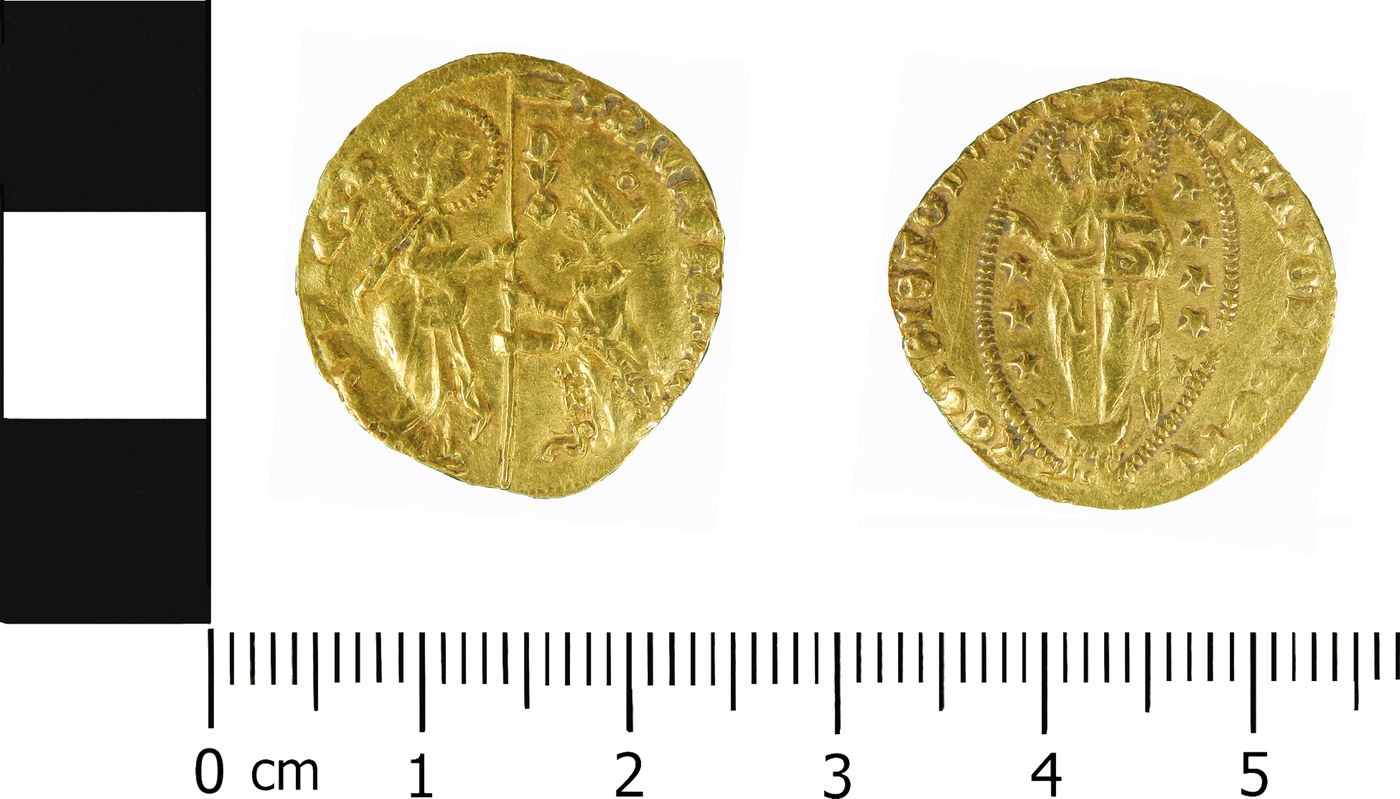
A medieval gold ducat of the Republic of Venice, showing Saint Mark presenting a banner to the kneeling Doge on one side and Christ on the other.
- Country
- Venice
- Denomination
- 1 Ducat
- Metal
- Gold
Got a coin like this?
Identify any coin from a photo, free.
Overview
The Venetian Ducat is the celebrated gold coin of the Republic of Venice, later also known as the zecchino or sequin. The example shown is gold and carries the classic medieval design: a standing figure of Saint Mark, patron of Venice, presenting a banner-staff to the kneeling Doge, together with a surrounding Latin inscription.
The obverse field is dominated by the two facing figures — Saint Mark on one side handing the gonfalone (banner) to the Doge who kneels to receive it — with the reigning Doge's name in the legend. The other face traditionally shows Christ in Glory standing within an oval frame of stars. Valued at 1 ducat, the coin held a nearly unchanged design and gold standard for centuries, making it one of the most recognizable and trusted trade coins of the medieval and early-modern world.
History & Background
Venice introduced the gold ducat in 1284 under Doge Giovanni Dandolo, at a time when Italian maritime republics were reviving high-value gold coinage for Mediterranean commerce. The design — Saint Mark bestowing the banner on the kneeling Doge — deliberately expressed the union of the city's patron saint with its elected head of state, and the reverse image of Christ echoed the Florentine and Byzantine gold coinage the ducat competed with.
The coin's remarkable feature was its consistency. The Republic maintained the same weight (about 3.5 grams) and near-pure gold standard, along with essentially the same imagery, from the late 13th century until the fall of the Republic in 1797. Only the Doge's name in the legend changed from reign to reign. This stability made the ducat a benchmark of value; it was widely imitated and its name and standard were adopted by mints across Europe.
From the 16th century the Venetian gold ducat was increasingly called the zecchino, from zecca, the Venetian mint — the origin of the English word sequin. Because so many Doges struck the type over five centuries, surviving ducats span an enormous range of rulers and are prized as tangible links to the long history of the Serene Republic.
How to Identify
Obverse (figures): a standing Saint Mark on the right presents a long banner-staff to the Doge kneeling on the left to receive it. The Doge's name appears in the legend running down the left side, with S M VENET (Saint Mark of Venice) reading downward on the right and DVX (Doge) near the banner. Identifying the Doge's name in this legend is how a specific issue is attributed.
Reverse (Christ): a standing figure of Christ in Glory, robed with a halo and often within an oval or mandorla ringed with stars, accompanied by an abbreviated Latin invocation such as SIT TIBI CHRISTE DATVS QVEM TV REGIS ISTE DVCATVS — the phrase from which the word ducat itself derives.
Physical clues: the piece is gold, small and thin, weighing roughly 3.4–3.5 grams and about 20–21 mm across. The near-pure gold gives a soft, warm color. Confirm the Saint-Mark-and-Doge scene, the standing Christ, and the Doge's name in the legend together rather than relying on any single feature; the type is written in abbreviated medieval Latin.
Value & Collectibility
Value depends heavily on which Doge issued the coin, its condition, and its gold content. Common Doges from the later, higher-mintage centuries are affordable and often trade at a modest premium over their gold value, while early or short-reigned Doges and exceptional examples can command substantially more.
Because the ducat kept the same design for over 500 years, correct attribution to the Doge named in the legend is essential to valuing any example. Exact prices vary widely with grade and rarity, so treat any single figure with caution.
As a famous, near-pure gold trade coin, the ducat has been widely imitated, copied, and reproduced — including later restrikes and outright forgeries. Compare recent auction results for the same Doge and obtain specialist or third-party authentication before buying or selling.
Frequently asked questions
What is a Venetian Ducat?
It is the gold coin of the Republic of Venice, first struck in 1284 and valued at one ducat. Later called the zecchino or sequin, it shows Saint Mark presenting a banner to the kneeling Doge and Christ on the reverse.
Who are the figures on the coin?
One face shows Saint Mark, the patron saint of Venice, handing a banner-staff to the reigning Doge, who kneels to receive it. The other face shows a standing figure of Christ within a frame of stars.
Why is it also called a zecchino or sequin?
From the 16th century the Venetian gold ducat was called the zecchino, after the Venetian mint (zecca). The English word sequin derives from zecchino.
How do I tell which Doge issued my ducat?
The Doge's name is written in the legend beside the kneeling figure on the Saint Mark side. Reading that name is the key to attributing the coin, since the design otherwise stayed the same for centuries.
Is it valuable?
As a near-pure gold coin its metal sets a floor, and rarity of the issuing Doge and condition can raise the value well beyond bullion. Because ducats are widely imitated, have gold examples authenticated before buying or selling.
Venetian Ducat guides
In-depth guides for identifying, valuing, and collecting Venetian Ducat.
Other coins you may enjoy
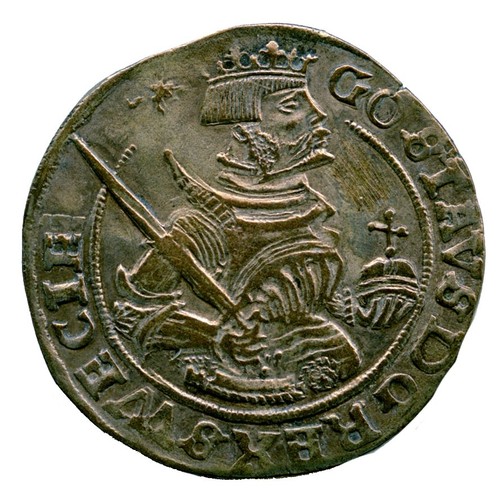
Gustav I Silver Coin
c. 1521–1560
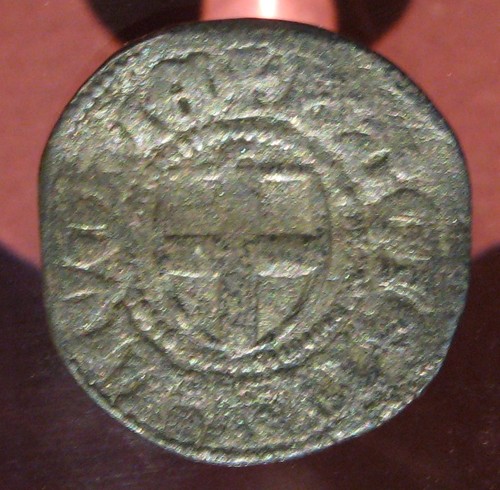
Livonian Order Schilling
c. 1410–1415
Transylvanian Ducat of Catherine of Brandenburg
1630
Venetian Grosso (Matapan)
c. 1193–1350s (13th–14th century)
Eric XIV Silver Coin
c. 1560–1568 (this example c. 1565)
Matapan (Serbian imitation)
1243-1276
Real (Medieval)
13th–14th century
Hryvnia
Medieval (c. 11th-13th century)
Byzantine Follis
641 AD
Akçe
Late 14th-Early 15th century
Denier of Charles the Bald
c. 840–877
Denier of Charlemagne
c. 790–814 AD