
How to Identify the Venetian Ducat
Identify a Venetian ducat by the Saint-Mark-and-kneeling-Doge scene, a standing Christ in a ring of stars, the Doge's name in the legend, and its small pure-gold module.
Read the full Venetian Ducat encyclopedia entry →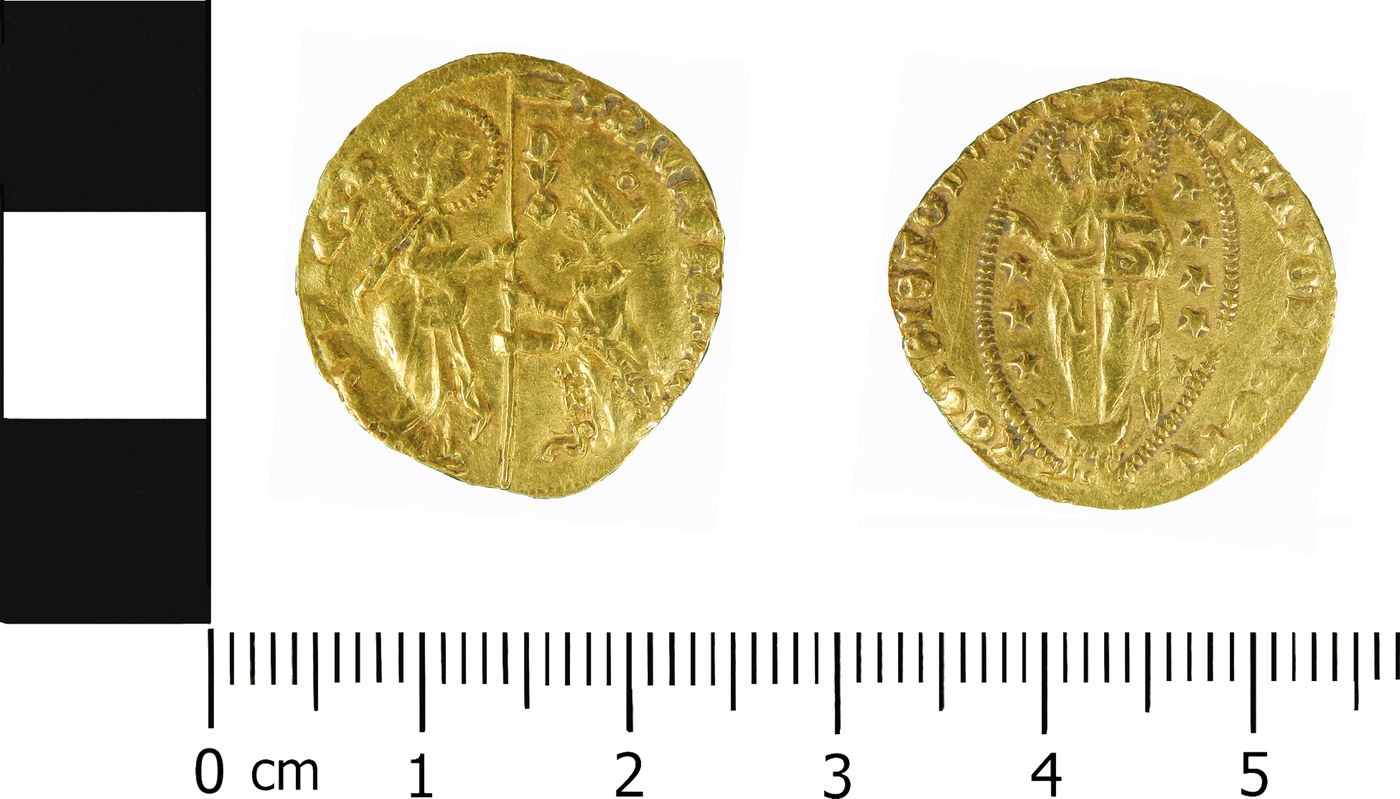
Start with the two figures. The signature feature is the scene of Saint Mark presenting a banner-staff to the kneeling Doge. Saint Mark stands upright holding the tall banner while the Doge kneels to grasp it. Read the vertical legend: S M VENET runs down the right beside Saint Mark, DVX sits near the banner, and the Doge's name runs down the left — that name is what pins the coin to a specific reign, since the imagery itself barely changed for 500 years.
Read the Christ side. The reverse shows a standing figure of Christ with a halo, usually inside an oval frame studded with stars, surrounded by the Latin invocation SIT TIBI CHRISTE DATVS QVEM TV REGIS ISTE DVCATVS. The presence of both the Saint-Mark scene and this standing Christ together is a strong confirmation of the type.
Check size, weight, and metal. A genuine ducat is small and thin — roughly 20–21 mm across and about 3.4–3.5 grams of near-pure gold, giving it a soft, warm color and a light, delicate feel. Weigh and measure the coin against these figures; a piece well outside this range, or one that is magnetic or hard-toned, is suspect.
Watch for look-alikes and imitations. The ducat was so trusted that many states copied its standard and even its design; Dutch and other European mints, and various Italian issuers, struck ducat-standard gold and close imitations. The Netherlands also struck standing-knight gold ducats that share the name but not the imagery. Confirm the Venetian legends (S M VENET, DVX, and the Doge's name) rather than assuming any ducat-weight gold coin is Venetian.
Authenticate carefully. Because it is famous and made of pure gold, the ducat has been heavily forged and restruck, including modern reproductions and jewelry mounts. Look for crisp, upright lettering rather than soft or mushy detail, inspect the edge for casting seams, and be wary of coins with solder marks or loop traces. For any valuable example, seek a specialist opinion or third-party certification and compare recent auction records for the same Doge.
Frequently asked questions
How do I identify which Doge struck the coin?
Read the legend running down the left side beside the kneeling figure; it gives the Doge's name. The rest of the design stayed nearly identical for centuries, so the Doge's name in the legend is the main way to attribute the coin.
What size and weight should a genuine ducat be?
A Venetian ducat is small and thin, about 20 to 21 mm across and roughly 3.4 to 3.5 grams of near-pure gold. Weigh and measure the coin against these figures, as pieces far outside the range are suspect.
How is a Venetian ducat different from other ducats?
Many states issued ducat-standard gold, but the Venetian type specifically shows Saint Mark handing a banner to the kneeling Doge with S M VENET and DVX in the legend, and a standing Christ on the reverse. Dutch ducats, for example, show a standing armored knight instead.
What are the main authentication risks?
Ducats are widely forged, restruck, and mounted in jewelry. Look for crisp upright lettering, inspect the edge for casting seams and any solder or loop marks, and have valuable gold examples professionally authenticated.