
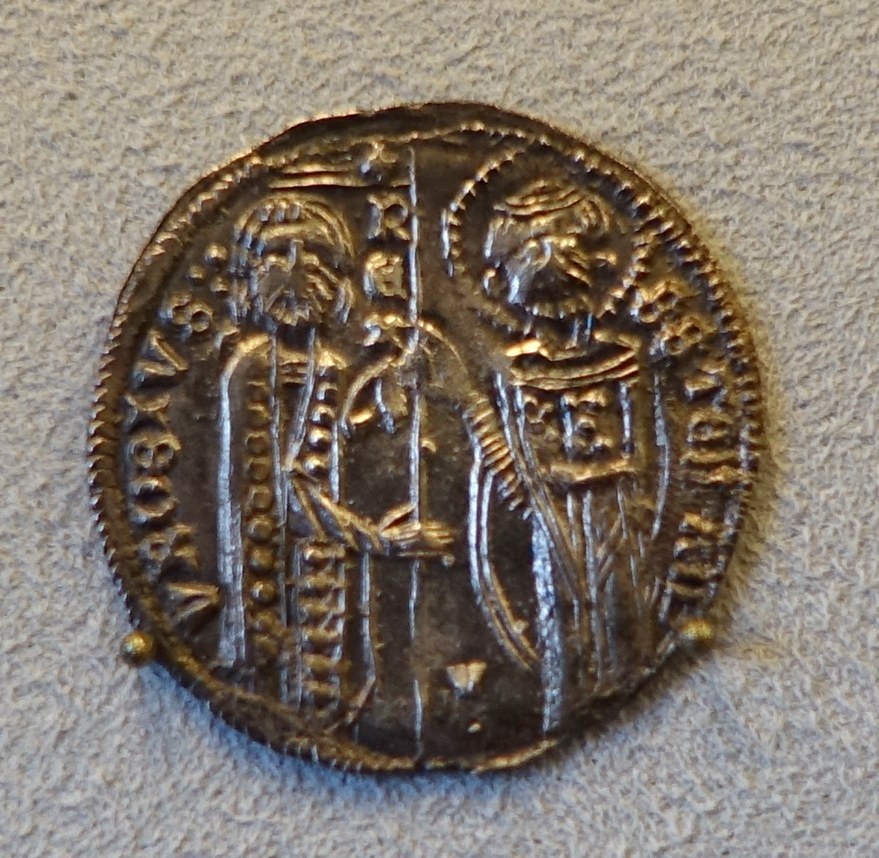
Matapan (Serbian imitation)
A medieval Serbian coin modeled on the Venetian matapan (grosso), showing standing figures on the obverse and a cross on the reverse.
- Country
- Serbia
- Denomination
- Matapan
- Metal
- Bronze
Got a coin like this?
Identify any coin from a photo, free.
Overview
The matapan was the popular name for the Venetian silver grosso, one of the most widely copied trade coins of the medieval Balkans. This piece is a Serbian imitation of that type: a locally struck coin that borrows the matapan's layout of two standing figures on the obverse while carrying a cross on the reverse.
The specimen photographed here is a bronze example. Circulating matapans and their close Serbian copies were normally struck in silver, so a bronze piece is best understood as a base-metal imitation, a contemporary counterfeit, or a later reproduction rather than a coin that traded at full silver value. Its interest lies in the design lineage it preserves rather than in bullion content.
Collectors study these imitations as evidence of how Venetian coinage dominated Balkan trade in the thirteenth century, and how Serbian rulers adapted a foreign prototype into their own emerging coinage tradition.
History & Background
Venice introduced the grosso, nicknamed the matapan, in the early thirteenth century, and it quickly became a standard of value across the Adriatic and the Balkans. Its familiar design and trusted weight made it a natural model for neighboring states that were beginning to mint their own coins.
Serbia under the Nemanjic dynasty, in the period around the reign of Stefan Uros I (1243-1276), began producing coins that closely echoed the Venetian matapan. These imitative grossi copied the general composition so that they would be readily accepted in trade, while introducing local elements and inscriptions. The practice was widespread enough that Venice objected to Serbian copies that undercut the weight and fineness of the original.
Exact issue dates, mints, and quantities for individual imitations are poorly documented, and attribution is often debated among specialists. The type marks an early stage in Serbia's transition from relying on foreign coin to striking a national silver dinar coinage in the decades that followed.
How to Identify
Look first at the obverse, which carries two standing figures arranged in the manner of the Venetian matapan, where a ruler and a sacred figure flank a central staff or banner. On Serbian imitations the modeling is often flatter and the surrounding inscription may be blundered, abbreviated, or altered from the Venetian legend. The reverse of this example shows a cross rather than a seated figure, one of the design substitutions seen on Balkan copies.
The coin is small and thin, roughly in the size range of the grosso (about 20-22 mm and a few grams). The photographed piece is bronze, which is diagnostic in itself: genuine circulating matapans and mainstream Serbian silver copies are white-metal, so a brown or bronze surface points to a base-metal imitation or reproduction.
Because dies were cut locally and by hand, expect irregular lettering, off-center strikes, and variation from piece to piece. Precise attribution to a specific ruler or mint usually requires comparison with published Serbian medieval coin references.
Value & Collectibility
Value depends heavily on metal, authenticity, and condition. Genuine medieval Serbian silver imitations of the matapan are collectible and trade in the modest-to-moderate range typical of small medieval Balkan silver, with better-preserved and clearly attributed examples bringing more.
A bronze specimen like the one shown generally carries little bullion value and is usually valued as a curiosity or study piece unless it can be authenticated as a genuine contemporary base-metal issue. Modern casts and replicas have negligible collector value.
Because the market for these coins is specialized and attribution is often uncertain, seek an opinion from a dealer or numismatist familiar with medieval Serbian and Venetian coinage before assigning a firm price.
Frequently asked questions
What is a matapan?
Matapan was the popular name for the Venetian silver grosso, a widely circulated medieval trade coin. Because it was so trusted, it was copied by many neighboring states, including Serbia.
Why is this coin bronze if matapans were silver?
Circulating matapans and mainstream Serbian copies were silver. A bronze example is best understood as a base-metal imitation, a contemporary counterfeit, or a later reproduction rather than a full-value silver trade coin.
How is the Serbian imitation different from the Venetian original?
Serbian imitations copy the overall composition, especially the standing figures, but often show flatter modeling, altered or blundered inscriptions, and design substitutions such as a cross on the reverse.
Who issued these coins?
They are associated with Serbia under the Nemanjic dynasty around the mid-to-late thirteenth century, near the reign of Stefan Uros I. Exact mints and dates for individual pieces are often uncertain.
Matapan (Serbian imitation) guides
In-depth guides for identifying, valuing, and collecting Matapan (Serbian imitation).
Other coins you may enjoy
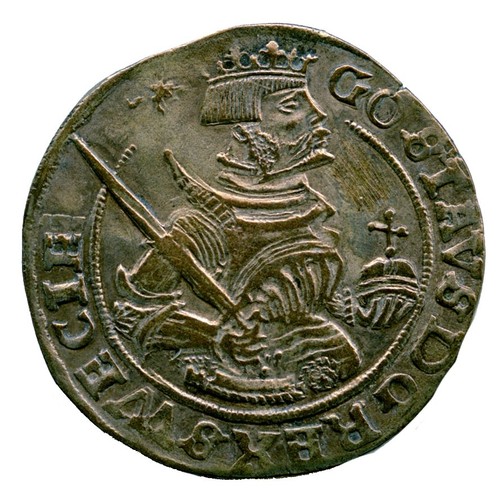
Gustav I Silver Coin
c. 1521–1560
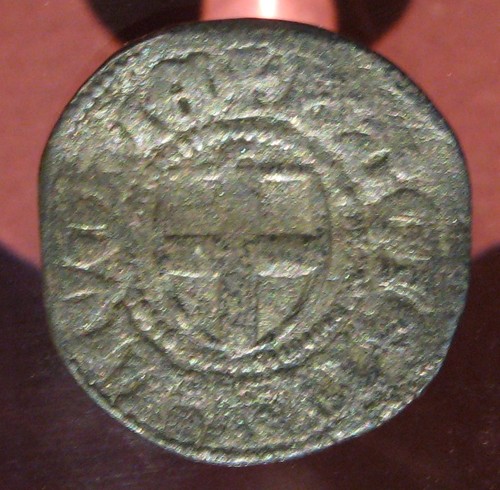
Livonian Order Schilling
c. 1410–1415
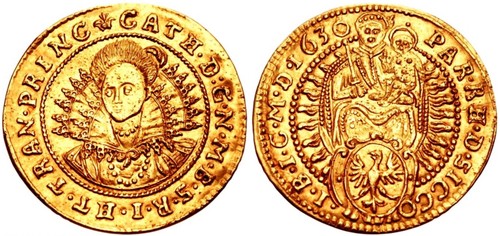
Transylvanian Ducat of Catherine of Brandenburg
1630
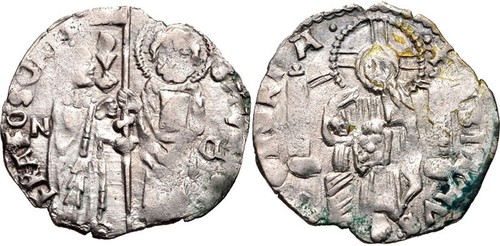
Venetian Grosso (Matapan)
c. 1193–1350s (13th–14th century)
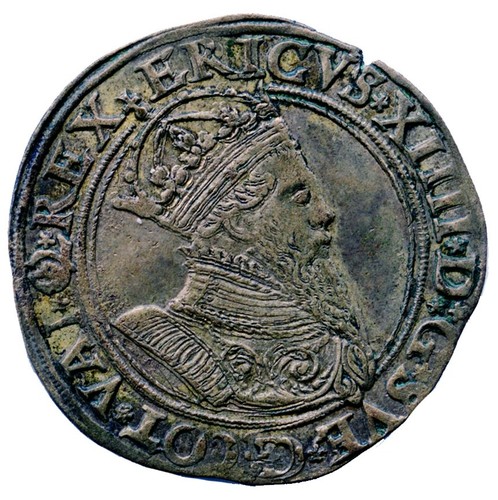
Eric XIV Silver Coin
c. 1560–1568 (this example c. 1565)
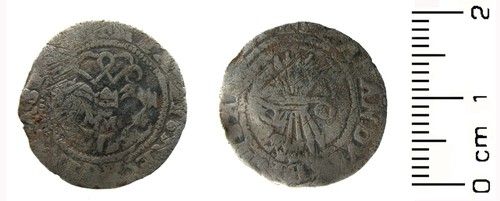
Real (Medieval)
13th–14th century
Hryvnia
Medieval (c. 11th-13th century)
Byzantine Follis
641 AD
Akçe
Late 14th-Early 15th century
Venetian Ducat
Medieval (c. 1284 onward)
Denier of Charles the Bald
c. 840–877
Denier of Charlemagne
c. 790–814 AD