
How to Identify the Matapan (Serbian imitation)
A collector's walk-through for telling a Serbian matapan imitation from the Venetian original and from modern copies.
Read the full Matapan (Serbian imitation) encyclopedia entry →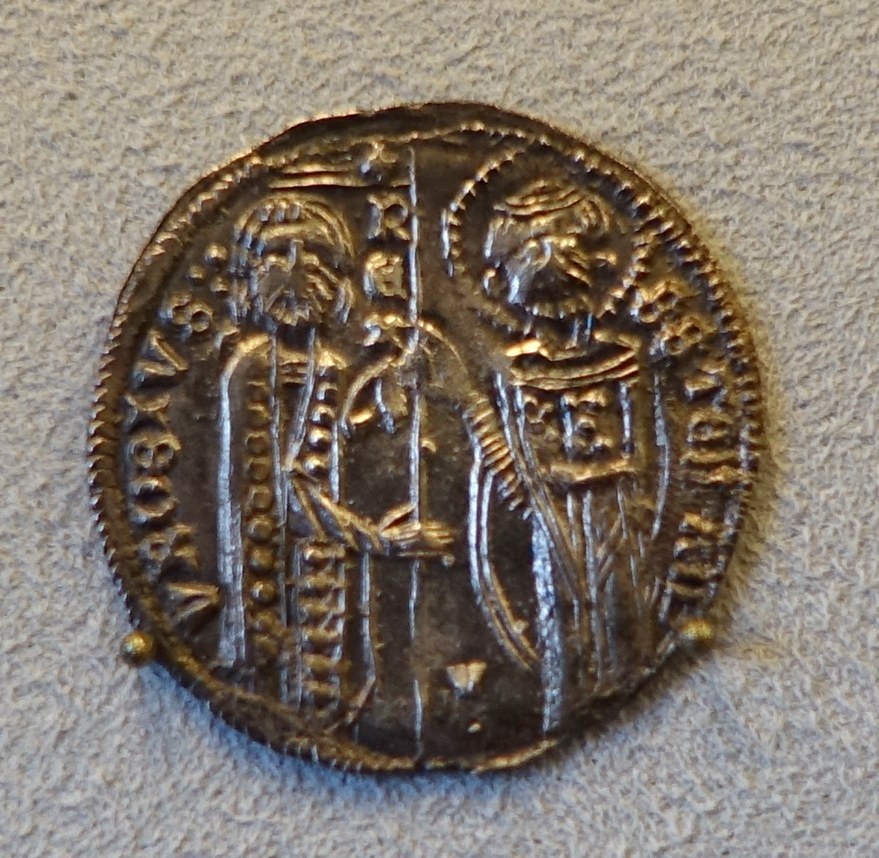
Start with the overall type. A matapan-style coin is a small, thin medieval piece, roughly 20-22 mm across and a few grams in weight. The Serbian imitation follows the Venetian grosso layout on the obverse, with two standing figures flanking a central staff or banner, so that side is your primary anchor for the type.
Examine the obverse detail closely. On genuine Venetian matapans the figures are crisply engraved and the legend is regular and legible. Serbian imitations tend to show flatter relief, cruder lettering, and inscriptions that are abbreviated, garbled, or replaced. Treat blundered or non-Venetian legends as a positive clue that you are looking at a Balkan copy rather than a Venetian strike.
Check the reverse. The classic Venetian matapan carries a seated figure, whereas this Serbian example shows a cross. A cross or other simplified reverse in place of the enthroned figure is a strong indicator of an imitative issue.
Assess the metal. Authentic circulating matapans and their principal Serbian copies are silver and show a white or gray toned surface. The bronze color of this specimen is diagnostic: it signals a base-metal imitation or a reproduction, not a silver trade coin. Weigh the piece and note its color and any casting seams.
Finally, be cautious with authentication. Hand-cut dies produce natural irregularity, but cast reproductions show soft mushy detail, bubbles, and mold lines. Because attribution of medieval Serbian imitations to a specific ruler or mint is genuinely difficult, compare against published references and, for anything of value, get an expert opinion before buying or selling.
Frequently asked questions
What is the quickest way to tell a Serbian imitation from a Venetian matapan?
Look at the lettering and reverse. Crude or blundered inscriptions and a substituted reverse such as a cross point to a Serbian imitation, while crisp regular Venetian legends and a seated reverse figure point to the original.
Does the bronze color mean it is fake?
Not necessarily fake, but it is not a full-value silver trade coin. Bronze indicates a base-metal imitation or a reproduction. Genuine circulating matapans and their main Serbian copies are silver.
What size and weight should I expect?
Expect a small, thin coin in the range of roughly 20-22 mm and a few grams, in line with the Venetian grosso it imitates. Large deviations warrant closer scrutiny.
How do I confirm attribution to Serbia?
Compare the figures, reverse type, and any legible letters against published medieval Serbian and Venetian coin references, and consult a specialist. Precise ruler and mint attribution is often uncertain for these imitations.