
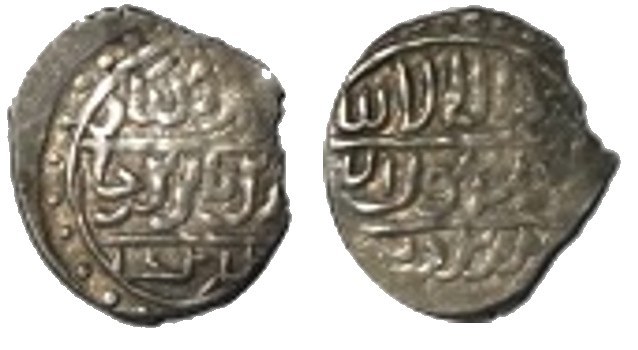
Akçe
The akçe was the tiny silver coin at the heart of the early Ottoman economy, struck with Arabic-script inscriptions and no portrait or figural imagery.
- Country
- Ottoman Empire
- Denomination
- Akçe
- Metal
- Silver
Got a coin like this?
Identify any coin from a photo, free.
Overview
The akçe is a small, thin silver coin that served as the basic monetary unit of the Ottoman Empire from its early years. The example here, with Arabic and Ottoman calligraphic inscriptions on both faces and no images of people or animals, is typical of the late-fourteenth to early-fifteenth-century issues struck as the young state expanded across Anatolia and the Balkans.
Rather than a portrait, the akçe carries religious phrases, the ruling sultan's name and titles, and a mint-and-date formula, all rendered in Arabic script. Its design reflects Islamic coinage tradition, where the written word rather than a royal likeness conveys authority. Because it is so small and light, it feels delicate and often shows an irregular, hand-struck flan.
Collectors prize the akçe as a foundational Ottoman denomination, a hand-hammered silver piece that circulated widely in markets from the Balkans to the Levant. Its modest size belies its historical importance as the coin that underpinned Ottoman trade, taxation, and daily commerce for centuries.
History & Background
The akçe (also spelled akce or akcha, and known to Europeans as the asper) was introduced in the fourteenth century and became the standard silver denomination of the Ottoman state as it grew from a frontier principality into an empire. Coins of the late fourteenth and early fifteenth centuries belong to the formative Ottoman period, an era of rapid territorial expansion punctuated by internal conflict.
Each akçe was struck in the name of the reigning sultan, so the inscriptions functioned as a statement of sovereignty: minting coin in one's own name was a mark of legitimate rule. Over generations the coin's weight and silver content were gradually reduced as the state managed its finances, and later debasements steadily shrank the akçe until larger denominations eventually displaced it.
As a unit of account the akçe endured for a remarkably long time, remaining central to Ottoman bookkeeping even after heavier silver and gold coins came to dominate actual transactions. The small silver pieces of the early period are, in effect, the ancestors of that long monetary tradition.
How to Identify
Both faces of the akçe are filled entirely with Arabic-script inscriptions arranged in horizontal lines, often within a plain or dotted border. There are no portraits, animals, or figural devices; the design is purely epigraphic, which is a defining feature of Islamic coinage of this kind. Expect the sultan's name and honorific titles on one side and religious or mint-and-date wording on the other.
Physically the akçe is tiny and thin: typically well under 15 mm across and often only around a gram or less in weight, struck on an irregular, hand-hammered flan. The silver is usually a pale, sometimes toned gray, and because the dies were larger than the blanks, part of the legend is frequently off the edge, leaving inscriptions incomplete on any single coin.
Key identifiers are the small size, thin silver fabric, hand-struck irregularity, and dense Arabic calligraphy on both sides with no images. The mint name and date formula, when present and legible, help place the coin to a specific reign and mint, though weak strikes and clipping often make full attribution difficult without specialist references.
Value & Collectibility
Early Ottoman akçes are generally modest in price, reflecting the large numbers struck and surviving. Common, well-worn or partially struck examples often trade in the low tens of dollars, making the type an accessible entry point into medieval Islamic and Ottoman coinage.
Value rises with legibility, completeness of the inscriptions, clear mint and date, and attribution to a specific early sultan, particularly scarcer reigns or mints. A sharply struck coin with most of the legend on the flan is worth considerably more than a weak, clipped, or corroded piece where little text remains.
Because fabric and calligraphy vary by reign and mint, and because condition ranges widely, treat any figure as a broad guide rather than a fixed price. Attribution by a specialist can meaningfully affect value, since a correctly identified scarce issue commands a premium over an unattributed common one.
Frequently asked questions
What is an akçe?
The akçe was the basic small silver coin of the Ottoman Empire, used in everyday trade and as a unit of account. Europeans often called it the asper.
Why are there no pictures on the coin?
Ottoman akçes follow Islamic coinage tradition, using Arabic-script inscriptions such as the sultan's name and religious phrases instead of portraits or figural images.
How big is an akçe?
It is very small and thin, usually well under 15 mm across and often about a gram or less, struck by hand on an irregular flan, so it feels delicate.
Is the akçe made of real silver?
Yes. Early akçes are struck in silver, though the weight and fineness were gradually reduced over time as the coin was debased across later Ottoman periods.
Why is part of the inscription missing?
The dies were larger than the small blanks, so on any single coin some of the legend falls off the edge. Incomplete inscriptions are normal and expected on akçes.
Akçe guides
In-depth guides for identifying, valuing, and collecting Akçe.
Other coins you may enjoy
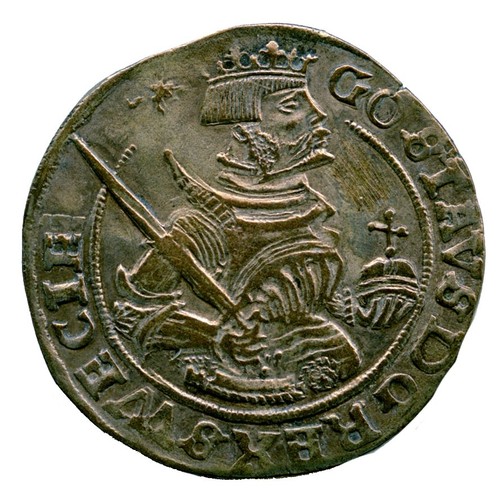
Gustav I Silver Coin
c. 1521–1560
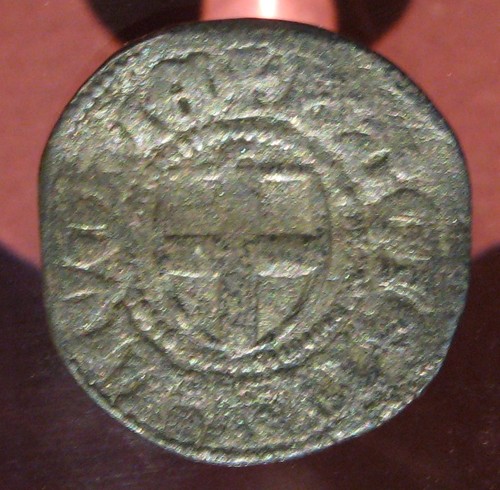
Livonian Order Schilling
c. 1410–1415
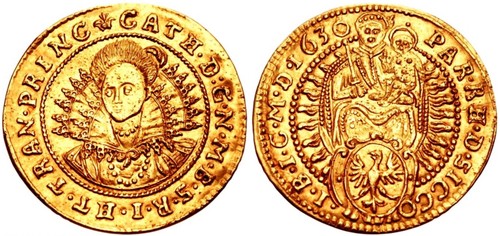
Transylvanian Ducat of Catherine of Brandenburg
1630
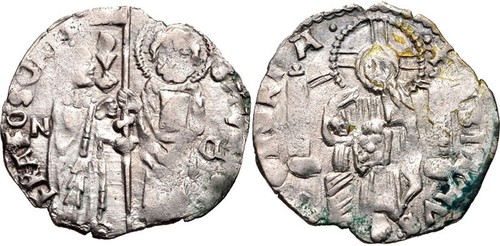
Venetian Grosso (Matapan)
c. 1193–1350s (13th–14th century)
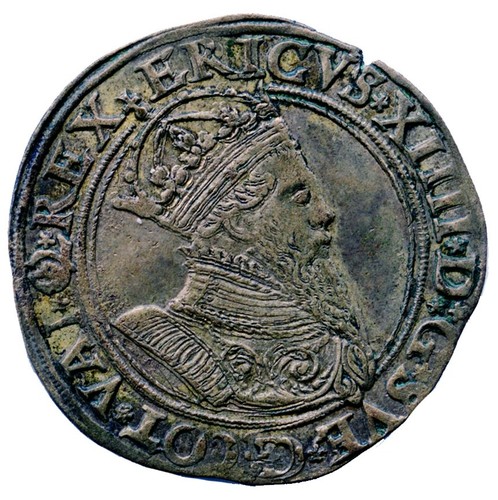
Eric XIV Silver Coin
c. 1560–1568 (this example c. 1565)
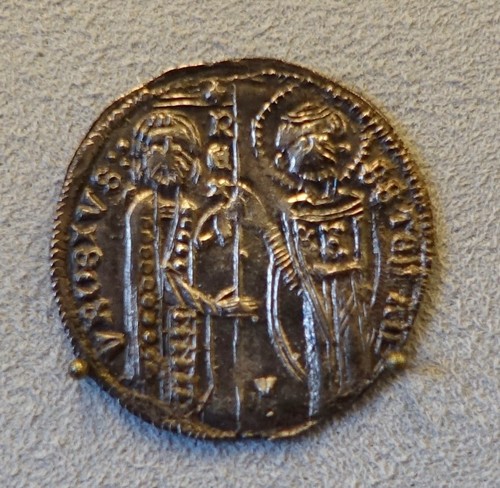
Matapan (Serbian imitation)
1243-1276
Real (Medieval)
13th–14th century
Hryvnia
Medieval (c. 11th-13th century)
Byzantine Follis
641 AD
Venetian Ducat
Medieval (c. 1284 onward)
Denier of Charles the Bald
c. 840–877
Denier of Charlemagne
c. 790–814 AD