
How to Identify the Real (Medieval)
Identify a medieval Spanish real by its heraldic lion, cross or castle shield, hand-struck silver fabric, and Latin royal legends.
Read the full Real (Medieval) encyclopedia entry →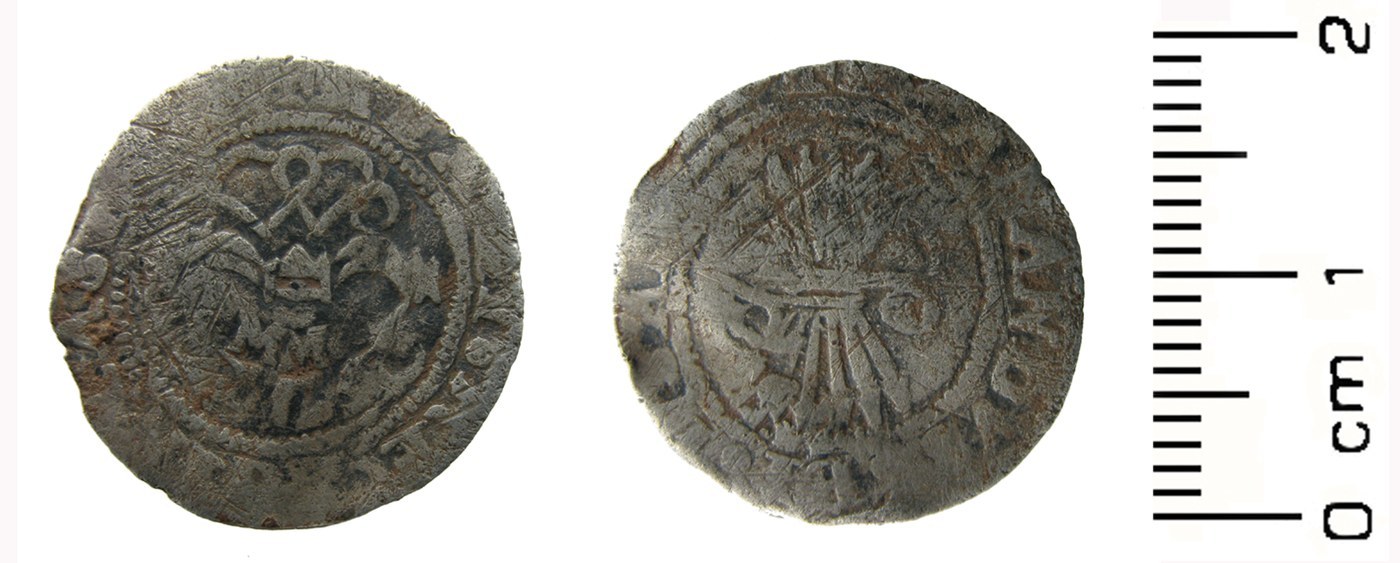
Start With the Heraldry
The fastest way to recognize a medieval real is the armorial imagery. One face should show a lion — the arms of León — while the other carries a cross, a castle, or a quartered shield that combines the emblems of Castile and León. These devices, rather than a portrait or a printed value, are what identify the coin. If you see a castle-and-lion pairing on hand-struck silver, you are in the right family of medieval Iberian coinage.
Read the Legend and Fabric
Around the heraldry you should find a Latin or abbreviated legend naming the king and kingdom, often worn on circulated pieces. Expect a hand-hammered strike: an irregular flan, some off-centering, and no machined edge or Arabic-numeral date. The lettering style, the form of the arms, and the words in the legend are the keys to attributing the coin to a specific reign, so photograph both faces clearly and compare them against a specialist reference.
Confirm Metal, Size, and Weight
The real is a silver coin, typically a small-to-medium hand-struck piece of a few grams, with exact diameter and mass depending on the reign and mint. Weigh and measure the coin: genuine medieval silver should be non-magnetic and show honest, sometimes toned surfaces rather than the soapy texture of a cast copy. A piece that is markedly heavier or lighter than known standards for the attributed type deserves scrutiny.
Separate It From Look-Alikes
Many medieval Iberian coins share the castle-and-lion vocabulary — dineros, other silver fractions, and later reales all borrow the same heraldry — so the exact denomination is not obvious from the arms alone. Match weight, diameter, style, and legend together rather than relying on the imagery by itself. Later Spanish reales bearing portraits, dates, or milled edges are a different, post-medieval stage of the same lineage.
Authenticate Before You Buy
Because medieval silver is imitated and attribution can be subtle, treat unattributed or suspiciously pristine coins with caution. Look for die-struck detail, natural wear consistent with age, and no casting seams on the edge. For higher-value pieces, a specialist in medieval Iberian numismatics or a reputable grading service offers the most reliable confirmation of both authenticity and the specific king and mint.
Frequently asked questions
How do I know the lion means León?
In Iberian heraldry the lion is the traditional emblem of the kingdom of León, usually paired with the castle of Castile; together they mark coinage of the Castile-León crowns.
Can I identify the exact king from the coin alone?
Often only with the legend. Match the king's name in the surrounding inscription, plus the weight, style, and mint marks, against a specialist reference to pin down the reign.
How can I tell a genuine hand-struck coin from a cast fake?
Genuine pieces show crisp die-struck detail, an irregular but seamless edge, and honest wear; cast copies often have soft, grainy surfaces and a seam around the rim.
Is a medieval real the same as a Spanish 'piece of eight'?
No. The medieval real is an early, purely heraldic ancestor; the famous 8 reales 'pieces of eight' are larger, later milled or cob coins from the unified Spanish monarchy.