
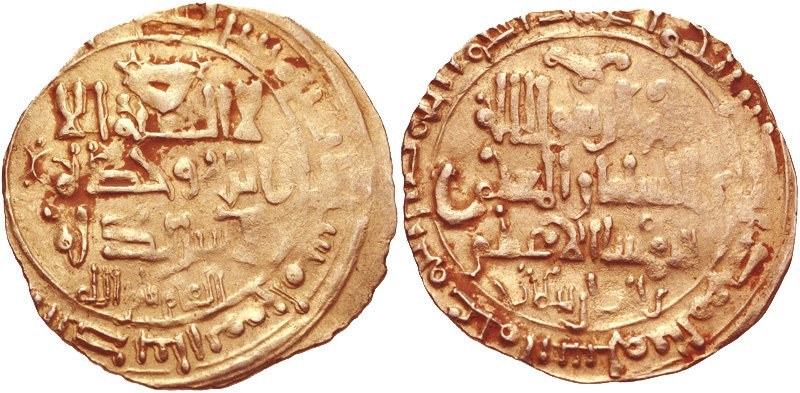
Gold Dinar of Alp Arslan
A hand-struck Islamic gold coin of the Great Seljuk sultan Alp Arslan, covered in concentric Arabic inscriptions naming the ruler and caliph, AH 455–465.
- Country
- Seljuk Empire
- Denomination
- Dinar
- Metal
- Gold
Got a coin like this?
Identify any coin from a photo, free.
Overview
The gold dinar of Alp Arslan is a hand-struck Islamic coin of the Great Seljuk Empire, made of gold and covered on both faces with Arabic inscriptions arranged in concentric circular bands. The example shown carries titles and legends in ringed borders on the obverse, with the ruler's name and further inscriptions filling an ornamental field on the reverse.
Like other medieval Islamic dinars, the coin is entirely aniconic: there is no portrait or figural image, only calligraphy. The central legends carry the Islamic declaration of faith, while the surrounding bands and the reverse field name the ruling sultan, acknowledge the Abbasid caliph, and record the mint and Hijri date.
Dated to AH 455–465 (AD 1063–1072), the coin belongs to the reign of Alp Arslan, the second Great Seljuk sultan, whose rule marked the height of Seljuk expansion into Anatolia and the wider Near East.
History & Background
Alp Arslan ("Heroic Lion") ruled the Great Seljuk Empire from AH 455 to 465 (AD 1063–1072), succeeding his uncle Tughril Beg. Under him and his celebrated vizier Nizam al-Mulk, the Seljuk Turks became the dominant power of the central Islamic world, governing a vast realm across Iran, Iraq, and neighbouring lands while the Abbasid caliph in Baghdad remained the nominal spiritual head.
His reign is best remembered for the Battle of Manzikert in AH 463 (AD 1071), where the Seljuks defeated and captured the Byzantine emperor Romanos IV Diogenes. The victory opened Anatolia to Turkish settlement and is regarded as a turning point in the history of the region. Alp Arslan died the following year during a campaign in Central Asia.
Seljuk gold dinars of this period followed the established Islamic epigraphic template, but their legends carry the distinctive Seljuk political formula: the sultan's name and titles appear alongside acknowledgement of the reigning Abbasid caliph, reflecting the arrangement by which the Turkish sultans held temporal power under the caliph's religious authority.
How to Identify
The dinar of Alp Arslan is a gold coin, hand-struck on a flan that is often slightly irregular and can be somewhat wavy or uneven from the striking process. Seljuk dinars vary in weight and are frequently struck on thin, spread flans, so the diameter and mass are less standardized than on later machine-made coins; gold colour and the absence of any magnetism are basic checks.
Both faces are laid out as concentric circular inscriptions with no image of any kind. The central areas carry the Islamic declaration of faith, while the surrounding bands and the ornamental reverse field name the sultan Alp Arslan and his titles, acknowledge the Abbasid caliph of the day, and record the mint and Hijri year in the marginal legend. Reading that outer ring is how the specific mint city and date within AH 455–465 are established.
The surest identification points are the gold metal, the aniconic concentric-inscription layout, and above all the presence of Alp Arslan's name and Seljuk titulature together with a caliphal name in the legends. Because many medieval Islamic dinars share the same general template, it is the ruler's name in the inscription — not the overall look — that ties a coin to Alp Arslan.
Value & Collectibility
Great Seljuk gold dinars are collected as historically important medieval Islamic gold, and pieces naming a famous sultan such as Alp Arslan carry added interest because of his association with Manzikert. As hand-struck gold, they trade well above base-metal Islamic coins, with a floor influenced by their gold content and a premium for the named ruler and history.
Value within the series depends on the mint, the exact Hijri year, how fully and clearly the legends are struck, the completeness of the flan, and overall preservation. Coins that are well-centered, with the sultan's name and mint-and-date legend fully legible, command higher premiums than weakly struck or clipped examples where key inscriptions run off the flan.
Because these are individually hand-struck coins, precise value depends on grade, eye appeal, and specialist demand, so any figures should be treated as general context rather than fixed prices. A correct reading of the ruler's name, mint, and date is the single most important factor in placing a Seljuk dinar in the market.
Frequently asked questions
Who was Alp Arslan?
Alp Arslan was the second Great Seljuk sultan, reigning AH 455–465 (AD 1063–1072). He led the Seljuk Turks to dominance in the central Islamic world and won the Battle of Manzikert against the Byzantines in 1071, opening Anatolia to Turkish settlement.
Is this dinar made of real gold?
Yes. The dinar was the standard Islamic gold denomination, and Seljuk dinars of Alp Arslan were struck in gold. Colour, weight, and the absence of any magnetic response are basic ways to check that a coin is gold rather than a base-metal imitation.
Why is there no portrait on the coin?
Medieval Islamic coinage was aniconic. Instead of a ruler's image, the dinar carries Arabic inscriptions arranged in concentric bands — the declaration of faith, the sultan's name and titles, the caliph's name, and the mint and date.
Why does the coin name both a sultan and a caliph?
The Seljuk sultans held temporal power while recognising the Abbasid caliph in Baghdad as the nominal religious authority. Their dinars therefore name the ruling sultan, Alp Arslan, alongside the reigning caliph, reflecting that shared arrangement.
How do I find out where and when it was made?
The outer marginal ring carries the mint-and-date legend. Reading that band identifies the mint city and the Hijri year, which for Alp Arslan's dinars falls within AH 455–465 (AD 1063–1072).
Gold Dinar of Alp Arslan guides
In-depth guides for identifying, valuing, and collecting Gold Dinar of Alp Arslan.
Other coins you may enjoy
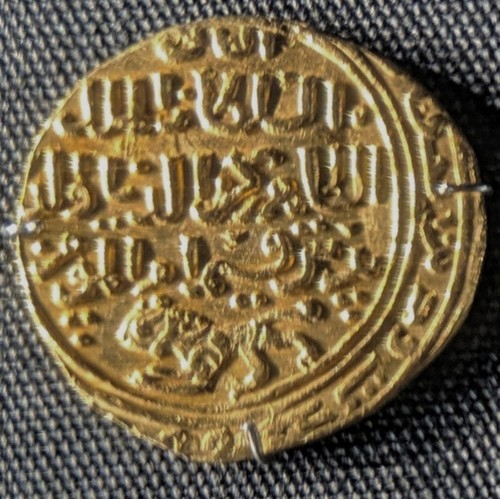
Gold Dinar of Baybars I
AH 658–676 (AD 1260–1277)
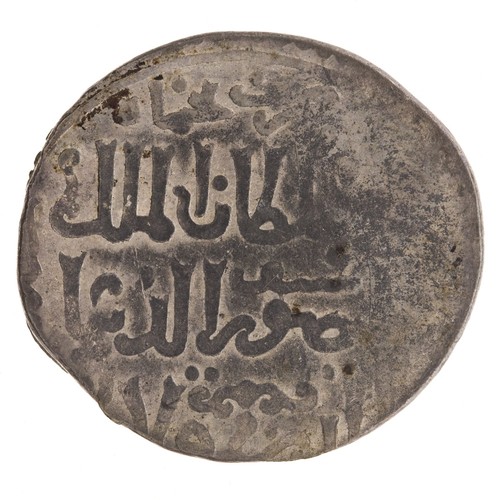
Silver Dirham of Sultan Qalawun
AH 678–689 (AD 1279–1290), the reign of Sultan Qalawun
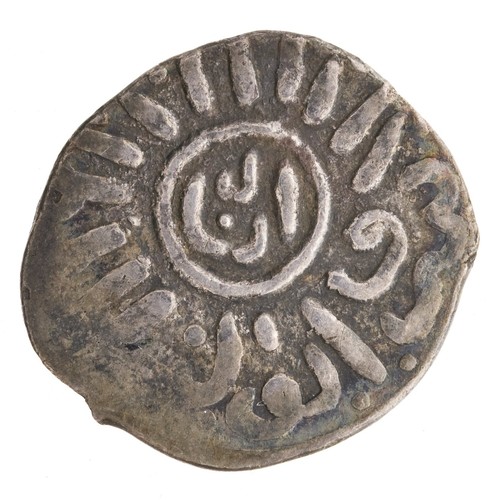
Silver Dirham of Sayf ad-Din Inal
AH 857–865 (AD 1453–1461), the reign of Sultan al-Ashraf Sayf ad-Din Inal
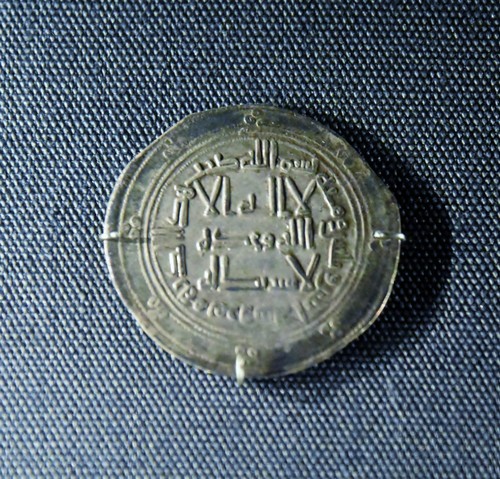
Abbasid Silver Dirham
AH 132 (AD 749–750); Abbasid dirhams broadly AH 132–656 (AD 750–1258)