
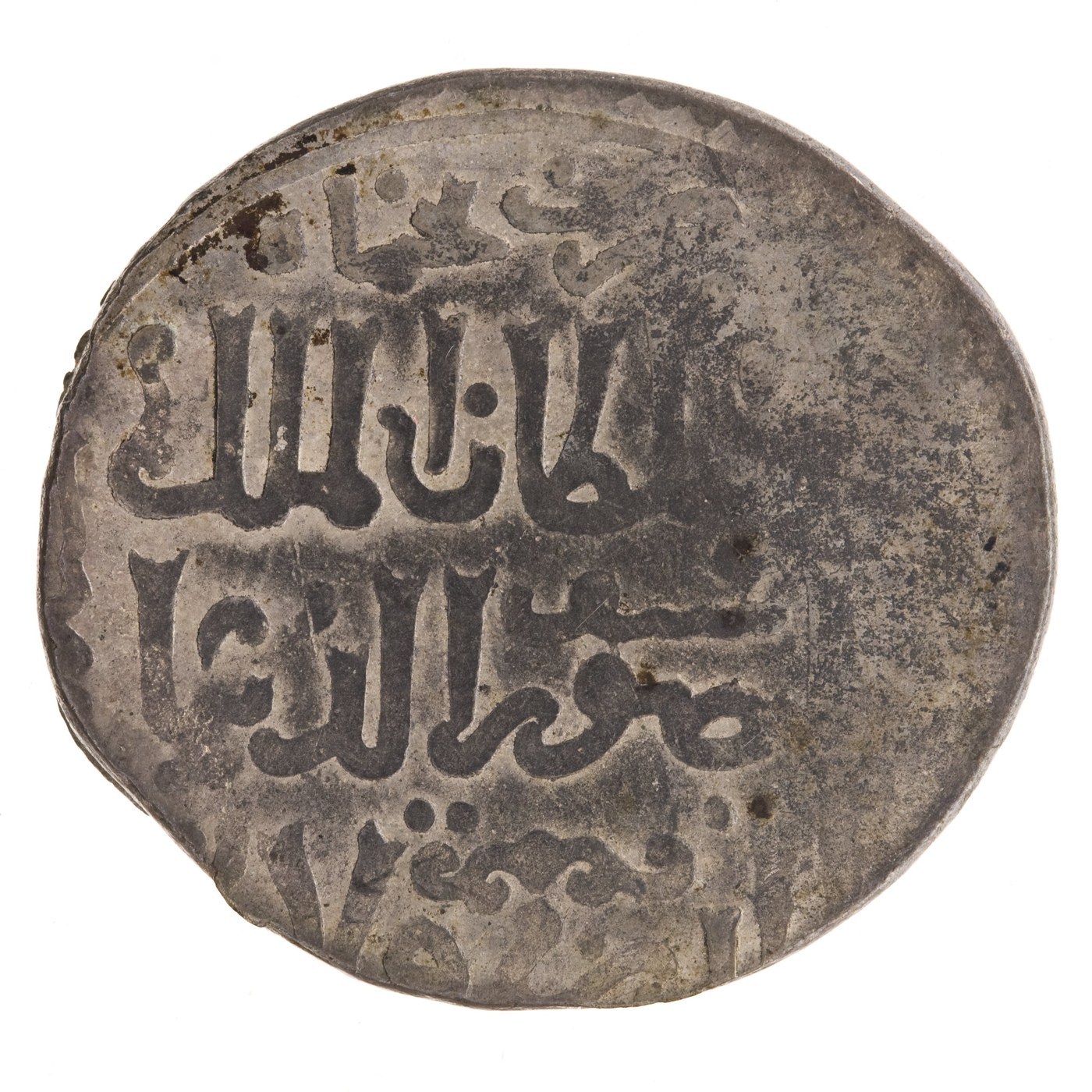
Silver Dirham of Sultan Qalawun
A hand-struck Mamluk silver dirham of Sultan Qalawun of Egypt, covered on both faces with Arabic calligraphy and struck AD 1279–1290.
- Country
- Egypt (Mamluk)
- Denomination
- Dirham
- Metal
- Silver
Got a coin like this?
Identify any coin from a photo, free.
Overview
The silver dirham of Sultan Qalawun is a hand-struck Islamic coin of the Bahri Mamluk sultanate of Egypt and Syria, made of silver and covered on both faces with Arabic inscriptions rather than any image. The example shown carries calligraphy on both the obverse and reverse, with no portrait or figural device of any kind, in keeping with the aniconic tradition of medieval Islamic coinage.
The legends record the sultan's name and titles — al-Malik al-Mansur Sayf al-Din Qalawun — together with religious formulas such as the declaration of faith. Qalawun ruled from AD 1279 to 1290 (AH 678–689), so a dirham struck in his name belongs firmly to the late 13th century, at the height of Mamluk power in Egypt and the Levant.
Mamluk dirhams of this period are broad, often somewhat irregular silver discs struck by hand from engraved dies. Because both faces are text, a genuine piece reads as a small silver coin of Arabic calligraphy, with the ruler's name and titles forming the core of the design.
History & Background
Qalawun (al-Malik al-Mansur Sayf al-Din Qalawun al-Alfi) was one of the most important sultans of the Bahri Mamluk line, rising through the ranks of the slave-soldier military elite that governed Egypt and Syria after the fall of the Ayyubids. He seized the throne in AH 678 (AD 1279) and reigned until his death in AH 689 (AD 1290), founding the Qalawunid dynasty whose descendants dominated the sultanate for roughly a century afterward.
His reign was defined by warfare against the Crusader states and the Mongol Ilkhanate, and by extensive building works in Cairo, including the famous complex bearing his name. Coinage in precious metal was a mark of sovereignty, and dirhams struck in Qalawun's name and titles circulated as everyday silver money across Egypt and Syria, at mints such as Cairo and Damascus.
The dirham itself was the long-standing silver denomination of the Islamic world, and the Mamluks continued it in their own style — dense Arabic legends naming the reigning sultan and his honorifics, framed by religious inscriptions. Coins of Qalawun sit within this Bahri Mamluk series and are dated by the Hijri years of his reign, AH 678–689.
How to Identify
A dirham of Qalawun is a silver coin, generally broad and thin, struck by hand so that the flan is often a little irregular and the strike sometimes uneven or off-center. The metal is silver, commonly toned grey, and there is no image of any person, animal, or object — only Arabic script on both faces.
The key to identification is the inscription. The legends name the ruler with the Mamluk royal formula, typically "al-Sultan al-Malik al-Mansur Sayf al-Din Qalawun," alongside religious text such as the profession of faith and, where the flan preserves it, the mint city and Hijri date. Reading the sultan's name and titles is what attributes the coin to Qalawun specifically, since many Mamluk dirhams share the same overall layout and differ chiefly in the name of the reigning sultan.
The surest diagnostic points are therefore the all-calligraphy design, the silver metal, the broad hand-struck flan, and above all the name Qalawun with his titles in the field. Because the mint and date often lie in the outer or marginal portions of the legend, well-centered, fully-struck examples that preserve those details are the most securely attributed.
Value & Collectibility
Mamluk silver dirhams of Qalawun are collectible medieval Islamic coins, valued for their association with a major sultan and for their bold Arabic calligraphy. As hand-struck pieces they vary widely in condition, and value tends to follow the completeness and legibility of the legends far more than any single catalog figure.
Ordinary examples with worn or partial inscriptions generally trade at modest collector prices, while coins that are well-centered, fully struck, and clearly preserve the sultan's name, mint, and date command higher premiums. Scarcer mints, unusual titles, and exceptional preservation all add value within the series.
Because these are individually struck coins with irregular flans, precise worth depends on grade, eye appeal, and how much of the legend survives, so any figures are general context rather than fixed prices. A clear reading of the name Qalawun and, if present, the mint and Hijri date is the single most important factor in placing and pricing the coin.
Frequently asked questions
Who was Sultan Qalawun?
Qalawun (al-Malik al-Mansur Sayf al-Din Qalawun) was a Bahri Mamluk sultan of Egypt and Syria who reigned from AD 1279 to 1290 (AH 678–689). He founded the Qalawunid dynasty and fought the Crusaders and Mongols while building extensively in Cairo.
Is this dirham made of real silver?
Yes. The dirham was the traditional silver denomination of the Islamic world, and Mamluk dirhams of Qalawun are silver coins, usually toned grey with age. They were struck by hand and can vary somewhat in weight and flan shape.
Why is there no portrait on the coin?
Islamic coinage was aniconic, avoiding figural images. Like other medieval Islamic coins, Qalawun's dirham carries only Arabic calligraphy — the sultan's name and titles together with religious formulas — with no portrait or picture.
How do I know it belongs to Qalawun and not another sultan?
By reading the legend. Mamluk dirhams share a similar layout but name the reigning sultan; a coin of Qalawun carries his name and titles, typically 'al-Sultan al-Malik al-Mansur Sayf al-Din Qalawun,' in the field inscription.
What do the dates AH 678–689 mean?
They are Hijri (Islamic-calendar) years corresponding to about AD 1279–1290, the span of Qalawun's reign. A dirham struck in his name falls within this window, and where the flan preserves it, the exact Hijri year appears in the legend.
Silver Dirham of Sultan Qalawun guides
In-depth guides for identifying, valuing, and collecting Silver Dirham of Sultan Qalawun.
Other coins you may enjoy
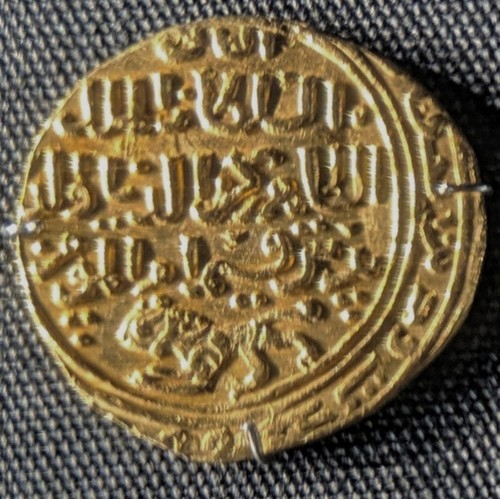
Gold Dinar of Baybars I
AH 658–676 (AD 1260–1277)
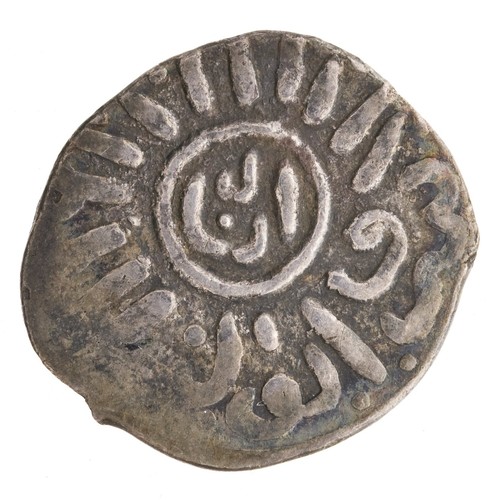
Silver Dirham of Sayf ad-Din Inal
AH 857–865 (AD 1453–1461), the reign of Sultan al-Ashraf Sayf ad-Din Inal
Gold Dinar of Alp Arslan
AH 455–465 (AD 1063–1072), the reign of Alp Arslan
Abbasid Silver Dirham
AH 132 (AD 749–750); Abbasid dirhams broadly AH 132–656 (AD 750–1258)