
How to Identify the Silver Dirham of Sultan Qalawun
A collector's guide to recognizing a Mamluk dirham of Qalawun: its silver flan, all-Arabic legends, the sultan's name and titles, look-alikes and fakes.
Read the full Silver Dirham of Sultan Qalawun encyclopedia entry →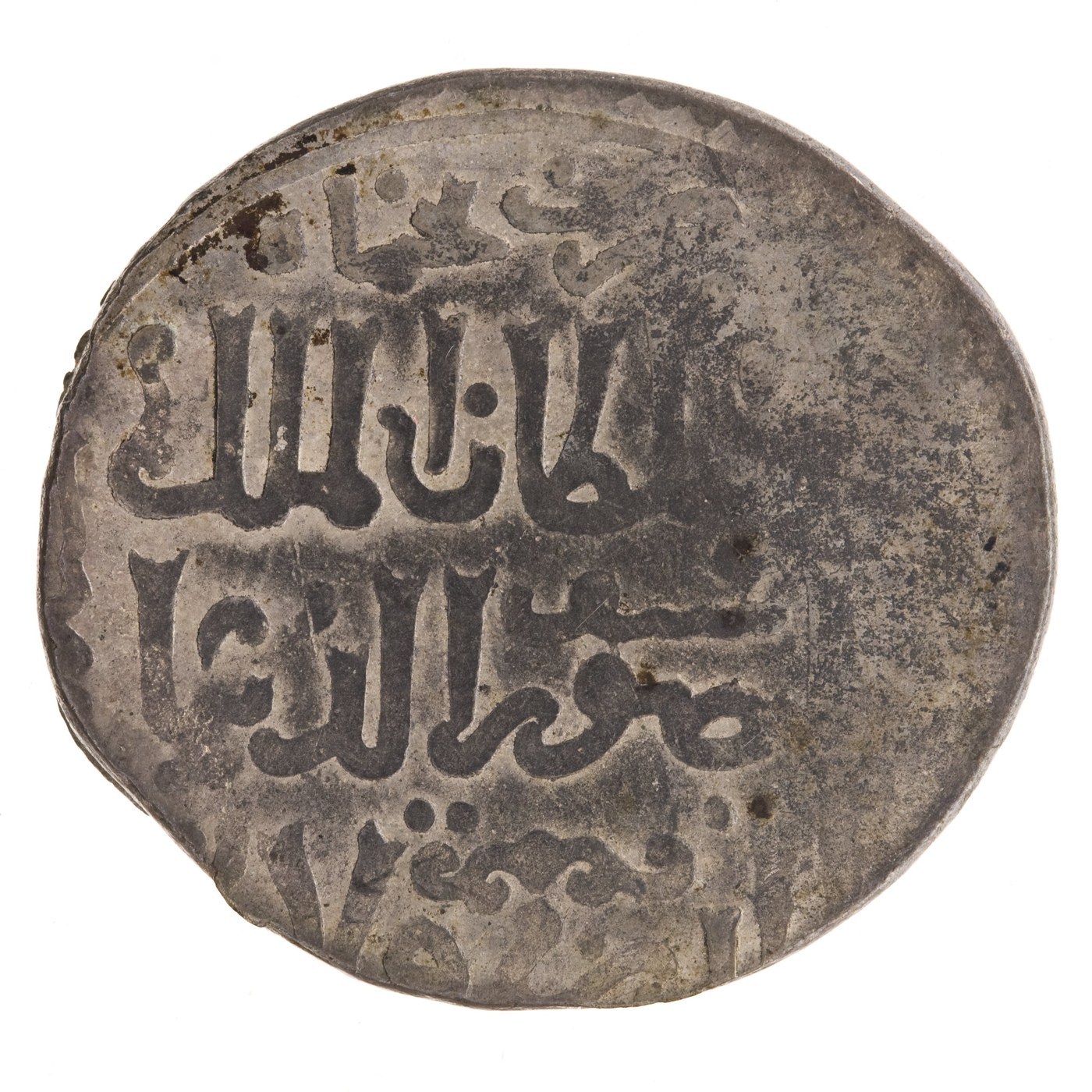
Begin with the physical coin. A dirham of Qalawun is silver, generally broad and thin, and struck by hand, so the flan is often slightly irregular and the strike can be uneven or off-center. The surface is usually grey-toned silver. A coin of this type that is magnetic, obviously base metal, or perfectly regular and machine-smooth should be treated with caution, as hand-struck medieval silver does not look mechanically uniform.
Read the design, not just the shapes. Both faces should carry Arabic calligraphy only — no portrait, animal, or object of any kind. The legends combine religious text, such as the declaration of faith, with the ruler's royal formula. To attribute the coin to Qalawun specifically, look for his name and titles in the field, typically rendered as 'al-Sultan al-Malik al-Mansur Sayf al-Din Qalawun.' The sultan's name is what distinguishes his dirhams from those of other Mamluk rulers who used the same general layout.
Use the marginal and field inscriptions to place the coin. Where the flan preserves them, the mint city — often Cairo (al-Qahira) or Damascus (Dimashq) — and the Hijri date appear within the legend, falling in the range AH 678–689 (AD 1279–1290) for Qalawun's reign. Well-centered, fully-struck coins that keep these details are the most securely attributed and the most valued, because so much depends on reading the name, mint, and year rather than the type alone.
Watch for look-alikes. Dirhams of other Bahri Mamluk sultans, and later Qalawunid rulers who repeated his dynastic name, share the same aniconic all-calligraphy template and can resemble Qalawun's coins closely. Never assume an old Mamluk-style silver coin is an issue of Qalawun without reading the ruler's name and titles; the difference usually lies in the name embedded in an otherwise similar legend.
Be cautious about authenticity. Genuine dirhams were struck from dies, not cast in molds, so casting seams, surface bubbles, a soft or grainy texture, a raised mold line at the edge, or an off-standard weight are warning signs. Modern replicas and tourist-market copies exist. When in doubt, weigh and measure the coin, photograph both faces clearly, and have the Arabic legend read against standard Mamluk references or by someone familiar with Islamic numismatics.
Frequently asked questions
How do I tell a dirham of Qalawun from that of another Mamluk sultan?
They share the same aniconic, all-calligraphy layout, so appearance alone is not enough. Read the royal formula in the field: a coin of Qalawun names 'al-Malik al-Mansur Sayf al-Din Qalawun.' The reigning sultan's name embedded in the legend is the deciding detail.
Where are the mint and date on the coin?
They appear within the legend, often toward the margins, when the flan preserves them. The mint is commonly Cairo or Damascus, and the Hijri year falls in the range AH 678–689 (AD 1279–1290). Worn or off-center strikes may not retain these details.
Is it normal for the flan to be irregular?
Yes. Mamluk dirhams were struck by hand from engraved dies, so broad, slightly uneven, or off-center flans are typical. A perfectly regular, machine-smooth disc is more consistent with a modern reproduction than a genuine medieval strike.
How can I spot a cast fake?
Genuine dirhams were struck, not poured. Look for casting seams, air bubbles, a mushy or grainy surface, a raised mold line at the edge, or an incorrect weight, and verify the Arabic legend against reference material or with a specialist when unsure.