
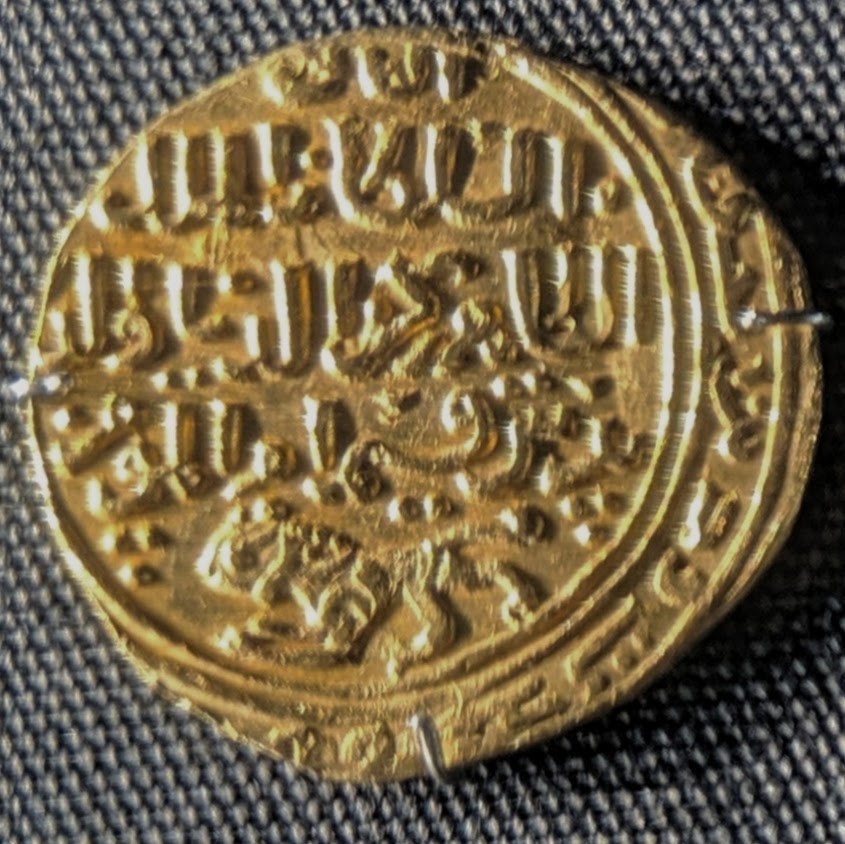
Gold Dinar of Baybars I
A hand-struck gold coin of the Mamluk sultan Baybars I, covered on both faces with Arabic calligraphy naming the ruler and struck in Egypt between 1260 and 1277 CE.
- Country
- Egypt (Mamluk Sultanate)
- Denomination
- Dinar
- Metal
- Gold
Got a coin like this?
Identify any coin from a photo, free.
Overview
The gold dinar of Baybars I is a hand-struck Islamic gold coin issued by the Mamluk Sultanate of Egypt during the reign of al-Malik al-Zahir Rukn al-Din Baybars (AD 1260–1277). Like other medieval Islamic dinars it is entirely aniconic: both faces carry only Arabic calligraphy — religious formulas together with the sultan's names and titles — with no portrait or figural image.
The example shown follows this pattern, with Arabic inscriptions arranged across the obverse and reverse. The legends name Baybars with his royal styles, including the honorific al-Malik al-Zahir, and carry the Islamic profession of faith and related pious phrases, along with mint and date information written into the field.
As the gold coin of one of the most powerful early Mamluk sultans, this dinar sits at a high point of medieval Egyptian coinage and is a sought-after piece among collectors of Islamic gold.
History & Background
Baybars rose from a slave-soldier (mamluk) background to become sultan of Egypt and Syria in AD 1260, after playing a leading role at the Battle of Ain Jalut, where Mamluk forces halted the Mongol advance. His reign (AH 658–676 / AD 1260–1277) consolidated Mamluk power, campaigned against the remaining Crusader states, and established administrative and monetary foundations for the Bahri Mamluk dynasty.
His gold dinars were struck within the long tradition of the Islamic dinar, the standard gold coin of the medieval Muslim world descended from the reforms of the late 7th century. Mamluk dinars continued the wholly epigraphic design but placed strong emphasis on the sultan's names and grand titulature, so a Baybars dinar advertises his authority in gold across Egypt and Syria.
Baybars also adopted a lion or panther as a personal emblem, and this device appears on some of his coinage and monuments. Where present it is a distinctive Mamluk feature, but the coins remain fundamentally inscriptional, with calligraphy dominating both faces.
How to Identify
A dinar of Baybars is a small, hand-struck gold coin, generally in the broad range of about 20–25 mm across and roughly 3.5–7 grams depending on the issue, as early Mamluk gold was often struck to variable weights on somewhat irregular flans rather than a single fixed standard. The metal is high-purity gold, warm yellow and non-magnetic, and the strike is frequently a little uneven or off-center, which is normal for the period.
Both faces are filled with Arabic calligraphy and no image of a person. The legends include the Islamic declaration of faith and pious formulas together with the ruler's names and titles — look for the name Baybars and the honorific al-Malik al-Zahir, along with further royal styles. Mint and date information is worked into the inscriptions, typically naming a mint such as Cairo (al-Qahira) or Damascus (Dimashq) and a Hijri year within AH 658–676.
The most reliable identification points are the gold metal, the fully calligraphic aniconic design, and the reading of Baybars's name and titles in the legend. Because many Mamluk and other Islamic dinars share the same epigraphic template, correctly reading the ruler's name, mint, and date is what confirms an attribution to Baybars I.
Value & Collectibility
Baybars I is a historically famous sultan, and gold dinars in his name are collectable pieces of medieval Islamic coinage. As hand-struck gold they carry bullion value from their gold content plus a numismatic premium reflecting the ruler, mint, date, and preservation, so even worn examples are worth well above their weight in gold to collectors.
Value within the series is driven mainly by how clearly the sultan's name and titles are struck, the specific mint and Hijri year, the completeness and centering of the legends, and overall condition. Well-centered, fully legible coins on good flans, and pieces from scarcer mints or dates, command higher premiums than weakly struck or clipped examples.
As with all hand-struck medieval coins, precise value depends on grade, eye appeal, gold weight, and specialist demand, so any figures are general context rather than fixed prices. Because gold dinars of prominent rulers are also targets for forgery, provenance and expert attribution meaningfully affect what a given coin is worth.
Frequently asked questions
Who was Baybars I?
Al-Malik al-Zahir Baybars was a Mamluk sultan of Egypt and Syria who reigned from AD 1260 to 1277. A former slave-soldier, he helped defeat the Mongols at Ain Jalut and became one of the most powerful early Mamluk rulers, and his gold dinars were struck during that reign.
Is this dinar made of real gold?
Yes. The dinar was the standard gold coin of the medieval Islamic world, and Mamluk dinars of Baybars are struck in high-purity gold — warm yellow, dense, and non-magnetic — rather than a base-metal alloy.
Why are there no pictures on the coin?
Medieval Islamic coinage is aniconic. The dinar carries only Arabic calligraphy — the profession of faith and pious formulas together with the sultan's names and titles — with no portrait or figural image, though Baybars used a lion emblem that appears on some of his coins.
How do I know it belongs to Baybars and not another sultan?
By reading the legend. The inscriptions name the ruler and his titles, so look for the name Baybars and the honorific al-Malik al-Zahir; the mint and Hijri date worked into the text confirm an attribution to his reign, AH 658–676.
Are Baybars dinars rare?
They are scarcer and more sought-after than common silver issues, both because gold survives in smaller numbers and because Baybars is a famous ruler. Value depends on the mint, date, strike, and condition, with well-struck, fully legible coins commanding the strongest premiums.
Gold Dinar of Baybars I guides
In-depth guides for identifying, valuing, and collecting Gold Dinar of Baybars I.
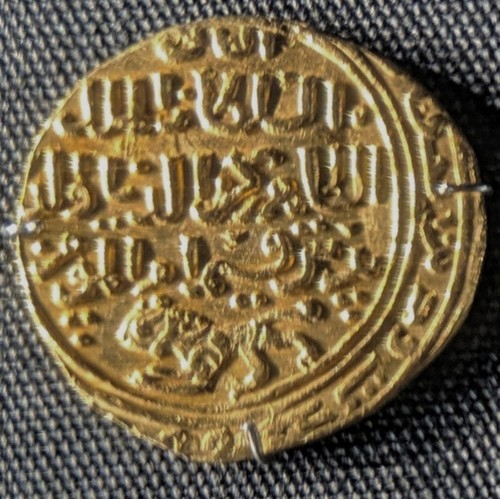
Other coins you may enjoy
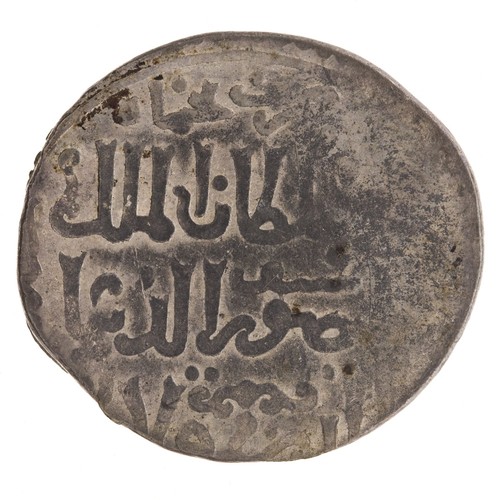
Silver Dirham of Sultan Qalawun
AH 678–689 (AD 1279–1290), the reign of Sultan Qalawun
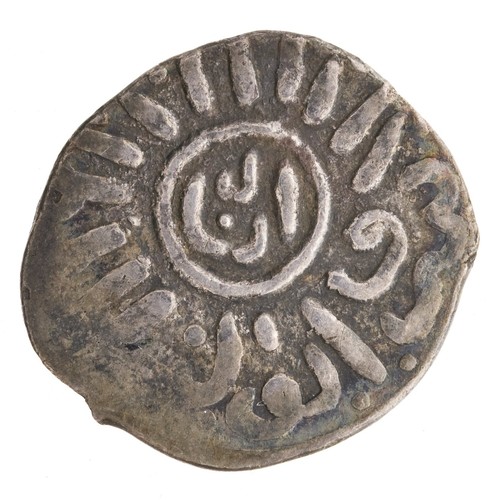
Silver Dirham of Sayf ad-Din Inal
AH 857–865 (AD 1453–1461), the reign of Sultan al-Ashraf Sayf ad-Din Inal
Gold Dinar of Alp Arslan
AH 455–465 (AD 1063–1072), the reign of Alp Arslan
Abbasid Silver Dirham
AH 132 (AD 749–750); Abbasid dirhams broadly AH 132–656 (AD 750–1258)