
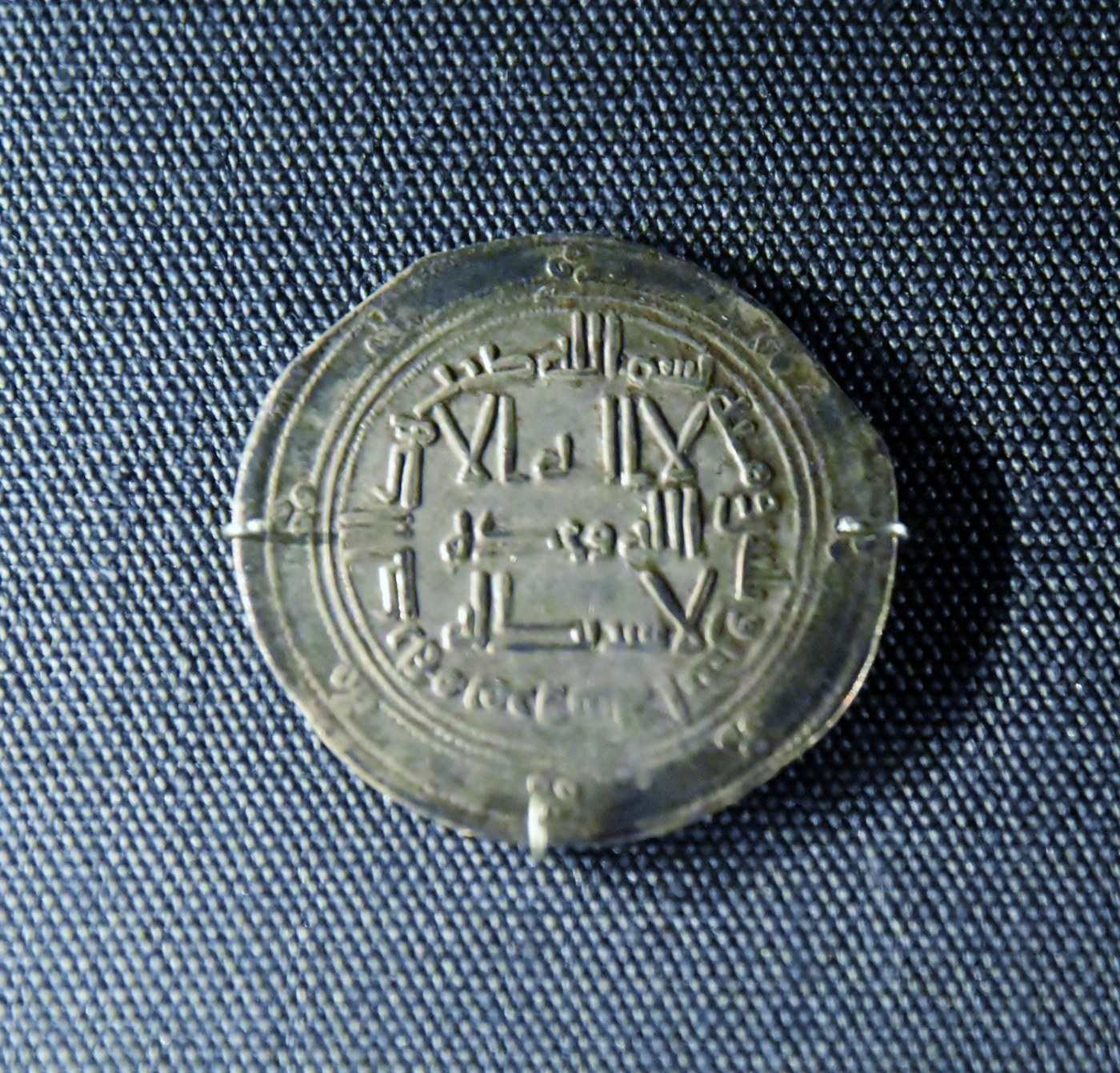
Abbasid Silver Dirham
A thin, broad Islamic silver coin of the Abbasid Caliphate, covered edge to edge with concentric Kufic Arabic inscriptions and dated AH 132 (AD 749–750).
- Country
- Islamic Caliphate
- Denomination
- Dirham
- Metal
- Silver
Got a coin like this?
Identify any coin from a photo, free.
Overview
The Abbasid silver dirham is a hand-struck coin of the Islamic Caliphate, made entirely of silver and covered on both faces with concentric rings of Kufic Arabic script. The example shown carries religious invocations arranged in circular bands on the obverse, and further concentric inscriptions recording the mint and date on the reverse, dated AH 132 (AD 749–750).
Like all early Islamic dirhams, it is a wholly aniconic coin: there is no portrait, animal, or figural image of any kind — only calligraphy. Both the central legends and the surrounding marginal legends are text, so a genuine piece is essentially a small silver disc of concentric writing.
AH 132 places this coin at the very birth of the Abbasid dynasty, the year the Abbasids displaced the Umayyads. Dirhams of this style went on to be struck across the caliphate for centuries and are among the most widely collected of all medieval Islamic coins.
History & Background
The dirham was the standard silver coin of the early Islamic world, established under the Umayyad caliph Abd al-Malik around AH 79 (AD 698) as part of a reform that swept portraits off the coinage and replaced them with pure Arabic inscriptions. When the Abbasid revolution overthrew the Umayyads in AH 132 (AD 750), the new dynasty inherited and continued this epigraphic dirham with only gradual changes.
A dirham dated AH 132 therefore sits exactly at that turning point, at or immediately around the founding of the Abbasid Caliphate under its first caliph, al-Saffah. The design keeps the familiar layout of the reformed Islamic dirham: a central declaration of faith ringed by a marginal legend naming the mint and year, with Quranic passages filling the reverse.
The Abbasid Caliphate went on to rule from Iraq — with Baghdad as its later capital — for roughly five centuries until the Mongol sack of Baghdad in AD 1258. Across that long span, silver dirhams of this concentric-Kufic form were struck at dozens of mints and traveled widely in trade, reaching as far as northern Europe, where large hoards of them have been found.
How to Identify
An Abbasid dirham is a thin, broad, roughly circular silver coin, typically around 25–29 mm in diameter but only about 2.7–3.0 grams in weight — noticeably lighter and flatter than a Roman or Mughal silver coin of similar width. The metal is silver, often toned grey, and the flan is usually a little irregular from hand striking.
Both sides are laid out as concentric circles of Kufic (angular early Arabic) script. The obverse center carries the Islamic declaration of faith — that there is no god but God alone — encircled by a marginal legend that, on the reformed dirham, names the mint and the year, beginning with the formula "In the name of God, this dirham was struck in…". The reverse center typically carries a further religious statement with Quranic text in the surrounding bands. Reading the outer ring is how the specific mint city and Hijri date are established; this coin is dated AH 132 (AD 749–750).
The surest identification points are the total absence of any image, the concentric-ring arrangement of the text, the thin light silver flan, and the angular Kufic lettering. Because the Umayyad and Abbasid reformed dirhams share this template, the mint-and-date marginal legend — not the general appearance — is what pins a coin to the Abbasid period.
Value & Collectibility
Abbasid dirhams as a group are among the more accessible medieval Islamic silver coins, because they were struck in very large numbers over several centuries and survive in quantity, including in hoards. Ordinary, legible examples in average condition generally trade at modest collector prices rather than at the level of great rarities.
Value within the series is driven mainly by the mint, the exact Hijri year, the caliph or governor named, the sharpness and completeness of the Kufic legends, and overall preservation. Early transitional dates such as AH 132, coins from scarce or short-lived mints, and unusually well-centered, fully-struck pieces command higher premiums than common later issues.
As with all hand-struck early coins, precise value depends on grade, eye appeal, and specialist demand, so any figures are general context rather than fixed prices. An accurate reading of the mint and date in the marginal legend is the single most important factor in placing an Abbasid dirham within the market.
Frequently asked questions
What does AH 132 mean and why is it significant?
AH refers to the Islamic Hijri calendar. AH 132 corresponds to about AD 749–750, the year the Abbasid dynasty overthrew the Umayyads, so a dirham of this date stands right at the founding of the Abbasid Caliphate.
Is the Abbasid dirham real silver?
Yes. The dirham was a high-silver coin struck to a standard of roughly 2.9 grams. Abbasid dirhams are essentially silver, typically toned grey with age, not a base-metal alloy.
Why are there no pictures on the coin, only writing?
Early Islamic coinage was aniconic. Following the late-7th-century reform, dirhams carried only Arabic inscriptions — religious declarations and the mint-and-date formula — arranged in concentric rings, with no portrait or figural image.
How do I read where and when it was made?
The outer marginal ring carries the mint-and-date legend, usually beginning "In the name of God, this dirham was struck in [city] in the year…". Reading that band identifies the mint city and the Hijri year, such as AH 132 here.
Are Abbasid dirhams rare or valuable?
Most are relatively common because they were minted in huge numbers over centuries, so ordinary examples are affordable. Early transitional dates, scarce mints, and exceptionally well-struck coins are worth more.
Abbasid Silver Dirham guides
In-depth guides for identifying, valuing, and collecting Abbasid Silver Dirham.
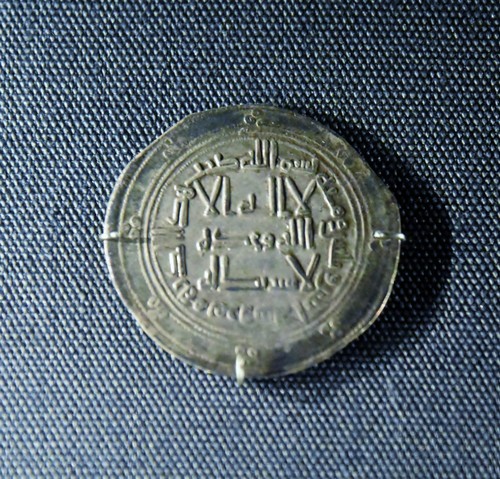
Other coins you may enjoy
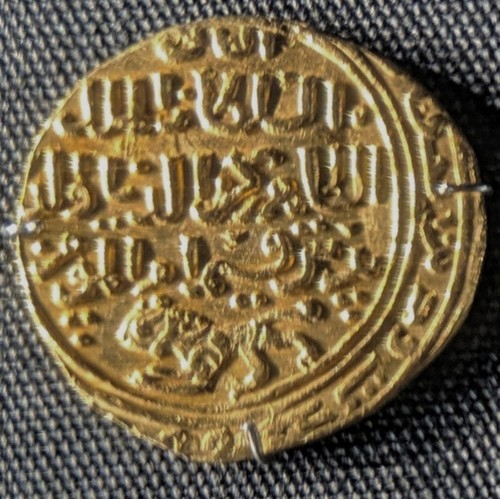
Gold Dinar of Baybars I
AH 658–676 (AD 1260–1277)
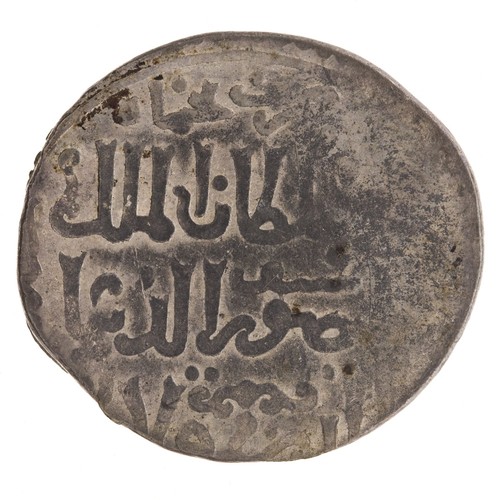
Silver Dirham of Sultan Qalawun
AH 678–689 (AD 1279–1290), the reign of Sultan Qalawun
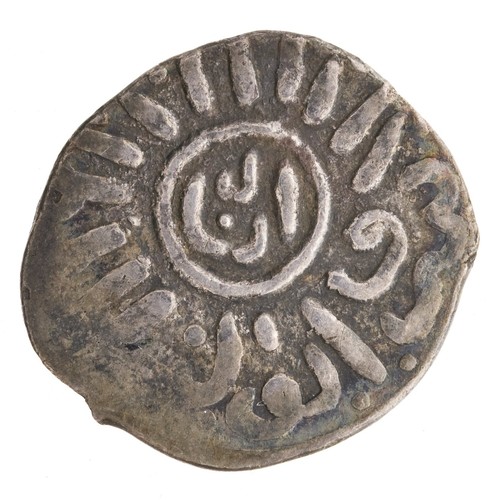
Silver Dirham of Sayf ad-Din Inal
AH 857–865 (AD 1453–1461), the reign of Sultan al-Ashraf Sayf ad-Din Inal
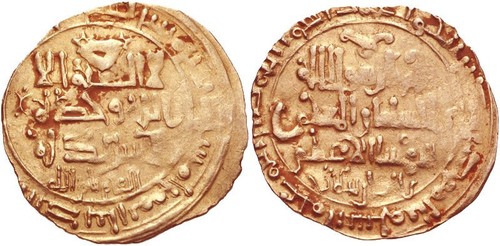
Gold Dinar of Alp Arslan
AH 455–465 (AD 1063–1072), the reign of Alp Arslan