
How to Identify the Gold Dinar of Alp Arslan
A collector's guide to recognizing a Seljuk gold dinar of Alp Arslan: gold flan, concentric Arabic legends, the ruler's name, look-alikes and authentication.
Read the full Gold Dinar of Alp Arslan encyclopedia entry →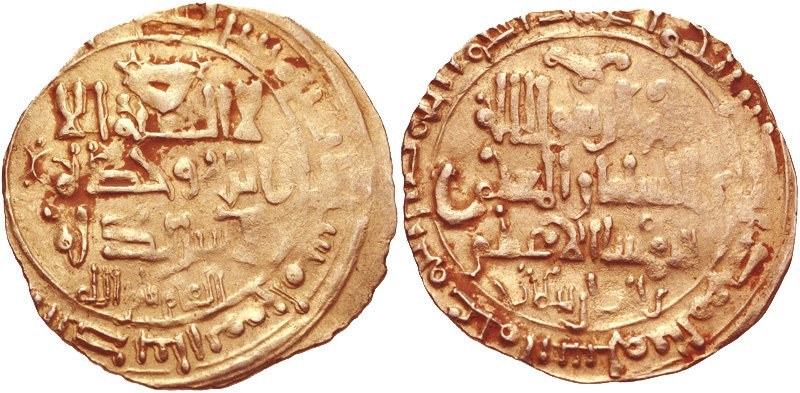
Start with the metal and fabric. A dinar of Alp Arslan is gold, hand-struck, and often on a thin or slightly irregular flan that can look wavy or unevenly spread — normal for eleventh-century Seljuk gold. Gold colour throughout, a soft warm lustre, and no magnetic attraction are basic first checks; a coin that is magnetic, clearly base metal, or gold only on the surface is not a genuine gold dinar.
Read the layout, not just the letters. Both faces should show concentric circular bands of Arabic inscription with no portrait, animal, or object of any kind. The central legends carry the declaration of faith, while the marginal rings and the ornamental reverse field carry the ruler's name and titles, the caliph's name, and the mint-and-date formula. The presence of figural imagery, or a cursive modern script instead of the medieval Arabic hand, argues against a genuine Seljuk dinar.
Attribute the coin by the ruler's name. What separates a dinar of Alp Arslan from the many similar-looking Islamic dinars is the inscription itself: it must name Alp Arslan with his Seljuk titles, together with the reigning Abbasid caliph. The marginal legend then gives the mint city and the Hijri year within AH 455–465 (AD 1063–1072). Because so many medieval dinars share the same template, correctly reading these names is the essential step; the general appearance alone is not enough.
Watch for look-alikes. Dinars of other Seljuk sultans, of the preceding and following dynasties, and of contemporaneous regional rulers all use the same aniconic concentric-inscription format and can appear nearly identical at a glance. Weakly struck coins where the key legends run off the flan are especially easy to misattribute. Never assume an old gold dinar is an Alp Arslan issue without confirming the ruler's name.
Be cautious about authenticity. Genuine dinars are struck from dies, not cast, so casting seams, surface bubbles, a soft grainy texture, or a raised mould line at the edge are warning signs, as is an off-standard weight for gold. Modern forgeries and gilt copies of Islamic gold exist. When in doubt, weigh and measure the coin, photograph both faces sharply, and have the legend read against standard references or by a specialist in Islamic coinage.
Frequently asked questions
How do I tell an Alp Arslan dinar from another Seljuk dinar?
They share the same aniconic concentric-inscription template, so appearance alone will not decide it. Read the legends for the ruler's name and titles: a dinar of Alp Arslan names him specifically, alongside the reigning Abbasid caliph, with the mint and Hijri date in the marginal band.
Where are the mint and date on the coin?
In the outer marginal ring. That band carries the mint-and-date formula, naming the mint city and the Hijri (AH) year, which for Alp Arslan falls within AH 455–465 (AD 1063–1072).
How can I check that the coin is really gold?
Look for consistent gold colour and lustre across both faces and the edge, confirm it is not attracted to a magnet, and weigh it. Surface-only gold colour, magnetism, or an off-standard weight are reasons to suspect a gilt or base-metal imitation.
How can I spot a cast fake?
Genuine dinars were struck from dies rather than poured into moulds. Casting seams, air bubbles, a mushy or grainy surface, a raised mould line at the edge, or an incorrect weight point to a cast copy; verify the Arabic legend against reference material when unsure.