
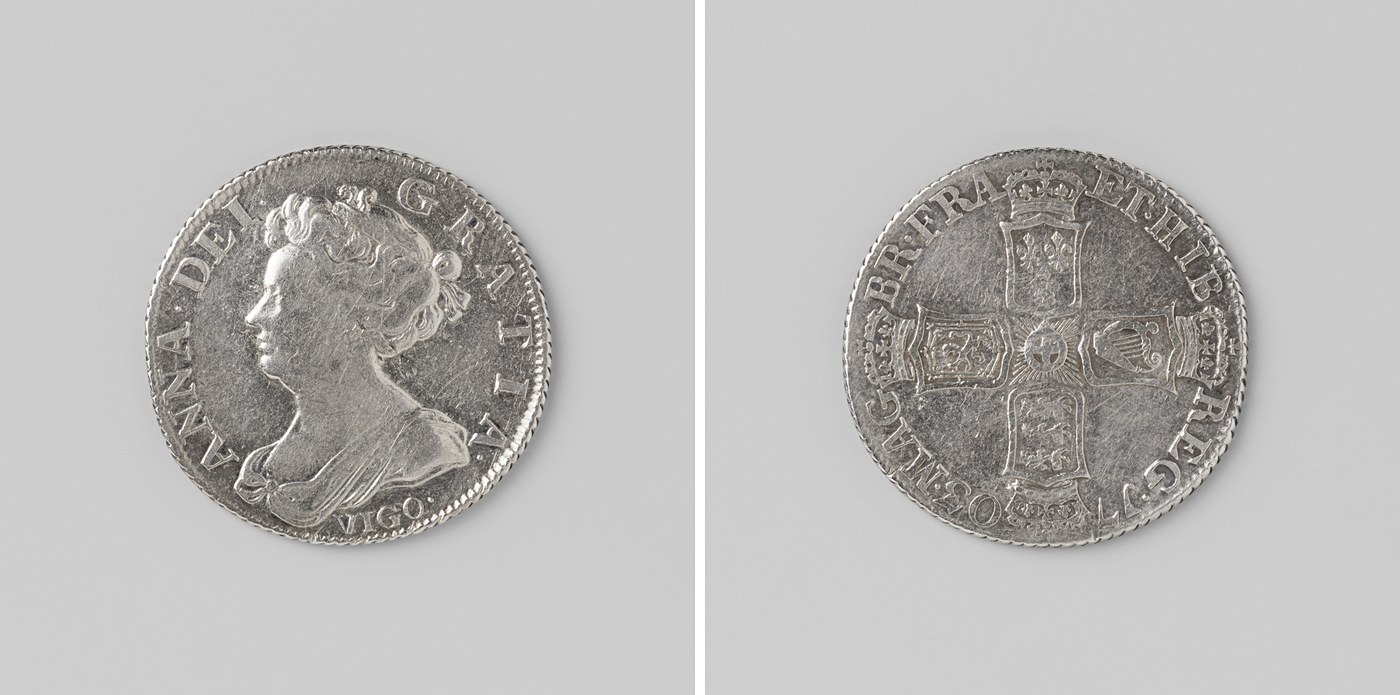
Shilling of Anne
A machine-struck silver shilling of Queen Anne, with her draped bust facing right and a reverse of crowned shields bearing the royal arms in a cross.
- Country
- Great Britain
- Denomination
- Shilling
- Metal
- Silver
Got a coin like this?
Identify any coin from a photo, free.
Overview
The Shilling of Anne is a milled silver coin struck during the reign of Queen Anne (1702-1714), the last of the Stuart monarchs. The obverse shows the draped bust of the Queen in profile facing right, encircled by a Latin legend naming her as queen. The reverse carries the royal arms displayed on four crowned shields arranged in the form of a cross, with a small central device and the interlinked royal initials in the angles between the shields.
Anne's reign spans one of the most important events in British coinage: the Act of Union of 1707, which joined England and Scotland into the single Kingdom of Great Britain. As a result the shilling exists in two broad forms, a pre-Union type struck from 1702 to 1707 and a post-Union type struck from 1707 to 1714, the two differing chiefly in how the English and Scottish arms are arranged on the reverse shields.
Struck entirely by mill and screw press, the shilling of Anne carries no mark of value in the field; the denomination is judged from its size, weight and design. It is a popular and historically resonant type for collectors of early milled British silver, marking the birth of the Great Britain coinage.
History & Background
Anne came to the throne in 1702 and reigned until her death in 1714. Her silver was struck by machinery at the Royal Mint in the Tower of London, continuing the fully milled coinage established under Charles II, and briefly at Edinburgh after the Union. The engraving of the coinage of this reign is associated with John Croker, whose right-facing bust of the Queen appears across the silver denominations.
The reign divides sharply around the Act of Union of 1707. Before the Union, the reverse shields carry the arms of England, Scotland, France and Ireland as separate quarters. After the Union the English and Scottish arms were combined on the same shields, so that the impaled arms of the two kingdoms appear together, reflecting the new Kingdom of Great Britain. Coins struck at the Edinburgh mint after the Union carry a small letter E, or E in a star, below the bust.
Several issues carry provenance marks recording the source of the silver. The word VIGO appears below the bust on coins struck from bullion captured from Spanish treasure ships at Vigo Bay in 1702. Other issues show plumes, roses, or roses-and-plumes, marking silver supplied by the Welsh mines and the Company for Smelting Down Lead. These marks, with the date and bust variety, distinguish the many issues across the reign.
How to Identify
Look first at the obverse. A Shilling of Anne shows the Queen in profile facing right, with a draped bust and hair drawn back, and a Latin legend running around the edge naming her as queen. There is no crown on the bust and no value mark in the field, which separates it from the earlier hammered Stuart shillings that carry an XII mark of value.
The reverse shows the royal arms on four crowned shields arranged as a cross, with the interlinked royal initials in the angles between them. On the pre-Union coins (1702-1707) the shields show England, Scotland, France and Ireland as separate arms; on the post-Union coins (1707-1714) the English and Scottish arms are combined on the same shields. Look below the bust for the word VIGO, or for plumes, roses, or a small E, which record the source of the silver or the Edinburgh mint.
Genuine examples are struck in silver on a round, evenly struck flan with sharp, uniform detail and weigh in the range typical of an early milled shilling, with a decorated or grained edge. Precise attribution of the exact issue depends on the date, whether it is a pre- or post-Union reverse, and any provenance or mint mark, matched against published references on Anne's silver.
Value & Collectibility
Value depends heavily on the date, whether the coin is a pre- or post-Union type, the presence of a provenance mark such as VIGO or plumes, the strength of strike and overall condition. Common dates in worn, circulated grade are among the more accessible genuine early milled British silver coins, while sharply struck examples with a clear portrait and full legends command more. Scarcer dates, the VIGO shillings, and the Edinburgh issues sit well above the common pieces.
Eye appeal matters as much as technical grade. A coin with a well-centred, sharp bust, clear shields and legible legends is worth considerably more than a worn, cleaned or damaged piece of the same date. Because the reign is short and divided by the Union, some individual date-and-type combinations are genuinely scarce.
As a historically significant coin from the birth of the Great Britain coinage, prices span a wide range, from modest sums for heavily worn common dates to substantial amounts for choice, high-grade or scarce-variety examples such as the VIGO issue. For any purchase of consequence, confirm authenticity and grade through a specialist dealer or reputable auction record rather than a single listing.
Frequently asked questions
What is the difference between a pre-Union and post-Union Shilling of Anne?
The pre-Union shillings of 1702 to 1707 show the arms of England, Scotland, France and Ireland as separate quarters on the reverse shields. After the Act of Union of 1707 the English and Scottish arms were combined on the same shields, reflecting the new Kingdom of Great Britain.
What does the word VIGO under the bust mean?
VIGO indicates the coin was struck from silver bullion captured from Spanish treasure ships at the Battle of Vigo Bay in 1702. VIGO shillings are a distinct and generally scarcer part of the reign and are sought after by collectors.
Why is there no XII value mark on my Shilling of Anne?
The milled shillings of Anne carry no mark of value in the field, unlike the earlier hammered Stuart and Tudor shillings that show an XII. The denomination is identified instead from the coin's size, weight and design.
What do the plumes or roses below the bust indicate?
They are provenance marks recording the source of the silver. Plumes indicate Welsh silver, while roses or roses-and-plumes indicate metal supplied by the Company for Smelting Down Lead. Coins with these marks help pin down the issue.
What does an E below the bust mean?
A small letter E, or E in a star, indicates the coin was struck at the Edinburgh mint after the Act of Union. These Scottish-struck issues are a distinct part of Anne's post-Union coinage.
Shilling of Anne guides
In-depth guides for identifying, valuing, and collecting Shilling of Anne.
Other coins you may enjoy
Spade Guinea
1760-1820
Two Guineas of George II
1738–1753
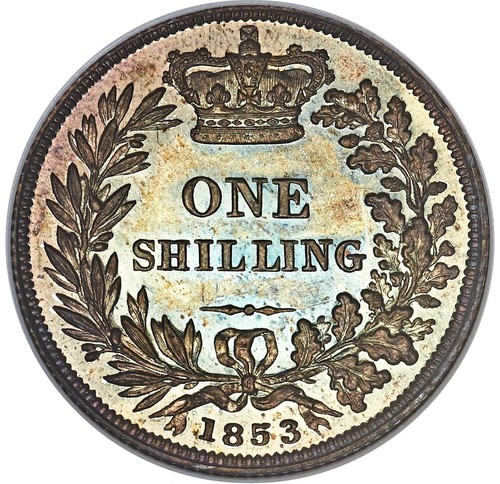
Shilling of Victoria
1838-1901
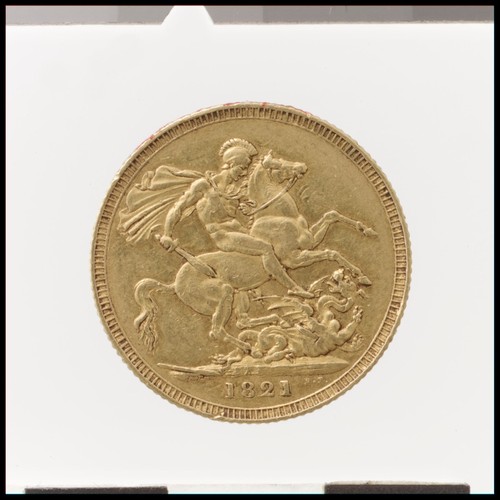
Sovereign of George IV
1821-1830
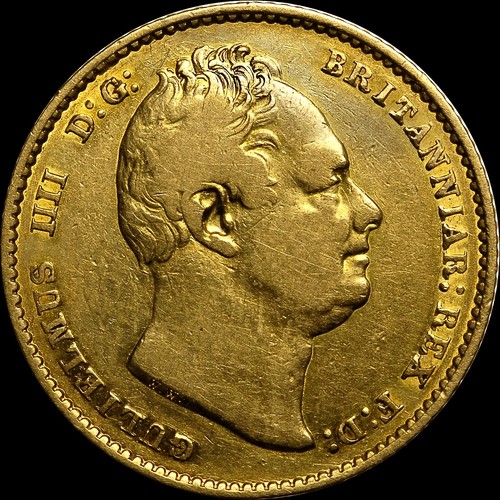
Sovereign of William IV
1831–1837
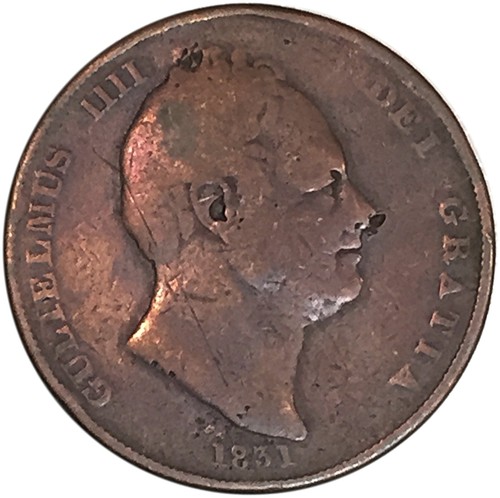
Penny of William IV
1831-1837
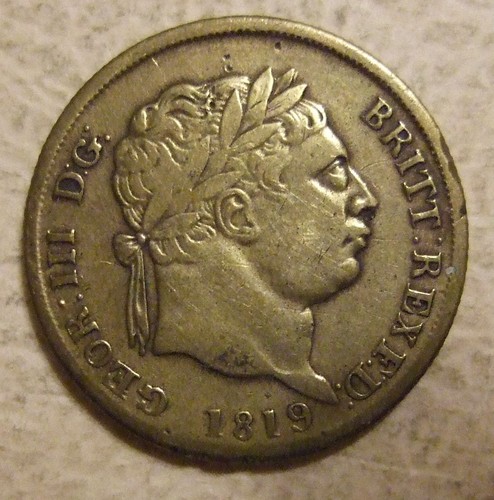
Shilling of George III
1816-1820
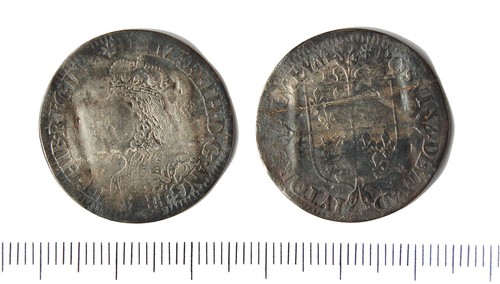
Milled Sixpence of Elizabeth I
1561-1571
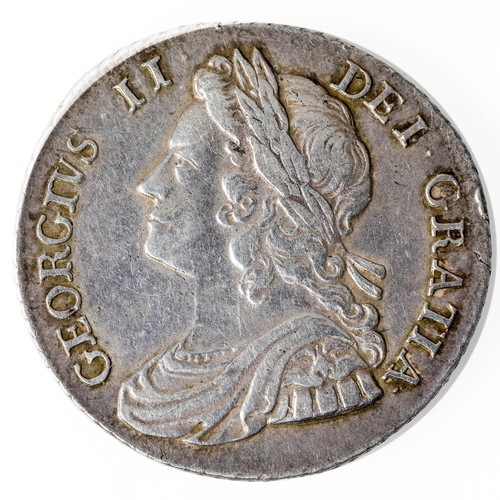
Shilling of George II
1727-1758
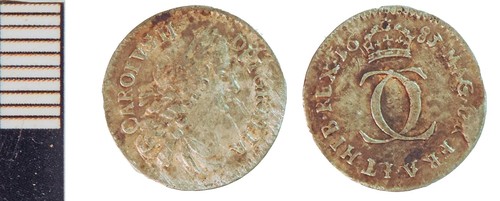
Charles II Twopence
1660-1685
Charles II Half Crown
1660–1685
Irish Halfpenny of Charles II
1680–1684