
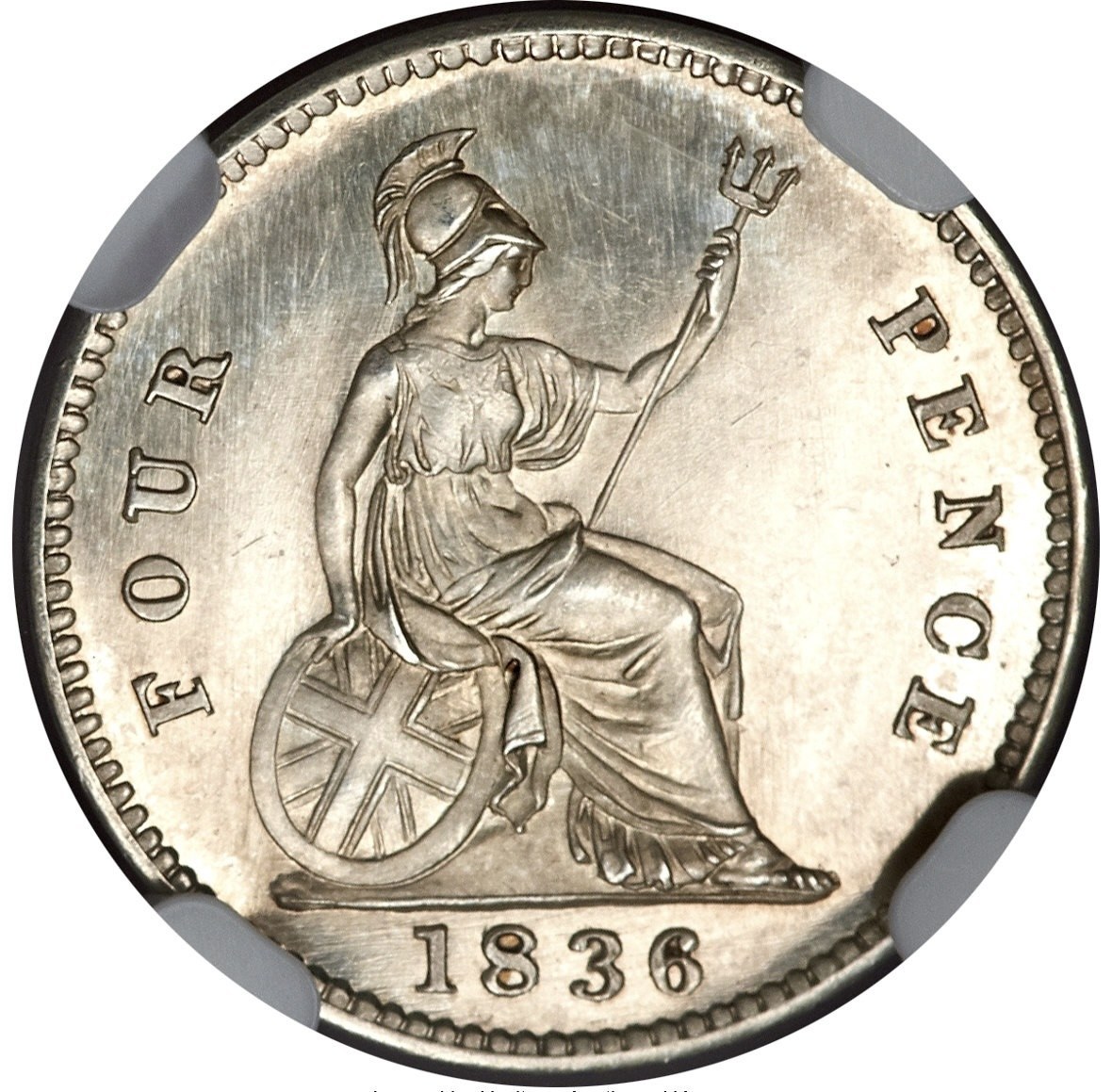
Groat of William IV
A small silver fourpenny piece of William IV (1836–1837), with a seated Britannia reverse; the coin that revived the modern British groat.
- Country
- United Kingdom
- Denomination
- 4 Pence
- Metal
- Silver
Got a coin like this?
Identify any coin from a photo, free.
Overview
The Groat of William IV is a small silver four-pence coin struck in Britain during the reign of William IV (1830–1837). The photographed piece is a reverse showing Britannia seated with a trident and a shield beside her, dated 1836, which is the first year of the reintroduced denomination. Only the reverse is shown here; the obverse of the type carries the bare-headed portrait of the king.
This coin is often called a "fourpence" and was popularly nicknamed the "Joey." It was a genuine circulating silver coin, small and thin, intended for everyday small change rather than for ceremonial or bullion use. As a milled (machine-struck) coin of the 1830s it has sharp, regular detail and a plain, dignified design typical of British silver of the period.
History & Background
The groat, or fourpence, had a long history in English coinage but had largely fallen out of general circulation by the eighteenth century, surviving mainly as a Maundy denomination. It was revived as a coin for ordinary use in 1836, during William IV's reign, and this William IV issue was struck only in 1836 and 1837 before the king's death in 1837.
The revival is traditionally associated with the politician Joseph Hume, who pressed for a convenient small silver coin for everyday transactions such as short cab and omnibus fares; the popular nickname "Joey" is usually linked to him. The denomination continued under Queen Victoria, so William IV groats represent the short opening chapter of the modern circulating fourpence.
The coins were produced at the Royal Mint using the milled methods of the era. Because the William IV series spans only two dates, it is a compact type to collect, and surviving pieces circulated as genuine money before the fourpence eventually faded from general use later in the nineteenth century.
How to Identify
The reverse, shown in the photograph, has Britannia seated holding a trident, with a shield resting beside her and the date in the field — here 1836. This seated-Britannia reverse is the defining feature of the fourpence and distinguishes it from other small silver of the period. The obverse of the type, not shown here, carries the bare head of William IV facing right with a Latin royal legend.
The coin is small — roughly 16 mm across and only a couple of grams — and struck in sterling silver, so it will feel light and thin and show the cool grey tone of circulated silver. Its size sits between the tiny silver threepence and the larger sixpence, so measuring the diameter and weight is the surest way to confirm the fourpence denomination.
Because William IV groats are dated only 1836 and 1837, the date is a key diagnostic: an 1836 or 1837 date with the seated-Britannia reverse and a bare-headed male portrait points to this reign, whereas the same reverse with a young female portrait indicates the later Victoria fourpence instead.
Value & Collectibility
William IV groats are collectable but not rare, so most circulated examples are modest in value, priced as affordable type coins. Worn pieces with flat detail sit at the lower end, while coins that keep sharp detail on Britannia and the portrait, with clean surfaces and good eye appeal, command more.
Value rises steeply with grade. Well-preserved, lightly circulated, or uncirculated examples — and proof strikings, where they exist — are worth substantially more than ordinary worn coins, and originality of surface matters as much as the date. As with all small silver, cleaning, scratches, and edge damage reduce value.
Because the William IV series is short and specific dates and die varieties can carry premiums, treat any single figure as broad context only. For a realistic estimate, compare recent auction and dealer sales of William IV fourpence coins in the same grade, and have any high-grade or unusual piece checked by a specialist.
Frequently asked questions
What is a groat?
A groat is a four-pence coin. The William IV groat is a small sterling-silver fourpenny piece struck in 1836 and 1837, revived as everyday small change after the denomination had long been out of general circulation.
Why is it called a "Joey"?
The circulating fourpence was popularly nicknamed the "Joey," a name usually linked to the politician Joseph Hume, who championed a handy small silver coin for short fares and small purchases.
What years was the William IV groat made?
The William IV fourpence was struck only in 1836 and 1837. The denomination then continued under Queen Victoria, so the two-date William IV run is the start of the modern circulating groat.
What is on the reverse?
The reverse shows Britannia seated holding a trident, with a shield beside her and the date in the field. This seated-Britannia design is the signature reverse of the reintroduced fourpence.
Is a William IV groat valuable?
Most circulated examples are affordable because the coin is collectable but not rare. Value rises sharply with high grade, original surfaces, and proof or scarcer varieties; worn, cleaned, or damaged coins are worth much less.
Groat of William IV guides
In-depth guides for identifying, valuing, and collecting Groat of William IV.
Other coins you may enjoy
Spade Guinea
1760-1820
Two Guineas of George II
1738–1753
Shilling of Victoria
1838-1901
Sovereign of George IV
1821-1830
Sovereign of William IV
1831–1837
Penny of William IV
1831-1837
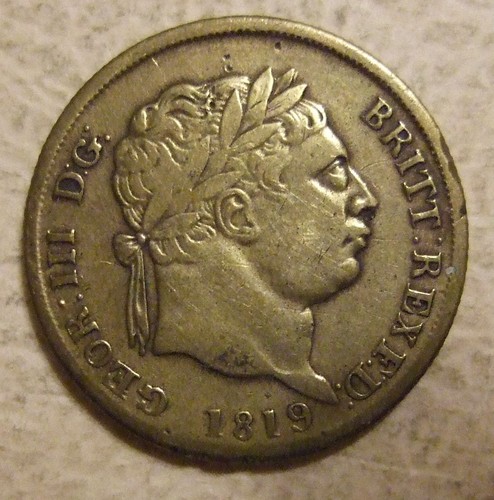
Shilling of George III
1816-1820
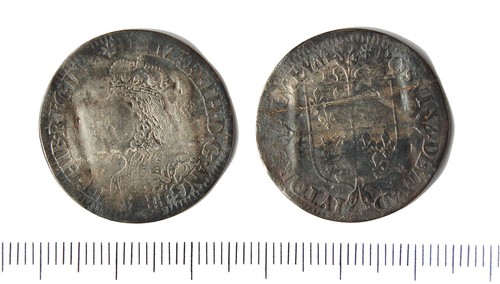
Milled Sixpence of Elizabeth I
1561-1571
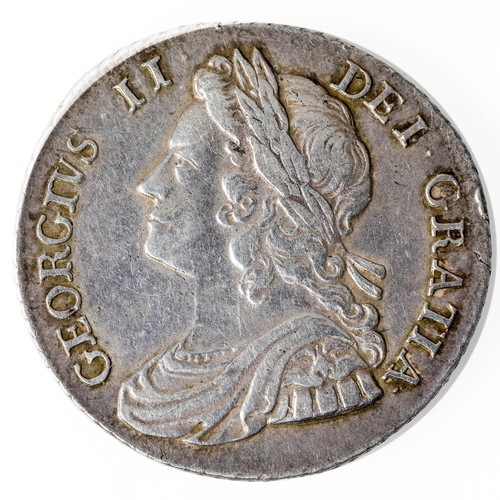
Shilling of George II
1727-1758
Shilling of Anne
1702-1714
Charles II Twopence
1660-1685
Charles II Half Crown
1660–1685