
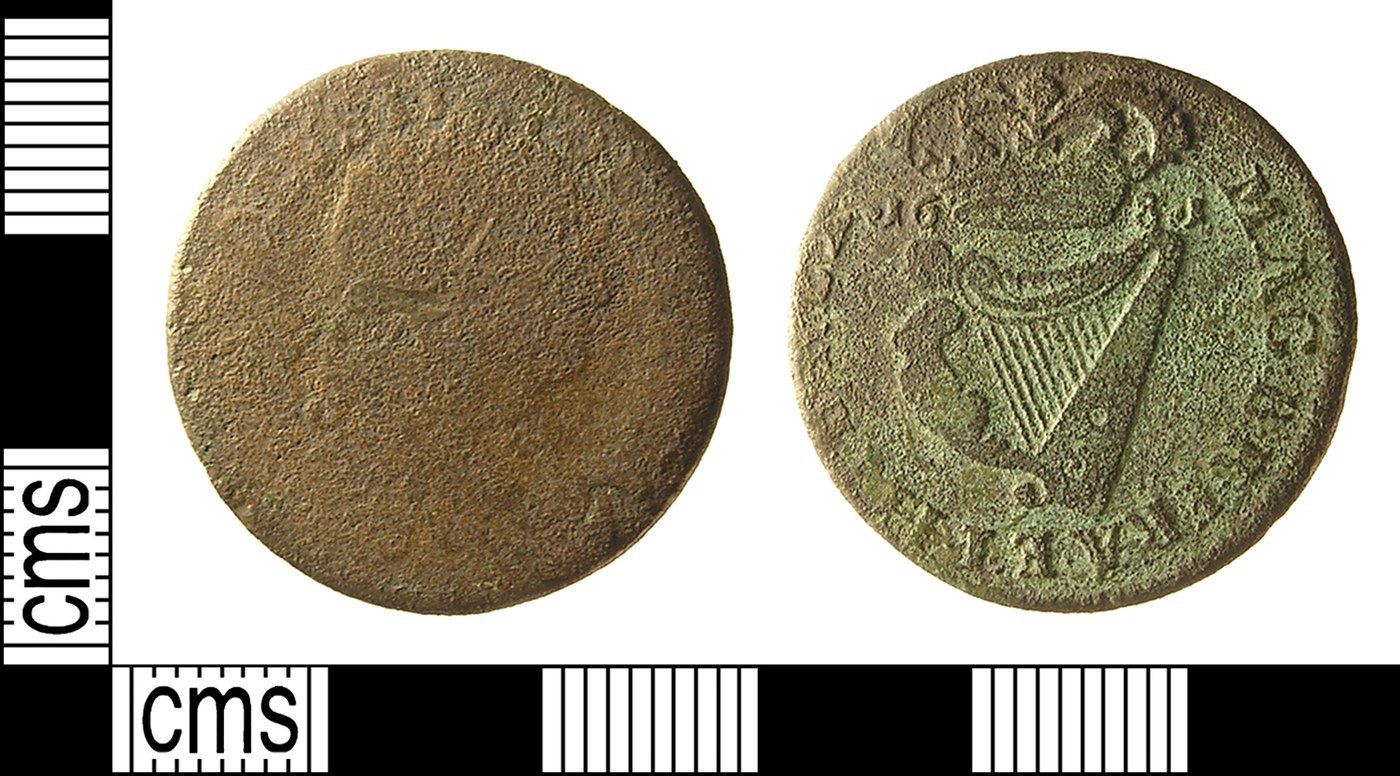
Irish Halfpenny of Charles II
A milled copper halfpenny struck for Ireland under Charles II, with his right-facing laureate bust and a crowned Irish harp on the reverse.
- Country
- Ireland
- Denomination
- Halfpenny
- Metal
- Copper
Got a coin like this?
Identify any coin from a photo, free.
Overview
The Irish Halfpenny of Charles II is a small copper coin issued for circulation in Ireland during the reign of Charles II (1660–1685). The photographed type shows the king's laureate bust facing right on the obverse and a crowned Irish harp on the reverse — the harp being the traditional emblem of Ireland used on its coinage.
This was a regal copper issue, meaning it was struck under royal authority specifically for Irish use rather than being a privately made token. Copper halfpennies of this kind filled the everyday need for low-value small change, standing well below the silver denominations of the period and serving ordinary market and tavern transactions.
Unlike the earlier hand-hammered coinage, these halfpennies were produced by machinery, giving them a rounder, more regular flan and more even relief. They form part of the first sustained regal copper coinage made for Ireland and are a recognisable, collectable type from the later Stuart era.
History & Background
After his restoration in 1660, Charles II reigned over England, Scotland, and Ireland, and Ireland continued to receive coinage distinct from that of England. Small change had long been a problem there, and in the earlier part of the reign the shortage was met partly by unofficial tokens. The regal copper halfpenny was introduced to supply an official, royally sanctioned coin of small value bearing the king's portrait and the Irish harp.
These copper halfpennies were struck under patent authority in the early 1680s, carrying Latin legends naming Charles by his royal style. The obverse legend gives his name and the claim to be king by the grace of God, while the reverse legend continues the royal titles around the crowned harp. Production of the regal coppers ran through the closing years of the reign.
Charles II died in 1685 and was succeeded by James II, whose short reign in Ireland is better known for the emergency 'gun money' coinage struck during the Williamite war. The Charles II copper halfpenny therefore belongs to a relatively settled period of regal Irish coinage that preceded those turbulent years, and it stands as one of the earlier examples of machine-made copper small change produced specifically for Ireland.
How to Identify
The obverse shows Charles II as a laureate bust facing right, surrounded by a Latin legend giving his name and the grace-of-God formula. The right-facing laureate head, combined with a copper (not silver) flan of halfpenny size, is the first thing to confirm.
The reverse is the key diagnostic: a crowned Irish harp, with a Latin legend around it continuing the royal titles. The harp — a stringed instrument surmounted by a crown — is the emblem of Ireland and distinguishes this piece from English copper of the same king, which uses seated Britannia rather than a harp. Any date present typically falls in the early 1680s.
This is a struck copper coin, so expect a rounder, more regular flan and more even relief than a hammered piece. Because copper circulated hard and corrodes easily, surviving examples are frequently worn, darkened, or pitted, and the legends and harp detail may be soft. Reading the visible portions of the obverse and reverse legends, and confirming the crowned-harp reverse, is the surest route to attribution.
Value & Collectibility
As a genuine copper coin from the reign of Charles II, the Irish halfpenny is a modest, widely collected type, and worn but honest examples are among the more affordable seventeenth-century Irish coins. Copper of this era saw heavy use and corrodes readily, so most surviving pieces are in low to moderate grade, and condition drives value far more than mere age.
Well-struck examples with clear legends, a bold portrait, sharp harp detail, and clean, unpitted surfaces are considerably scarcer and command higher prices, as do any scarcer dates or varieties. Corroded, holed, heavily worn, or cleaned coins are worth much less, and environmental damage is common on copper of this period.
Anyone valuing a specific coin should compare it against recent sales of the matching date and grade and treat any single quoted figure as context rather than a firm price. Correct attribution, eye appeal, and surface quality influence value more than the simple fact that a coin is a Charles II Irish halfpenny.
Frequently asked questions
What is the harp on the reverse?
It is the crowned Irish harp, the traditional emblem of Ireland used on its coinage. Its presence marks the coin as an Irish issue and distinguishes it from English copper of Charles II, which shows a seated Britannia instead.
Is this coin silver or copper?
It is copper. The halfpenny was a low-value coin meant for everyday small change, well below the silver denominations of the period, which is why it was struck in copper rather than a precious metal.
Is the Charles II Irish halfpenny hammered or milled?
It is a milled (machine-struck) coin, giving it a rounder, more regular flan and more even relief than earlier hand-hammered coinage.
Why are so many of these coins in worn or corroded condition?
Copper small change circulated heavily and corrodes easily over centuries. Most surviving examples show wear, darkening, or pitting, and well-preserved pieces with clear detail are notably scarcer.
How is it different from an English halfpenny of the same king?
Both share a right-facing laureate bust of Charles II, but the Irish coin has a crowned harp on the reverse while the English copper halfpenny shows a seated figure of Britannia.
Irish Halfpenny of Charles II guides
In-depth guides for identifying, valuing, and collecting Irish Halfpenny of Charles II.
Other coins you may enjoy
Spade Guinea
1760-1820
Two Guineas of George II
1738–1753
Shilling of Victoria
1838-1901
Sovereign of George IV
1821-1830
Sovereign of William IV
1831–1837
Penny of William IV
1831-1837
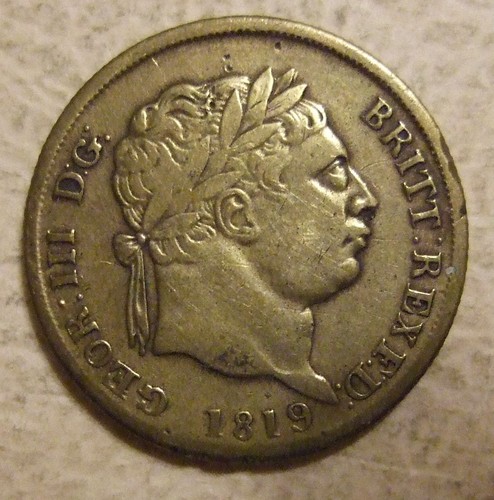
Shilling of George III
1816-1820
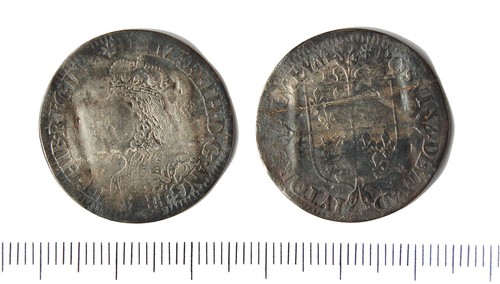
Milled Sixpence of Elizabeth I
1561-1571
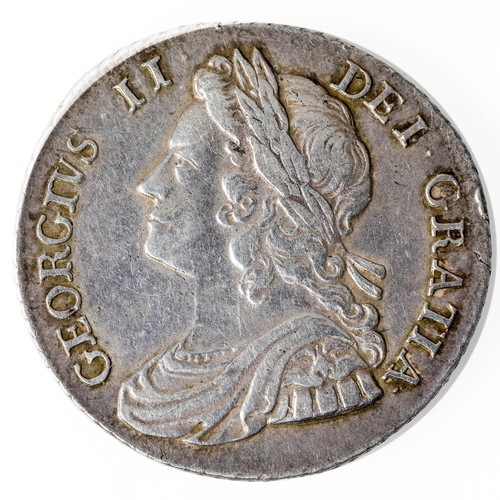
Shilling of George II
1727-1758
Shilling of Anne
1702-1714
Charles II Twopence
1660-1685
Charles II Half Crown
1660–1685