
How to Identify the Irish Halfpenny of Charles II
A collector's guide to attributing the Charles II Irish copper halfpenny by its right-facing bust, crowned harp reverse, metal, and legends.
Read the full Irish Halfpenny of Charles II encyclopedia entry →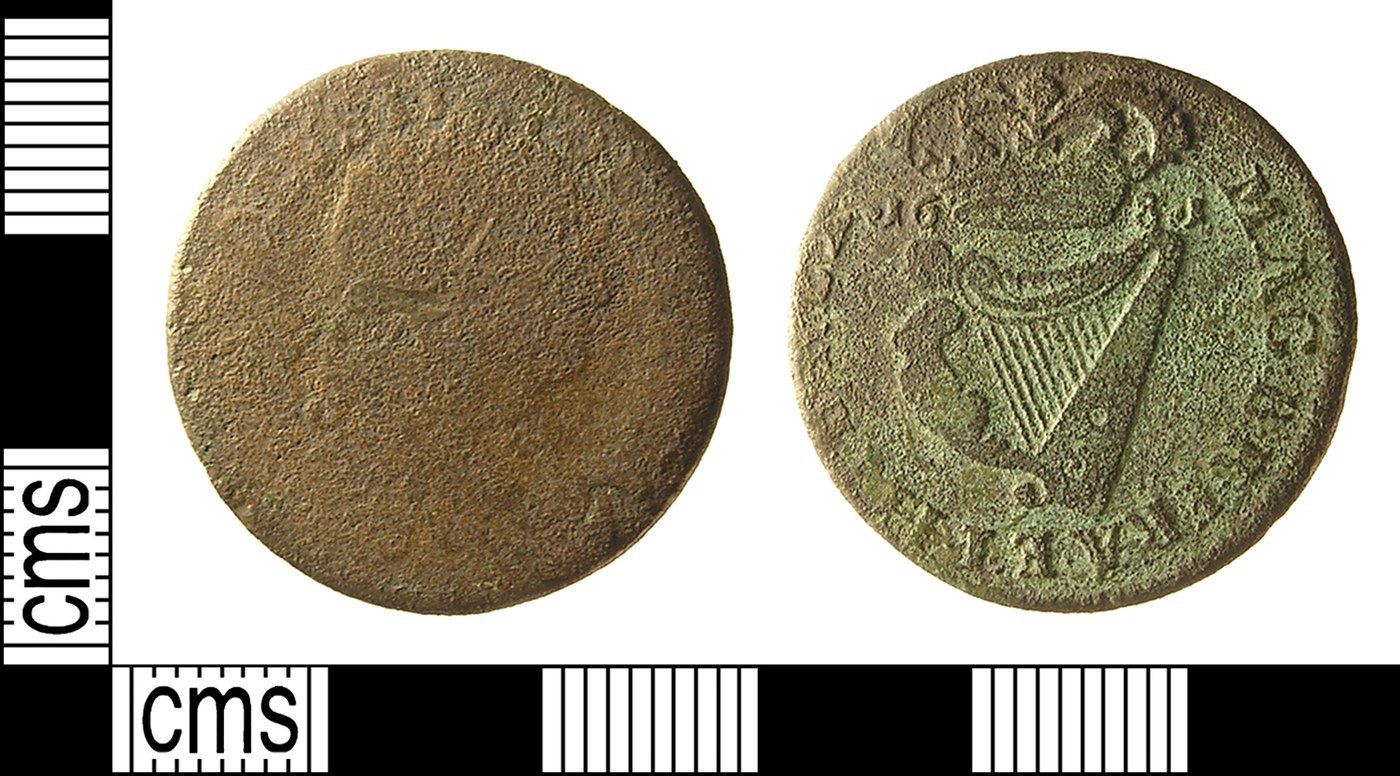
Start with the metal and size. This is a small copper coin, not silver, so a brown, reddish, or dark patinated surface on a halfpenny-sized flan is what you should expect. If the piece is white, bright, and clearly a precious metal, it is not this type. Copper of the period is often worn or corroded, so judge fabric rather than surface freshness.
Read the obverse. The portrait is Charles II as a laureate bust facing right, encircled by a Latin legend giving his name and the grace-of-God style. Confirm the facing direction and look for the king's name in the legend; even a partial reading of the inscription helps separate this coin from later or earlier rulers whose copper can look similar when worn.
Check the reverse for the crowned harp. The single most useful diagnostic is a crowned Irish harp surrounded by a continuation of the royal titles. This harp is what marks the coin as an Irish issue and is the clearest way to distinguish it from the English copper halfpenny of the same king, which uses a seated Britannia figure rather than a harp. Any visible date should sit in the early 1680s.
Watch for look-alikes and later Irish coppers. Ireland produced other harp-bearing coppers under later monarchs, and privately made seventeenth-century tokens also circulated, so do not rely on the harp alone — pair it with the Charles II portrait and legend. James II's Irish 'gun money' and William and Mary halfpennies are different types; reading the royal name in the legend resolves most confusion.
Authenticate with care. Copper is easy to cast and to fake, and genuine coins are struck, so watch for casting seams, surface bubbles, unnaturally soft or blurred lettering, or a filed edge. Distinguish honest wear and old patina from artificial toning or tooling, and have scarcer dates, unusually well-preserved examples, or any high-value piece examined by a specialist before relying on the attribution.
Frequently asked questions
What is the quickest way to confirm it is a Charles II Irish halfpenny?
Look for a right-facing laureate bust of Charles II on a copper flan combined with a crowned Irish harp on the reverse. That harp-and-portrait pairing, plus the king's name in the legend, is the core identification.
How do I tell it apart from an English halfpenny of Charles II?
Check the reverse. The Irish coin shows a crowned harp, while the English copper halfpenny of the same king shows a seated Britannia. The obverse portraits are similar, so the reverse is the deciding feature.
The coin is very worn and I cannot read the date — can I still identify it?
Often yes. The crowned harp reverse and the right-facing laureate bust identify the type even when the date is illegible. Reading any surviving portions of the legend for the king's name adds confidence.
How can I tell a genuine coin from a cast copy?
Genuine pieces are struck, with reasonably crisp detail and no casting seams. Watch for mould lines, surface bubbles, soft mushy lettering, or a filed edge, and seek professional authentication for scarce or valuable examples.