
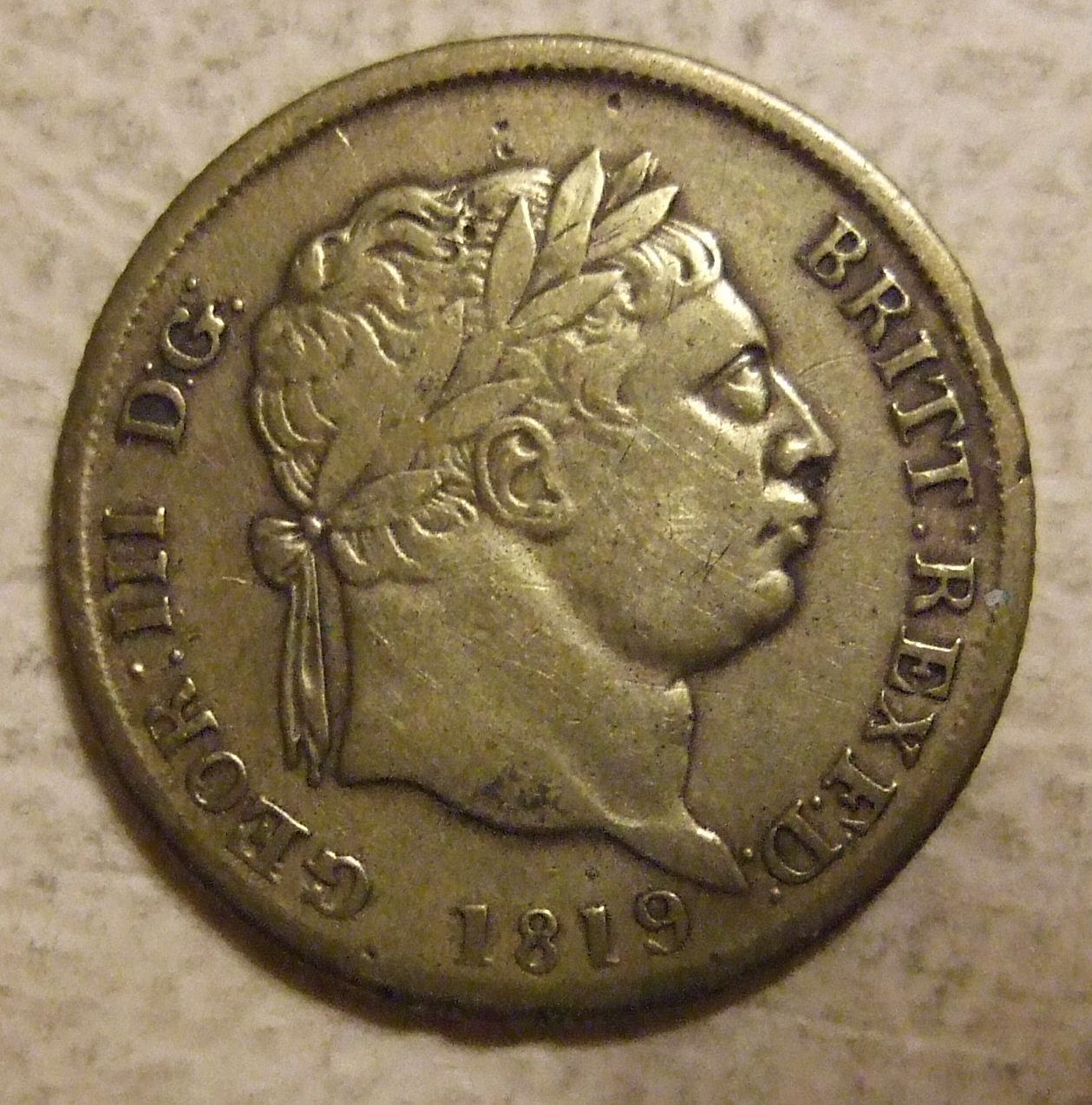
Shilling of George III
A milled silver shilling of George III from the Great Recoinage, with his laureate bust facing right and a crowned quartered royal shield within the Garter.
- Country
- Great Britain
- Denomination
- Shilling
- Metal
- Silver
Got a coin like this?
Identify any coin from a photo, free.
Overview
The Shilling of George III shown here is a milled (machine-struck) silver coin of Great Britain, from the reformed 'new coinage' issued in the final years of the reign, dated 1819. The obverse carries a laureate bust of George III facing right, wearing a laurel wreath, surrounded by an abbreviated Latin legend naming him as king. The reverse shows a crowned, quartered royal shield of arms set within the Garter, the whole a compact heraldic design with the date below.
Unlike the irregular hammered coins of earlier centuries, this shilling was struck by machinery to a consistent size, weight and roundness, with a milled (reeded) edge. It was valued at twelve pence, one-twentieth of a pound, and formed part of the standardised silver introduced to put Britain's worn and deficient coinage back on a sound footing after decades of shortage.
The type is popular with collectors as an affordable and attractive example of late Georgian milled silver, marking the last shillings of a reign that spanned from 1760 to 1820. Its neoclassical laureate portrait and tidy crowned shield make it easy to recognise and distinguish from the earlier, plainer George III shillings.
History & Background
George III reigned from 1760 to 1820, but for much of that time very few shillings were struck for circulation, and the silver in everyday use grew worn, clipped and scarce. Emergency measures, including countermarked foreign coins and privately issued tokens, filled the gap. The situation was only resolved by the Great Recoinage of 1816, which reorganised the coinage on a new standard and reopened large-scale silver production at the Royal Mint, newly equipped with steam-powered machinery at Tower Hill.
The shillings that followed, struck from about 1816 through 1820, carry the mature laureate portrait of the aged king and a crowned shield reverse within the Garter. This 1819 piece belongs to that final new-coinage series. From this recoinage onward, British silver was issued as token coinage: its face value was set above the value of the metal it contained, so the crisp new shillings and sixpences no longer needed to hold a full shilling's worth of silver.
Earlier George III shillings do exist, most notably the 1763 'Northumberland' shilling and the 1787 issue, but these are different in style from the recoinage type shown here. The 1816-1820 shillings were the last of the reign; George III died in 1820 and was succeeded by George IV, whose shillings carry a new portrait and legends.
How to Identify
Start with the obverse. This coin shows the laureate head of George III facing right, the king crowned with a laurel wreath rather than a royal crown, encircled by an abbreviated Latin legend naming him. The right-facing laureate bust is the signature of the 1816-1820 recoinage shillings and separates them from the earlier George III types, which show an un-wreathed draped bust.
Turn to the reverse to confirm the crowned quartered shield of arms within the Garter, a tidy heraldic device combining the arms of the kingdoms, with the Garter motto around it and the date, here 1819, below. This crowned-shield-in-Garter reverse is quite different from the cruciform arrangement of four shields used on the 1787 shilling, and is a quick way to place the coin in the final new-coinage series.
The coin is struck in sterling silver to a regular round flan with a reeded (milled) edge, roughly the diameter and weight expected of a Georgian shilling, noticeably smaller than a halfcrown and larger than a sixpence. Because it is machine-made, a genuine example is even, well-centred and consistent, without the off-centre striking of hammered coins. Exact sub-varieties are distinguished by small differences in the bust, legend and date, which can be matched to standard references on George III milled silver.
Value & Collectibility
As one of the more plentiful late-Georgian silver types, the new-coinage George III shilling is generally an affordable and accessible collector coin. Well-worn circulated examples are among the cheaper genuine Georgian silver pieces, while coins that keep clear detail in the laurel wreath, the shield and the legends command more, and truly high-grade or lustrous mint-state examples sell for a considerable premium.
Condition is the main driver of value for this type. A sharp, evenly struck coin with a bold portrait, a clean crowned shield and an unworn reeded edge is worth well above a smooth, scratched or cleaned piece of the same date. Harsh cleaning, edge knocks and heavy wear all reduce desirability, as does any sign of tooling or repair.
Because dates and minor varieties within the 1816-1820 run differ in scarcity, some are more sought after than others, and prices span a wide range accordingly. For any purchase of consequence, confirm the grade and authenticity against reputable auction records or a specialist dealer rather than relying on a single online listing.
Frequently asked questions
Is the Shilling of George III made of silver?
Yes. The 1816-1820 new-coinage shillings were struck in sterling silver as token coinage, meaning the face value was set above the metal value. They are genuine silver coins with a reeded edge.
What does the reverse of this George III shilling show?
It shows a crowned, quartered royal shield of arms set within the Garter, with the Garter motto around it and the date, such as 1819, below. This crowned-shield design marks the final new-coinage type of the reign.
How is it different from earlier George III shillings?
The 1816-1820 coins have a laureate (laurel-wreathed) bust and a crowned shield within the Garter. Earlier shillings, such as the 1763 and 1787 issues, use a plainer draped bust and a cruciform arrangement of four shields on the reverse.
Are George III shillings valuable?
Most circulated new-coinage examples are affordable, being fairly plentiful. Value rises sharply with condition, so sharply struck, lustrous or high-grade coins, and scarcer dates or varieties, are worth considerably more than worn pieces.
Shilling of George III guides
In-depth guides for identifying, valuing, and collecting Shilling of George III.
Other coins you may enjoy
Spade Guinea
1760-1820
Two Guineas of George II
1738–1753
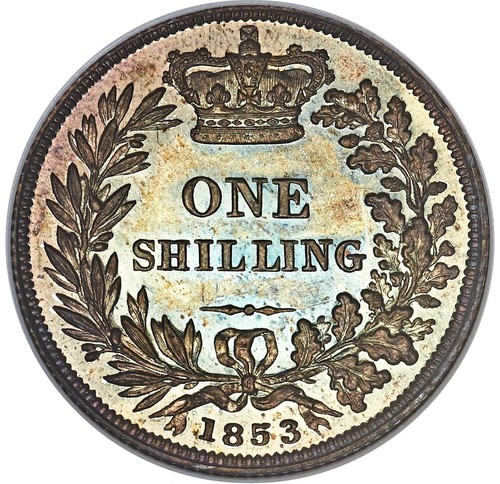
Shilling of Victoria
1838-1901
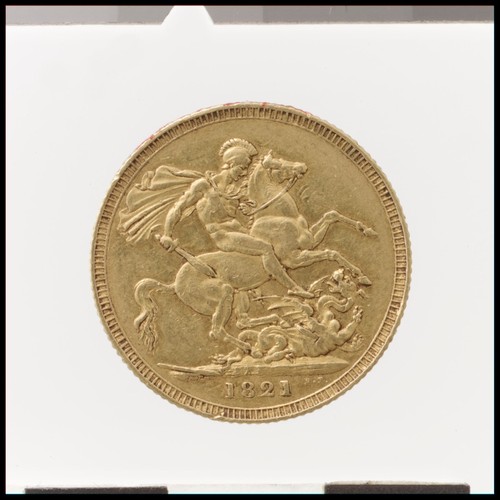
Sovereign of George IV
1821-1830
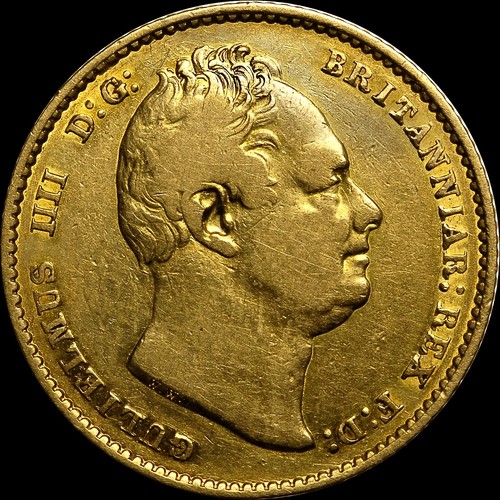
Sovereign of William IV
1831–1837
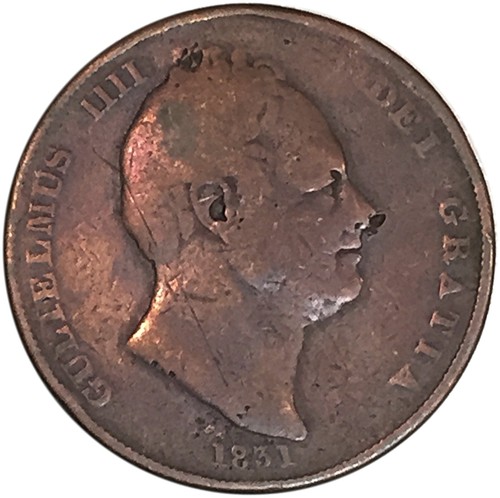
Penny of William IV
1831-1837
Milled Sixpence of Elizabeth I
1561-1571
Shilling of George II
1727-1758
Shilling of Anne
1702-1714
Charles II Twopence
1660-1685
Charles II Half Crown
1660–1685
Irish Halfpenny of Charles II
1680–1684