
How to Identify the Shilling of George III
A collector's walkthrough for attributing a milled George III silver shilling by its laureate bust, crowned Garter shield, size, metal and edge.
Read the full Shilling of George III encyclopedia entry →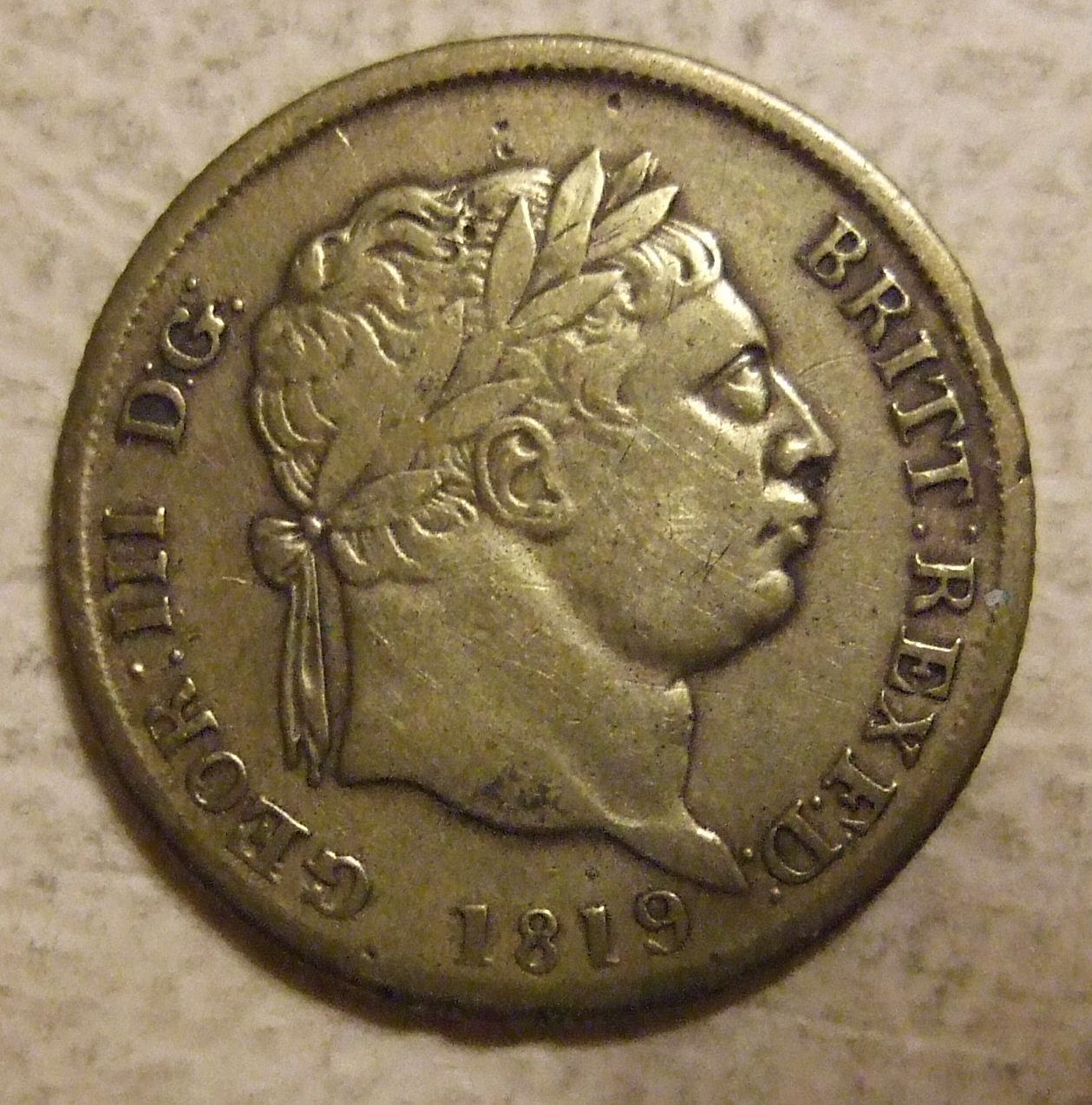
Begin with the metal, size and edge. A new-coinage George III shilling is a milled sterling-silver coin struck on a regular, fully round flan with a reeded (milled) edge. It is noticeably smaller than a halfcrown and larger than a sixpence, and its weight and diameter fall within the range expected of a Georgian shilling. Because it was struck by machine, a genuine coin is even and well-centred, without the irregular flans and off-centre legends of the hammered silver of earlier reigns.
Read the obverse to confirm the portrait. You should see the laureate head of George III facing right, the king wearing a laurel wreath rather than a royal crown, with an abbreviated Latin legend running around the edge naming him as king. This right-facing laureate bust is the defining mark of the 1816-1820 recoinage shillings and is the quickest way to separate them from the earlier draped-bust George III shillings.
Check the reverse for the crowned quartered shield within the Garter. The shield combines the arms of the kingdoms, is topped by a crown, and is encircled by the Garter and its motto, with the date below, here 1819. Confirming this crowned-shield-in-Garter design rules out the 1787 shilling, which instead shows four separate shields arranged in a cross, and the coins of neighbouring reigns.
Be alert to look-alikes. The following George IV shillings carry a different portrait and legends, and contemporary sixpences share the design at a smaller size, so use the diameter to avoid confusing the two. Because these coins were widely circulated, many survivors are heavily worn or have been cleaned; harsh cleaning leaves an unnatural brightness and fine hairlines, and smoothing or tooling of the fields both reduce authenticity and value.
For precise attribution of date and minor variety, and before paying a premium for a scarcer piece, match the bust, legend and date against a standard reference on George III milled silver, and check the weight and edge reeding. Cast surfaces, seams, a wrong weight or a plain (unreeded) edge are warning signs of a forgery, and for any coin of consequence a specialist opinion or reputable auction record is worth seeking.
Frequently asked questions
How do I know it is a shilling and not a sixpence?
The two share the laureate bust and crowned-shield design, so use the size and weight. The shilling is the larger coin, roughly a shilling's diameter and weight, while the sixpence is distinctly smaller. Comparing diameters is the most reliable check.
Where is the date on this George III shilling?
The date, such as 1819, appears on the reverse below the crowned shield within the Garter. Matching the date and small differences in the bust and legend to a reference identifies the exact issue and variety.
Does the coin have a mint mark?
These shillings were struck at the Royal Mint and do not carry a separate mint letter in the way some coinages do. Attribution relies on the portrait style, the legend, the date and minor die varieties rather than a mint mark.
How can I spot a fake or altered example?
A genuine coin is struck sterling silver of correct weight with a crisp reeded edge and sharp die detail. Casting seams, a soft or grainy surface, the wrong weight, a plain edge, or signs of tooling and cleaning are warning signs. For valuable pieces, buy from a specialist or trusted auction.