
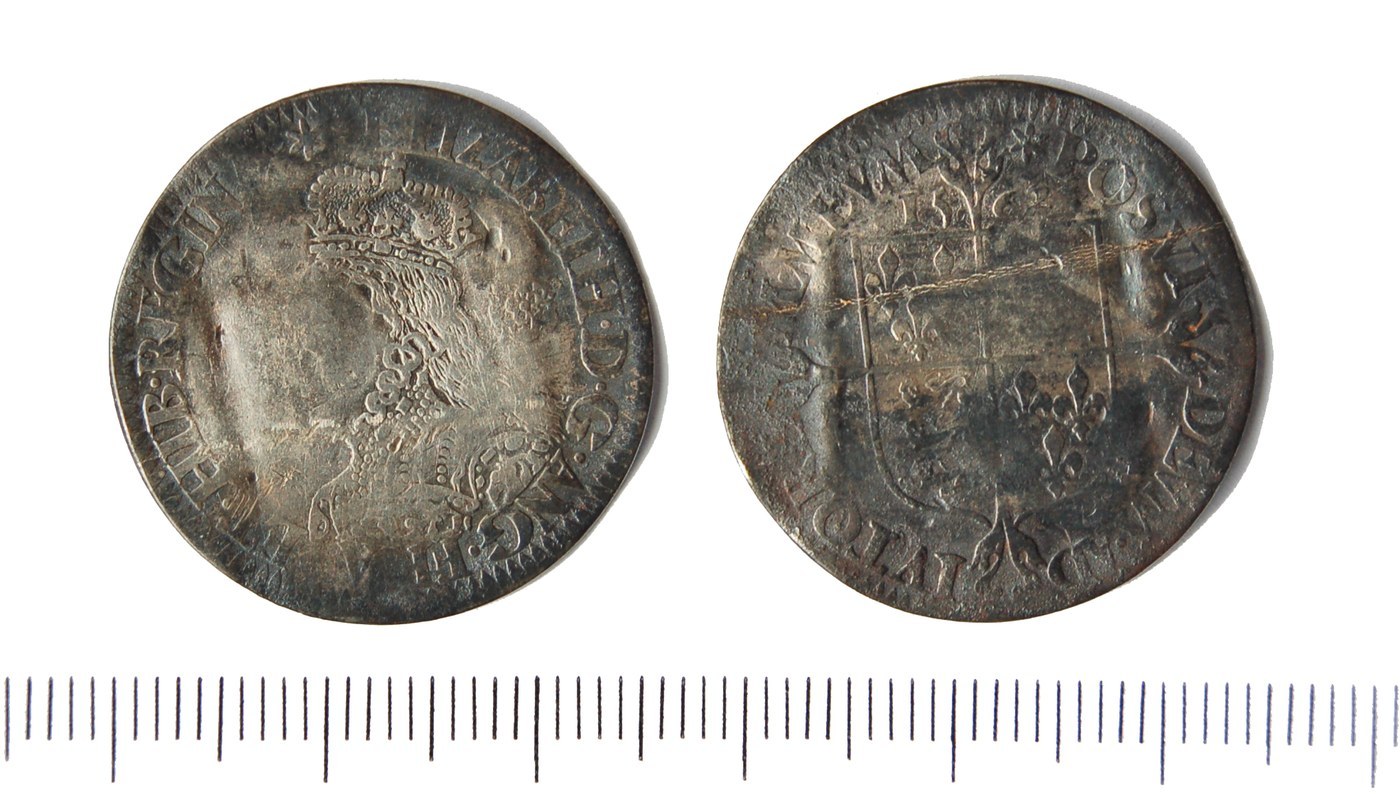
Milled Sixpence of Elizabeth I
An early machine-struck English silver sixpence of Elizabeth I, showing her crowned draped bust with a rose and the royal shield above a date.
- Country
- England
- Denomination
- Sixpence
- Metal
- Silver
Got a coin like this?
Identify any coin from a photo, free.
Overview
The Milled Sixpence of Elizabeth I is an English silver coin struck not by hand but with an early screw press, or "mill," during the reign of Elizabeth I (1558-1603). The obverse shows the queen's crowned, draped profile bust facing left, with a rose behind the head that marks the sixpence value, all inside a Latin legend. The reverse carries a quartered royal shield of the arms of England and France set over a long cross, with the year of striking placed above the shield.
These milled pieces were an experimental alternative to the usual hammered coinage of the period. Because they were made with mechanical equipment, they tend to be rounder, more evenly struck, and more regular in shape than the hammered sixpences produced alongside them, though they were only made for a limited span of years.
Collectors value the type both as an attractive Elizabethan silver coin and as a milestone in the history of coin production, representing one of the first serious English attempts to mechanize the minting of money.
History & Background
The milled coinage of Elizabeth I was produced at the Tower of London mint by Eloye (Eloi) Mestrelle, a French moneyer who introduced screw-press and horse- or mill-driven machinery to strike coins more uniformly than the traditional hammer and dies allowed. Milled sixpences were struck across roughly the 1560s and into the early 1570s, and because the reverse carries a date, surviving coins can usually be placed within specific years of that span.
The experiment was not a lasting success in its own time. The machinery was slower in output than skilled hammermen, and there was resistance from the established mint workers. Mestrelle's milled production ended around the early 1570s, and England returned fully to hammered coinage for several more decades before mechanized striking was permanently adopted much later.
The sixpence itself was a standard denomination worth six pence, and Elizabeth's long reign saw large quantities of hammered sixpences made. The milled examples form a small, distinct subset of that output, which is part of why they are sought after today as a discrete and historically important series.
How to Identify
Begin with the obverse. You should see Elizabeth I in profile facing left, wearing a crown and with a draped or ornately dressed bust, surrounded by a Latin legend naming her as queen. A key mark is the rose behind the queen's head: on Elizabethan silver the rose denotes the sixpence (and threepence), which separates the sixpence from the shilling and other values that lack it.
Turn to the reverse to confirm the type. It shows a quartered shield bearing the arms of England and France placed over a long cross, with the date of striking above the shield. A dated reverse is characteristic of these coins and is one of the most useful features for attribution. A small initial mark, or mint mark, at the start of the legend changes over time and helps pin down the year.
The milled fabric is the other major clue. Compared with hammered sixpences of the same reign, milled examples are typically more circular, more consistently centered, and more evenly struck, reflecting their machine production. Genuine pieces are struck in silver on a flan of sixpence size and weight; anything markedly off in diameter, weight, or metal color should be treated with caution and compared against published Elizabethan references.
Value & Collectibility
Value depends on the date, the mint mark, the sharpness of the strike, and overall condition. Because the milled series was made in far smaller numbers than the ordinary hammered sixpences, well-preserved milled examples generally carry a premium over comparable hammered pieces, and certain dates and marks are notably scarcer than others.
As with all early silver, eye appeal drives price: a coin with a clear, well-centered portrait, a legible date, sound legends, and attractive natural toning is worth considerably more than a worn, weakly struck, or damaged example of the same year. Rare dates and choice, high-grade survivors sit at the top of the range.
Because this is a genuinely old and collectible coin that is also imitated, prices span a broad range, from modest sums for heavily worn pieces to significant amounts for scarce dates in high grade. For any purchase of consequence, confirm authenticity and grade through a specialist dealer or a reputable auction record rather than a single online listing.
Frequently asked questions
What makes this sixpence "milled" rather than hammered?
It was struck with an early screw-press and mill machinery introduced by Eloye Mestrelle, instead of by hand between hammer-held dies. This gives milled examples a rounder, more even, more regular appearance than the hammered sixpences of the same reign.
How do I know it is a sixpence and not a shilling?
Look for the rose behind Elizabeth's head on the obverse, which marks the sixpence value, and check the coin's smaller size and weight. Shillings are larger and lack the rose, so the mark of value plus the diameter separates the two.
Why is there a date on the coin?
The reverse carries the year of striking above the royal shield, which is a distinctive feature of these milled sixpences. The date, together with the mint mark at the start of the legend, lets collectors place the coin within a specific year of the series.
Are milled sixpences of Elizabeth I rare?
They are much scarcer than the ordinary hammered sixpences of the reign because they were produced only for a limited period and in smaller quantities. Some dates and mint marks are scarcer than others, and high-grade examples are especially sought after.
Milled Sixpence of Elizabeth I guides
In-depth guides for identifying, valuing, and collecting Milled Sixpence of Elizabeth I.
Other coins you may enjoy
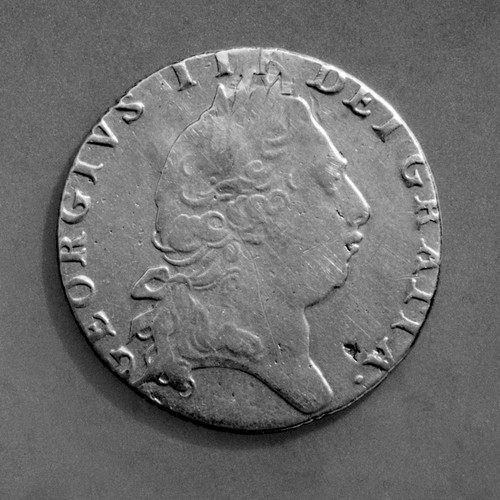
Spade Guinea
1760-1820
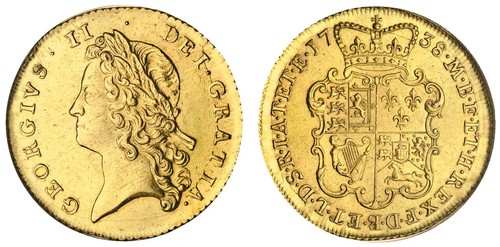
Two Guineas of George II
1738–1753
Shilling of Victoria
1838-1901
Sovereign of George IV
1821-1830
Sovereign of William IV
1831–1837
Penny of William IV
1831-1837
Shilling of George III
1816-1820
Shilling of George II
1727-1758
Shilling of Anne
1702-1714
Charles II Twopence
1660-1685
Charles II Half Crown
1660–1685
Irish Halfpenny of Charles II
1680–1684