
How to Identify the Milled Sixpence of Elizabeth I
A collector's walkthrough for telling an Elizabethan milled silver sixpence apart from hammered pieces by rose mark, date, fabric, and mint mark.
Read the full Milled Sixpence of Elizabeth I encyclopedia entry →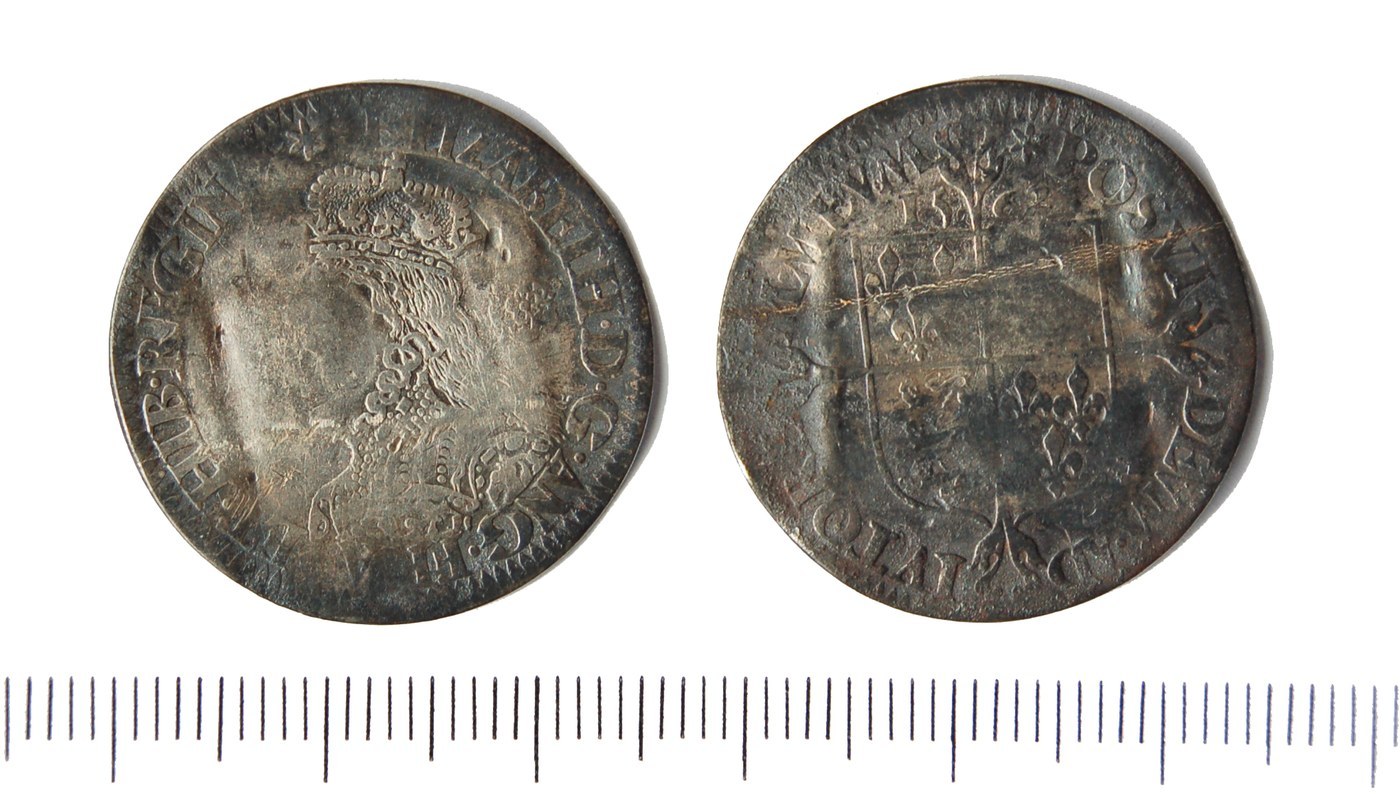
Start with denomination and metal. This is a silver coin of sixpence size and weight, smaller than a shilling and larger than a threepence. The single most useful value mark is the rose behind Elizabeth's crowned, draped bust on the obverse: on Elizabethan silver the rose denotes the sixpence, so its presence, together with the coin's diameter, is your first confirmation that you are looking at a sixpence and not a shilling or other denomination.
Read the obverse and reverse together. The obverse should show Elizabeth I in left-facing profile, crowned and draped, ringed by a Latin legend naming her as queen. The reverse should show a quartered shield of the arms of England and France over a long cross, with a date above the shield. That dated reverse is a hallmark of the type and is far more informative than on undated hammered issues, because it lets you assign the coin to a specific year.
Judge the fabric to separate milled from hammered. Mestrelle's milled sixpences were made with machinery, so they are usually rounder, more evenly centered, and more uniform in thickness than the hammered sixpences struck in the same reign, which tend to be irregular, oval, or weakly struck at the edges. A notably neat, circular flan with balanced striking is a strong sign you hold a milled piece rather than a hammered one.
Use the mint mark to fix the date. A small initial mark at the start of the legend changes through the series and, matched against a standard reference for Elizabethan coinage alongside the visible date, allows precise attribution. Because the milled run was short, only a limited set of dates and marks exists, which makes cross-checking against published plates both practical and worthwhile.
Watch for look-alikes and authentication pitfalls. Hammered Elizabethan sixpences share the same portrait, rose, shield, and date layout, so fabric and regularity are what distinguish the milled version; do not assume a coin is milled simply because it is well struck. Be cautious of cast copies with soft detail or seams, tooled or smoothed surfaces, and coins whose weight, diameter, or metal color is wrong for silver. For any scarce date or high-grade example, seek confirmation from a specialist in English hammered and milled coinage or a reputable auction record before paying a premium.
Frequently asked questions
How can I quickly tell a milled sixpence from a hammered one?
Compare the shape and strike. Milled examples are noticeably rounder, more evenly centered, and more uniform because they were machine-struck, while hammered sixpences are often irregular, oval, or weak at the edges. The portrait and design are otherwise very similar.
Where do I find the date and mint mark?
The date sits above the royal shield on the reverse, and the mint mark is a small symbol at the start of the legend, usually on the obverse. Reading both and matching them to an Elizabethan coinage reference gives you the year and issue.
What does the rose behind the head mean?
On Elizabeth I's silver, the rose behind the queen's head marks the sixpence value (also used on the threepence). It is a primary way to distinguish a sixpence from the larger shilling, which does not carry it.
How do I avoid buying a fake?
Confirm the coin is struck rather than cast, with crisp detail and no casting seams, and that its weight and diameter suit a silver sixpence. Wrong color, mushy surfaces, or an incorrect date-and-mark combination are warning signs; for valuable pieces buy from a specialist or trusted auction.