
How to Identify the Groat of William IV
A collector's guide to confirming a William IV fourpence by its seated-Britannia reverse, portrait, size and silver, date, and the look-alikes to rule out.
Read the full Groat of William IV encyclopedia entry →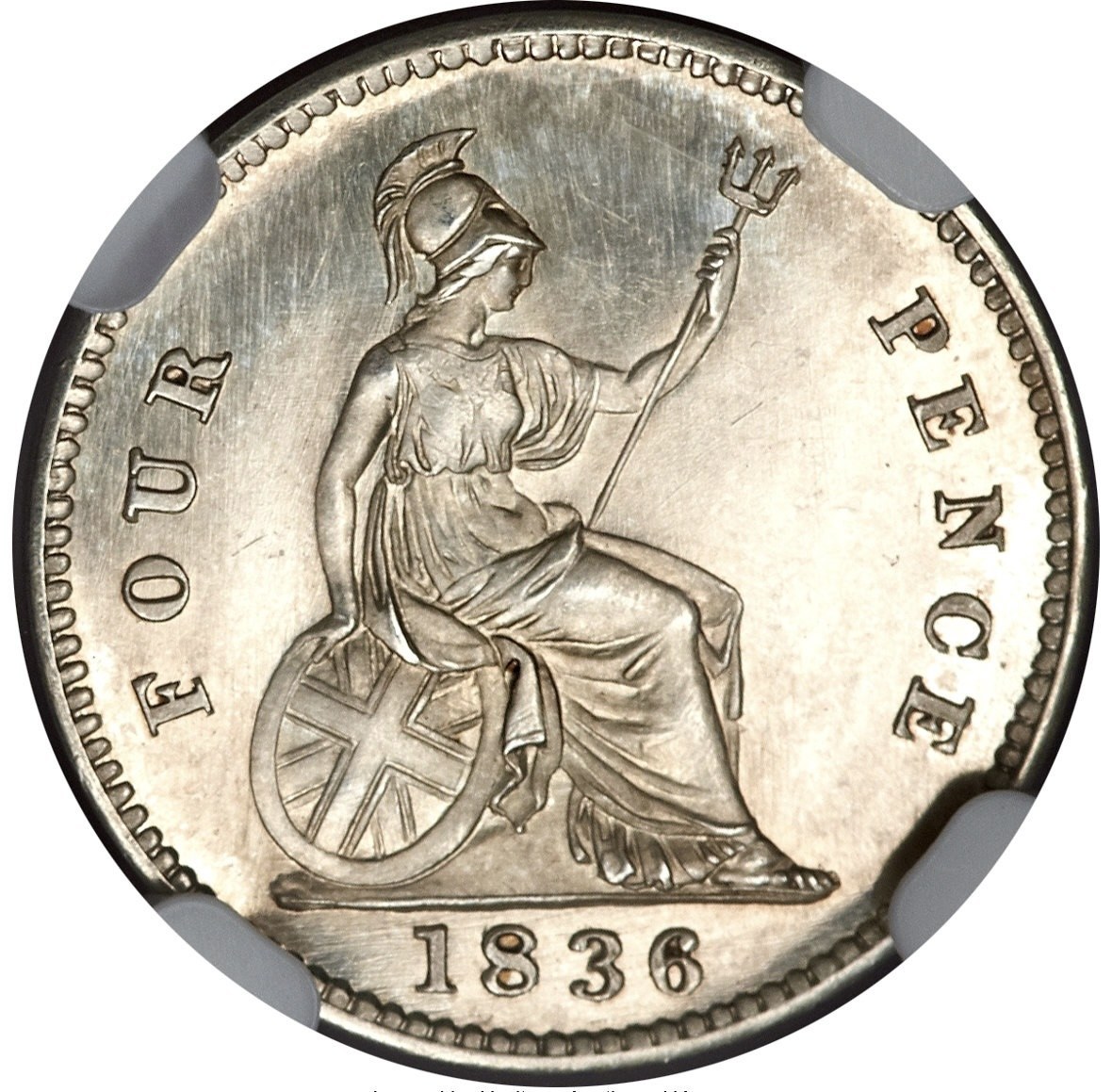
Start with the reverse, which is the most distinctive side. A William IV groat shows Britannia seated holding a trident, with a shield beside her and the date in the field. This seated-Britannia design is the hallmark of the reintroduced fourpence; if your coin has a wreath, a numeral, a crowned mark, or a different figure, it is not this type. On the photographed example the reverse is dated 1836, the first year of issue.
Check the obverse portrait and legend. The William IV fourpence carries the bare (uncrowned) head of the king facing right, with a Latin legend naming him as king. A bare-headed male portrait paired with the seated-Britannia reverse is what separates a William IV groat from the later Victoria fourpence, which uses a young female head with the same reverse. Reading the portrait and legend is essential before assigning the coin to this reign.
Measure the coin. The fourpence is small — about 16 mm in diameter and only a couple of grams — and struck in sterling silver, so it should feel thin and light and show a genuine grey silver tone rather than the whiter, harder look of base metal. Use calipers and a scale: the fourpence sits between the tiny threepence and the larger sixpence, and confirming the size and weight guards against mistaking a threepence, a sixpence, or a foreign coin for a groat.
Use the date as a filter. Genuine William IV groats are dated only 1836 or 1837. A seated-Britannia fourpence with any other date belongs to a different reign or issue — most often Victoria — so an unexpected date is a signal to re-identify rather than assume it is William IV. Be aware, too, that Maundy fourpences of the era look similar in size but form part of a matched Maundy set; context and finish help tell circulation coins from Maundy pieces.
Authenticate before valuing. Because it is small silver, a fourpence can be imitated or altered, and grade drives value. Look for natural wear consistent with the design, avoid coins that have been polished or cleaned to an unnatural brightness, and be wary of tooled detail, re-engraved dates, or wrong weight. For any high-grade, scarce-date, or unusually valuable-seeming example, get an opinion from a specialist in British milled silver and compare against reference images and recent sales.
Frequently asked questions
How do I tell a William IV groat from a Victoria one?
Both share the seated-Britannia reverse, so use the obverse: William IV has a bare-headed male portrait, while the Victoria fourpence has a young female head. The date also helps, since William IV groats are only 1836 or 1837.
How is the fourpence different from a threepence or sixpence?
Mainly by size and weight. The fourpence is about 16 mm and a couple of grams, larger than the tiny threepence and smaller than the sixpence. Measure the diameter and weigh the coin, and check that the reverse shows seated Britannia.
Which side is shown in the photo?
The photograph shows the reverse — the seated Britannia with trident, shield, and the 1836 date. The obverse, with the king's bare-headed portrait and Latin legend, is on the other side.
How can I check that it is genuine silver?
Genuine fourpences are sterling silver and show a soft grey tone and honest wear, with size and weight matching the type. Coins that are too light, too bright, or crudely detailed warrant caution; have doubtful or high-value pieces examined by a specialist.