
How to Identify the Shilling of Anne
A collector's walkthrough for attributing a Queen Anne silver shilling by its right-facing bust, crowned shields, pre- or post-Union arms, mint and provenance marks.
Read the full Shilling of Anne encyclopedia entry →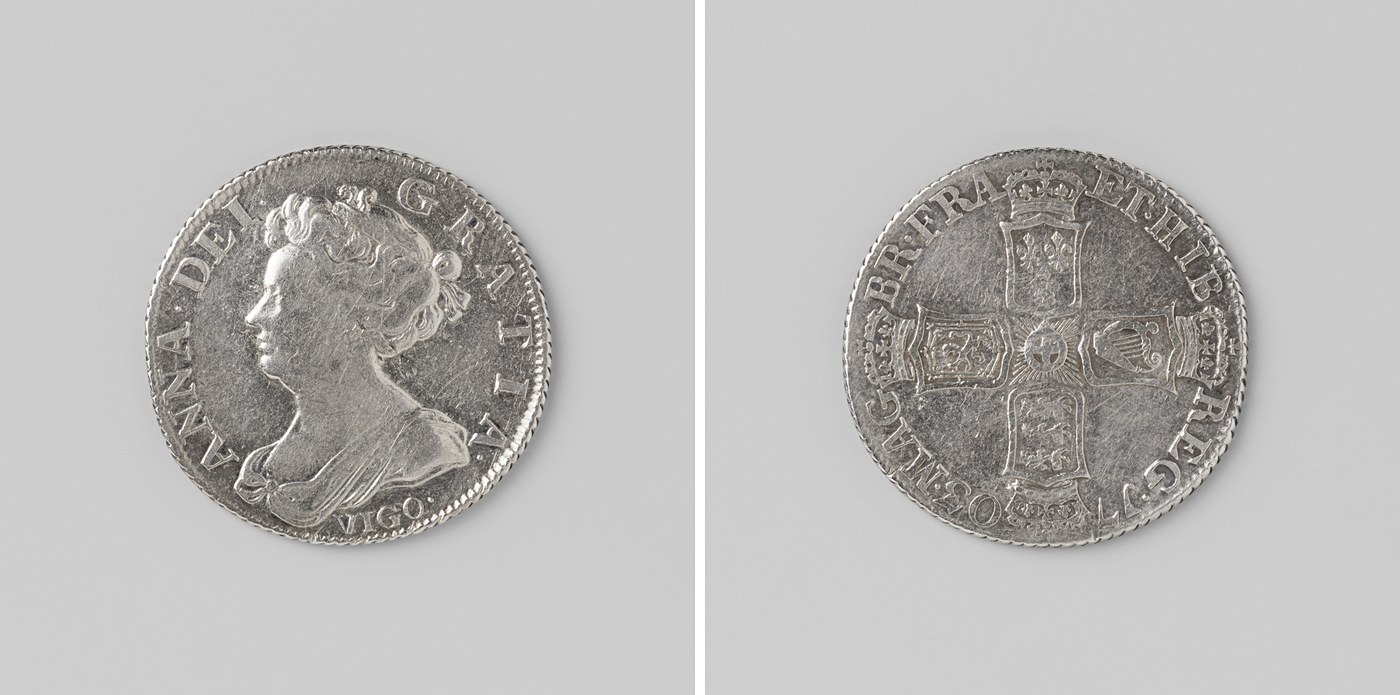
Start with the denomination and metal. A Shilling of Anne is a silver coin struck on a round, even flan with sharp, uniform detail and a decorated or grained edge, larger than a sixpence of the same reign but smaller than a halfcrown or crown. Note that the coin carries no mark of value in the field, so do not expect an XII; the denomination is judged from size, weight and design.
Read the obverse next. You should see the draped bust of Queen Anne in profile facing right, hair drawn back, with a Latin legend running around the edge naming her as queen. There is no crown on the bust and no value mark, which separates the type at a glance from the earlier crowned, XII-marked hammered shillings of the Tudor and early Stuart period. Compare the bust against reference plates, as the portrait was modified across the reign.
Turn to the reverse and decide pre-Union or post-Union. Confirm the royal arms on four crowned shields arranged as a cross, with the interlinked royal initials in the angles. On coins of 1702-1707 the shields carry England, Scotland, France and Ireland as separate quarters; on coins of 1707-1714 the English and Scottish arms are impaled together on the same shields. This single feature tells you which half of the reign the coin belongs to before you even read the date.
Check below the bust for mint and provenance marks. Look for the word VIGO, which marks silver captured at Vigo Bay in 1702; for plumes, indicating Welsh silver; for roses or roses-and-plumes, indicating the Company for Smelting Down Lead; or for a small E, indicating the Edinburgh mint after the Union. These marks both narrow the attribution and, in the case of VIGO especially, strongly affect value. The date, where legible, together with the bust variety, pins down the exact issue.
Be alert to look-alikes and pitfalls. The shillings of William III that precede this reign and of George I that follow carry different portraits and legends, so read the name in the legend carefully. Because these coins are old and often circulated, expect honest wear, but watch for cast surfaces, casting seams, soft mushy detail, tooling, or the wrong weight, all of which can indicate a forgery or an altered coin. The desirable VIGO issue in particular is a target for fakes and added lettering, so treat any VIGO shilling with extra caution. For anything beyond a common worn date, seek confirmation from a specialist in early milled British silver or a reputable auction record.
Frequently asked questions
How do I tell a pre-Union from a post-Union Shilling of Anne without a clear date?
Look at the reverse shields. If England, Scotland, France and Ireland appear as separate quarters, it is a pre-Union coin of 1702 to 1707. If the English and Scottish arms are combined on the same shields, it is a post-Union coin of 1707 to 1714.
Which way does the bust face on a Shilling of Anne?
The bust faces right and is draped, with no crown and no value mark. This right-facing, uncrowned portrait naming Anne as queen is the core signature of the type and separates it from the crowned, XII-marked hammered shillings of earlier reigns.
How do I recognise a VIGO shilling?
A VIGO shilling has the word VIGO struck below the bust, recording silver taken at Vigo Bay in 1702. It is a scarcer and more valuable issue, and for that reason a frequent target of forgery and added lettering, so authenticate it carefully before buying.
How do I avoid buying a fake?
Check that the coin is struck rather than cast, with crisp detail, no casting seams, a proper grained or decorated edge, and the right weight for silver. Mushy surfaces, wrong colour, tooling or wrong weight are warning signs; for VIGO, Edinburgh or other valuable pieces, buy from a specialist or trusted auction.