
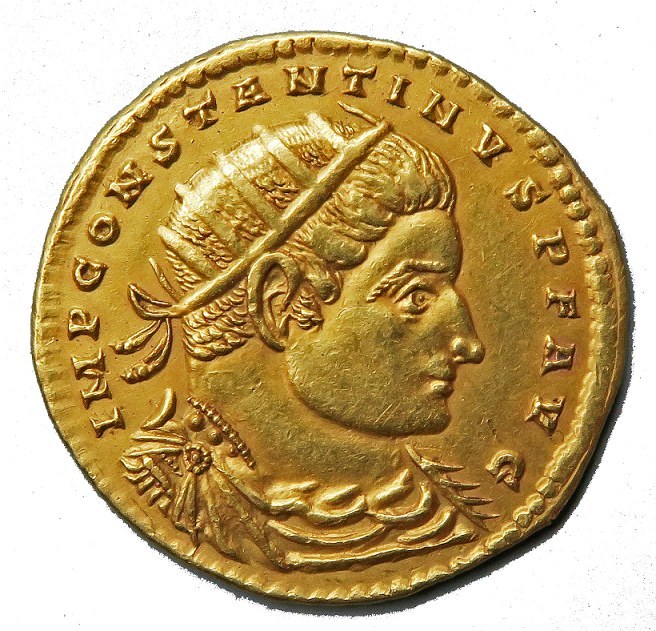
Aureus of Constantine I the Great
A Roman gold aureus struck for Constantine I the Great, showing his laureate portrait, from the era of his rise to sole power around AD 313.
- Country
- Roman Empire
- Denomination
- Aureus
- Metal
- Gold
Got a coin like this?
Identify any coin from a photo, free.
Overview
The aureus was the standard gold coin of the Roman Empire, and those bearing the portrait of Constantine I ("the Great," reigned AD 306-337) belong to one of the most consequential reigns in Roman history. The example here shows the emperor's bust facing right on the obverse, the hallmark of an imperial gold issue from this period.
By Constantine's day the aureus was a high-value coin struck in nearly pure gold and issued in far smaller numbers than the everyday bronze and silvered pieces of the age. Coins carrying his likeness circulated as the currency of the wealthy, the army's officer class, and the imperial administration, and they served as vehicles for political imagery as Constantine consolidated control of the empire.
The year AD 313 associated with this piece places it near the turning point of Constantine's career: his victory at the Milvian Bridge in AD 312 and the toleration of Christianity that followed. Gold coins of this era are prized both as fine ancient objects and as artifacts of a pivotal moment in the transition from the pagan to the Christian Roman world.
History & Background
Constantine was proclaimed emperor by his troops at York in AD 306 and spent the following years contending with rival claimants during the collapse of the Tetrarchy. His defeat of Maxentius at the Milvian Bridge in AD 312 secured the West, and in AD 313 the arrangement remembered as the Edict of Milan extended toleration to Christians. He became sole ruler of the entire empire after defeating Licinius in AD 324.
The aureus had been the empire's principal gold denomination for centuries, but its weight had drifted downward over the third century. Constantine reformed the gold coinage, and from around AD 309-310 he introduced a lighter standard gold coin, the solidus, struck at 72 to the Roman pound. The heavier aureus was gradually superseded by the solidus, so gold pieces from the earlier part of Constantine's reign sit at the boundary between the old and new systems.
Constantine's gold was produced at a network of imperial mints across the empire, including Rome, Trier, Ticinum, Nicomedia, Antioch, and later Constantinople. His long reign and sweeping reforms - military, administrative, religious, and monetary - make his coinage a central reference point for the study of the late Roman state.
How to Identify
The obverse is the key. On this coin Constantine faces right, in the standard manner of a Roman imperial gold portrait. His busts appear laureate, or sometimes diademed, cuirassed, or draped, and the surrounding Latin legend names him with forms such as CONSTANTINVS AVG, CONSTANTINVS P F AVG, or IMP CONSTANTINVS PF AVG. Reading that legend is the surest way to attribute the coin to Constantine rather than to a family member or rival.
The reverse is not visible on the photographed example, so it is not described here. Gold issues of this reign carried a range of reverse types - standing deities and personifications, military and victory themes, and imperial titulature - typically with a mint mark in the exergue beneath the design. A specialist attribution rests on matching that reverse type and mint mark to published references.
In hand the coin is small and dense: a Constantinian aureus is roughly 18-20 mm across and generally in the range of about 4 to 5.5 grams depending on the standard in force, while the later solidus is lighter still at around 4.5 grams. The metal is high-purity gold, warm yellow and untarnished, with the crisp relief of a carefully engraved die.
Value & Collectibility
Gold coins of Constantine I are scarce, high-value pieces that trade well above his common bronze issues. Even worn or lower-grade examples generally command prices in the thousands of dollars, and well-struck, well-centered coins with sharp portraits and desirable reverse types can reach the tens of thousands at auction.
Value is driven by the intrinsic gold content, the sharpness and artistry of the portrait, the rarity of the specific reverse type and mint, the state of preservation, and provenance. Because Constantine is one of the most historically significant Roman emperors, demand from both ancient-coin specialists and general collectors is strong.
The figures given here are broad context, not an appraisal. Ancient gold is also a target for forgery, so the realizable value of any particular coin depends heavily on authentication and a documented chain of ownership.
Frequently asked questions
What is an aureus?
The aureus was the main gold coin of the Roman Empire for several centuries. It was a high-value denomination struck in nearly pure gold, used for large payments, savings, and military disbursements rather than everyday purchases.
Why is Constantine called "the Great"?
Constantine reunified the Roman Empire under his sole rule, extended toleration to Christianity in AD 313, and founded Constantinople. His sweeping military, administrative, and religious reforms earned him the epithet "the Great."
What is the difference between an aureus and a solidus?
Both are Roman gold coins. Constantine introduced the solidus, a lighter standard struck at 72 to the Roman pound, which gradually replaced the older, slightly heavier aureus during his reign.
Are Constantine's gold coins valuable?
Yes. Genuine gold coins of Constantine I are scarce and typically worth thousands of dollars or more, with fine examples reaching much higher at auction. Their value depends on condition, reverse type, mint, and provenance.
Aureus of Constantine I the Great guides
In-depth guides for identifying, valuing, and collecting Aureus of Constantine I the Great.
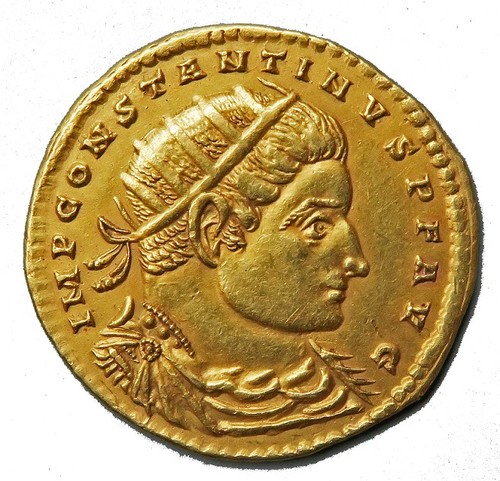
Other coins you may enjoy
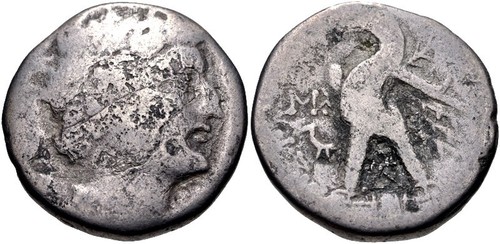
Tetradrachm of Ptolemy XII
80-51 BC
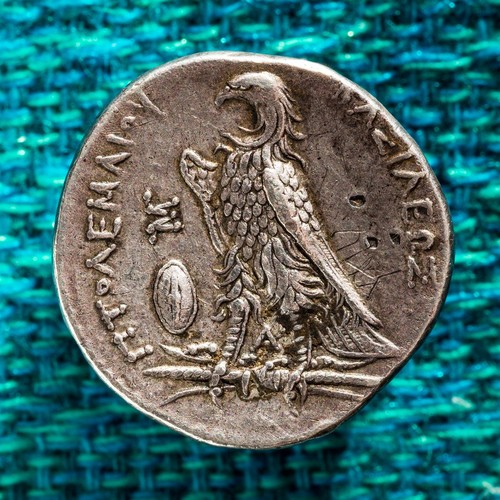
Tetradrachm of Ptolemy I
305-283 BC
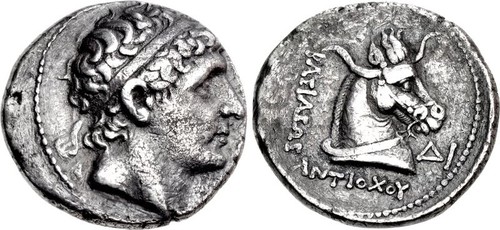
Tetradrachm of Antiochos I Soter
281-261 BC
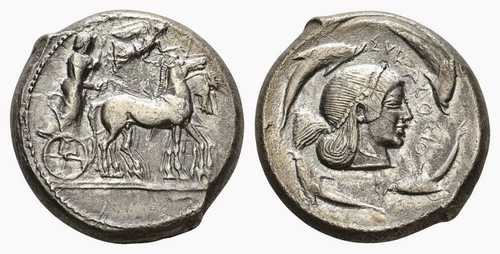
Syracuse Tetradrachm
c. 5th-4th century BC (Classical period)
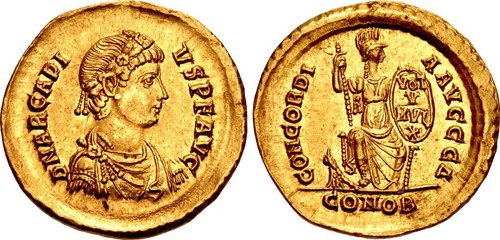
Solidus of Arcadius
AD 395-402
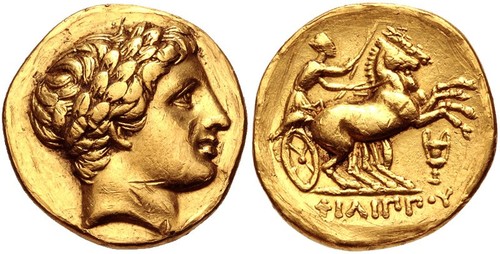
Philip III Gold Stater
323-317 BC
Siliqua of Gratian
AD 367-383
Sestertius of Maximinus Thrax
235-238 AD
Solidus of Valentinian III
AD 425-455
Seleucus I Nicator Tetradrachm
Late 4th-3rd century BC
Nummus of Magnentius
AD 350-353
Follis of Galerius
AD 308-310