
How to Identify the Aureus of Constantine I the Great
A collector's guide to reading the portrait, legend, weight, and gold fabric that mark a genuine aureus of Constantine the Great.
Read the full Aureus of Constantine I the Great encyclopedia entry →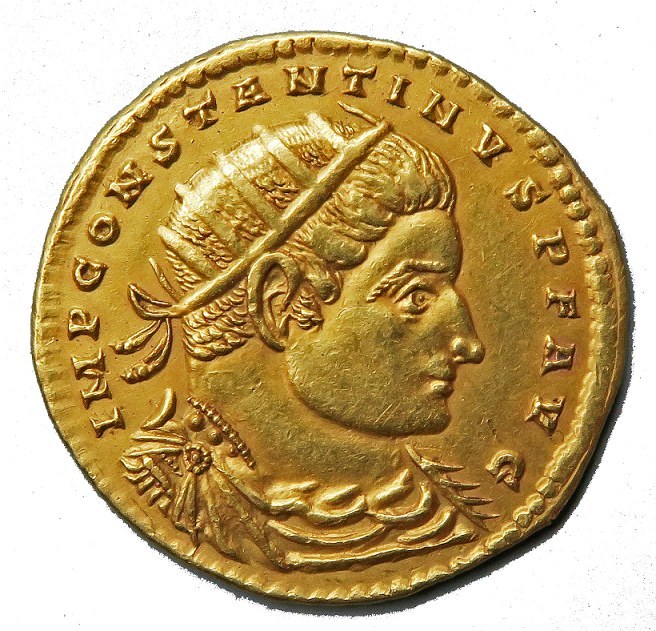
Begin with the obverse legend, because the portrait alone is not enough. A right-facing imperial bust in gold is typical of the whole late-Roman period, so read the Latin around the edge: Constantine's coins name him with forms such as CONSTANTINVS AVG, CONSTANTINVS P F AVG, or IMP CONSTANTINVS PF AVG. His portrait is usually laureate, and later in the reign diademed, with the cuirassed or draped bust facing right. Legends naming a different Augustus, or a Caesar such as Crispus or Constantine II, point to a family member rather than the emperor himself.
Assess size, weight, and metal next. A Constantinian aureus is a small, heavy coin, roughly 18-20 mm across and generally about 4 to 5.5 grams, in high-purity gold that stays bright yellow without tarnish. If the coin weighs closer to 4.5 grams and comes from later in the reign, you may be holding a solidus rather than an aureus; the two overlap in this transitional period, and precise attribution depends on the standard in force at the issuing mint. Genuine gold of this period has crisp, hand-struck relief and a dense feel for its size.
Work the reverse and its mint mark for a full attribution. The photographed example does not show the reverse, but on Constantinian gold the reverse type and the mint mark in the exergue are what tie a coin to a specific issue, mint, and date. Constantine's gold was struck at mints including Trier, Rome, Ticinum, Nicomedia, and Antioch, each with its own abbreviation. Matching the type and mark against a standard reference such as Roman Imperial Coinage is how specialists confirm the exact issue.
Be cautious about authenticity, because ancient gold is heavily forged. Warning signs include incorrect weight or diameter, a soft or grainy surface suggesting a cast rather than a struck coin, a visible seam around the edge, lettering or portrait style that does not match published dies, and gold that looks too red or too brassy. Modern replicas and "museum" copies exist in gold-colored base metal. Given the sums involved, treat any Constantine aureus as needing expert authentication and documented provenance before purchase.
Frequently asked questions
How do I know a gold coin is Constantine and not another emperor?
Read the obverse legend. Constantine's coins carry his name in forms like CONSTANTINVS AVG or CONSTANTINVS P F AVG. Many emperors used similar right-facing gold portraits, so the legend, not the bust style, identifies the ruler.
How can I tell an aureus from a solidus of Constantine?
Both are gold. The solidus is a lighter reformed standard at 72 to the Roman pound (around 4.5 grams), while the earlier aureus is slightly heavier. They overlap during Constantine's reign, so weight together with the mint and date determines which denomination it is.
The reverse isn't clear. Can I still identify the coin?
You can confirm the emperor from the obverse legend and portrait, but a full attribution to a specific issue needs the reverse type and the mint mark in the exergue. Without a legible reverse, only a general identification is possible.
What should make me suspect a forgery?
Watch for wrong weight or diameter, a casting seam or grainy surface, lettering and portrait style that do not match known dies, and gold that looks too red or brassy. Ancient gold is widely faked, so seek expert authentication and provenance.