
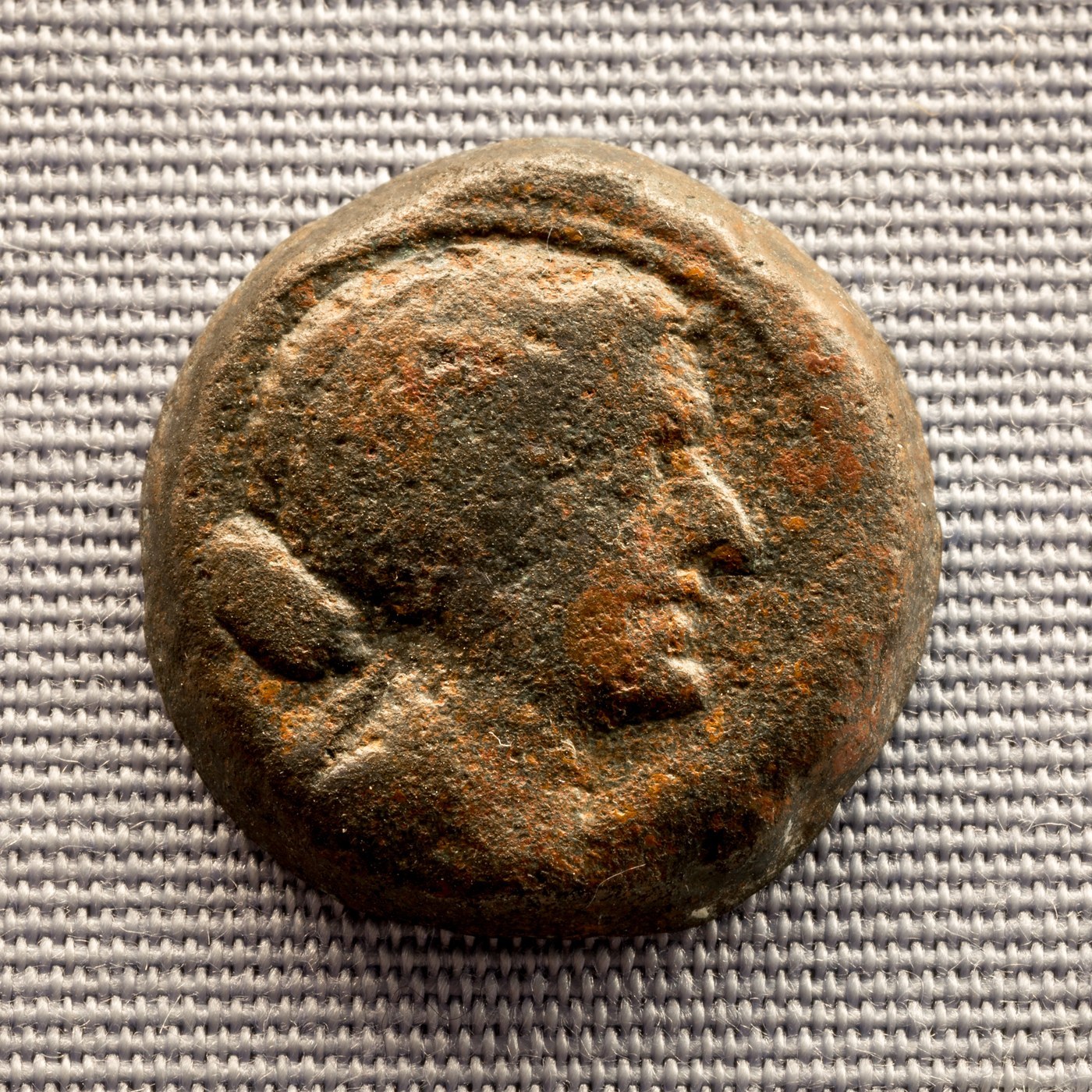
Bronze Coin of Cleopatra VII
Ptolemaic bronze coin of Cleopatra VII of Egypt, 51-30 BC, showing her draped diademed bust in profile as sole named female ruler of the dynasty.
- Country
- Egypt
- Denomination
- Bronze
- Metal
- Bronze
Got a coin like this?
Identify any coin from a photo, free.
Overview
This is a bronze coin struck under Cleopatra VII, the last active ruler of the Ptolemaic dynasty of Egypt, who reigned from 51 to 30 BC. The example shown displays the draped bust of the queen facing left, wearing the royal diadem, in the profile portrait style used on her own base-metal coinage. It is a piece of everyday circulating money rather than a ceremonial issue.
Unlike the anonymous or ancestral portraits common on much Ptolemaic bronze, Cleopatra placed her own likeness on many of her coins, an unusual assertion of authority for a woman in the ancient Mediterranean world. The bust is rendered in a strong, somewhat severe Hellenistic style, with a prominent nose, forward-set chin, and hair drawn back in a bun beneath the diadem.
As a bronze rather than a precious-metal issue, the coin was intended for daily transactions in the markets and cities of Ptolemaic Egypt. It is identified above all by that named royal female portrait, the Ptolemaic fabric, and the reign dates of 51-30 BC. On this particular specimen the reverse is not visible in the photograph, so identification rests on the portrait side and the coin's overall character.
History & Background
Cleopatra VII came to the throne of Egypt in 51 BC, ruling first alongside younger brothers and later as effective sole monarch. Her reign coincided with the final decades of the Ptolemaic kingdom and with the turbulent last years of the Roman Republic, and her alliances with Julius Caesar and then Mark Antony placed Egypt at the center of Mediterranean politics.
Throughout her reign Egypt continued to strike coinage in the Ptolemaic tradition established since the time of Ptolemy I, but Cleopatra's issues are notable for foregrounding her own image and name. Bronze denominations bearing her portrait circulated widely and served the ordinary monetary needs of a kingdom whose silver and gold were increasingly strained by war, tribute, and political upheaval.
The dynasty ended in 30 BC, when, following the defeat of Antony and Cleopatra by Octavian at Actium and the subsequent fall of Alexandria, Cleopatra died and Egypt was annexed as a province of Rome. Her coinage is therefore among the last money of independent Ptolemaic Egypt, struck on the eve of the country's absorption into the Roman world.
How to Identify
The obverse shows the draped bust of Cleopatra VII facing left, wearing the royal diadem, a band tied at the back of the head. Look for the distinctive Hellenistic profile: a pronounced nose, a firm forward chin, a rounded eye, and the hair pulled back in waves to a bun at the nape of the neck, with drapery indicated at the truncation of the neck. The style is bold and can appear stern rather than idealized.
The coin is bronze (AE), typically with a brown, green, or earthen patina from long burial, and struck by hand so the flan is often irregular and the strike off-center. Ptolemaic bronzes come in a range of module sizes; larger pieces can be substantial and heavy, while smaller denominations are more modest. On many of Cleopatra's bronzes the reverse carries an eagle standing on a thunderbolt, the standard Ptolemaic emblem, sometimes with a denomination mark or mint letters, though on this specimen the reverse is not visible in the image.
The key identifiers are the named female royal portrait in Ptolemaic style, the bronze fabric and patina, and consistency with the 51-30 BC reign. Because the photographed coin does not show its reverse, attribution should lean on the portrait, the metal, and the size, with the reverse type confirmed in hand where possible.
Value & Collectibility
Bronze coins of Cleopatra VII are among the most sought-after of all ancient bronzes because they combine an identifiable portrait with one of the most famous names in history. Even worn, clearly attributable examples command a premium over ordinary Ptolemaic bronze, with modest pieces often trading from the low hundreds of dollars and well-preserved coins with a clear portrait reaching into the four figures or higher.
Condition is decisive. The clarity and centering of the portrait, the sharpness of the diadem and facial features, the quality of the patina, and the visibility of any reverse type and legends all drive value strongly. A coin where Cleopatra's face is full and legible is worth far more than one where the portrait is flat or off the flan.
These figures are general market context rather than an appraisal. Because Cleopatra's name draws high demand and correspondingly high forgery risk, significant purchases are usually made with specialist attribution, clear reverse identification, and documented provenance, all of which affect the price a given coin will bring.
Frequently asked questions
Is this really a portrait of Cleopatra herself?
Yes. Cleopatra VII placed her own diademed bust on much of her coinage, including bronze issues. The portrait is a stylized Hellenistic likeness rather than a photograph, so it emphasizes a strong nose and chin, but it does represent the queen by name and design.
What is the coin made of?
It is bronze, a base-metal coinage meant for everyday transactions rather than a gold or silver issue. Surviving examples usually carry a brown, green, or earthen patina from centuries of burial.
What was normally on the reverse?
Many of Cleopatra's bronzes show an eagle standing on a thunderbolt, the long-standing Ptolemaic emblem, sometimes with a denomination mark or mint letters. The reverse is not visible on this particular photographed coin, so it should be confirmed in hand.
Why is a woman's portrait unusual on ancient coins?
In the ancient Mediterranean, coin portraits overwhelmingly depicted male rulers or gods. Cleopatra's decision to put her own named image on circulating money was a deliberate and relatively rare assertion of a female monarch's authority.
When was it made?
It dates to Cleopatra VII's reign, 51 to 30 BC, the final decades of independent Ptolemaic Egypt before the kingdom was annexed by Rome in 30 BC.
Bronze Coin of Cleopatra VII guides
In-depth guides for identifying, valuing, and collecting Bronze Coin of Cleopatra VII.
Other coins you may enjoy
Tetradrachm of Ptolemy XII
80-51 BC
Tetradrachm of Ptolemy I
305-283 BC
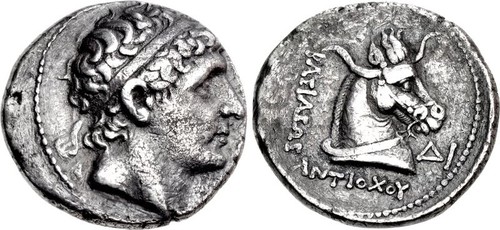
Tetradrachm of Antiochos I Soter
281-261 BC
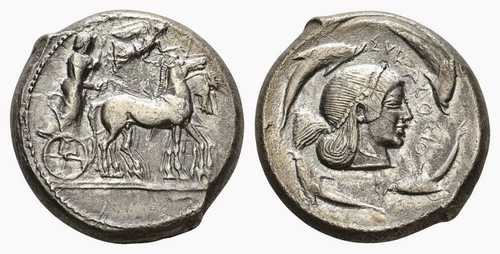
Syracuse Tetradrachm
c. 5th-4th century BC (Classical period)
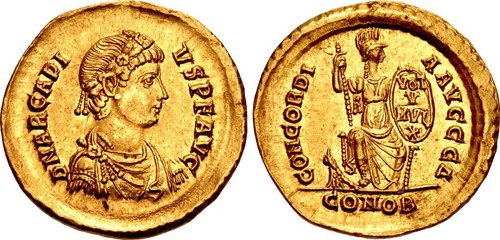
Solidus of Arcadius
AD 395-402
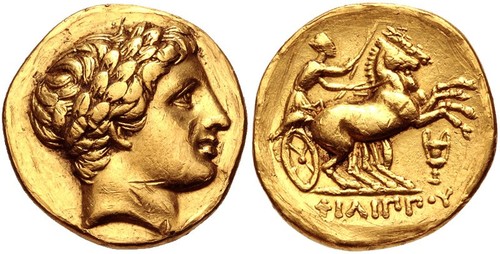
Philip III Gold Stater
323-317 BC
Siliqua of Gratian
AD 367-383
Sestertius of Maximinus Thrax
235-238 AD
Solidus of Valentinian III
AD 425-455
Seleucus I Nicator Tetradrachm
Late 4th-3rd century BC
Nummus of Magnentius
AD 350-353
Follis of Galerius
AD 308-310