
Alexander the Great Tetradrachm
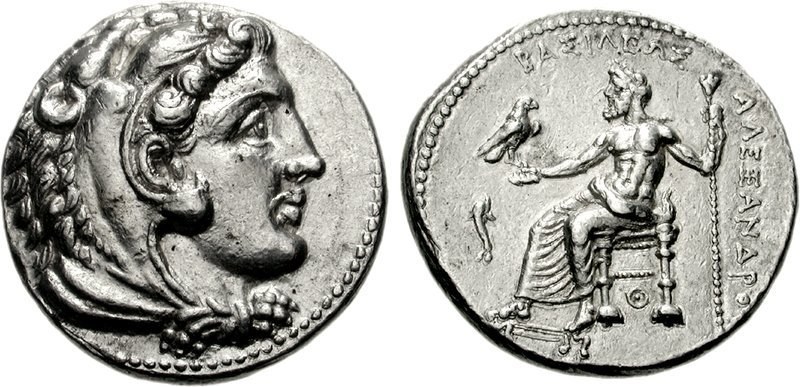
Silver tetradrachm of Alexander III of Macedon with the head of Heracles in a lion skin and an enthroned deity holding an eagle on the reverse.
- Country
- Ancient Macedon
- Denomination
- Tetradrachm
- Metal
- Silver
Got a coin like this?
Identify any coin from a photo, free.
Overview
The Alexander the Great tetradrachm is a large silver coin of the kingdom of Macedon, struck in the name of Alexander III (reigned 336-323 BC). It is one of the most widely produced and recognizable coinages of the ancient world. The obverse shows the head of the young hero Heracles wearing the scalp of the Nemean lion as a headdress, an image long associated with Alexander himself, who claimed descent from Heracles.
The reverse shows a seated deity on a backless throne, holding a long scepter and extending an eagle on the outstretched hand, with the Greek legend of Alexander's name beside the figure. The seated figure is the enthroned Zeus, and the eagle is his attribute; the coin carries victory and kingship symbolism appropriate to a conqueror. The example here is dated to about 323 BC, the year of Alexander's death, placing it among the lifetime and early issues.
Struck on the Attic weight standard, the tetradrachm ("four-drachm" piece) is a broad, heavy silver coin. Because the same types were kept in production for generations after Alexander died, the design became a de facto international trade currency across the Greek and Near Eastern world.
History & Background
Alexander III of Macedon introduced this silver coinage during his reign, and it was struck in enormous quantities to pay the armies and administer the vast empire he built through his conquests. Mints operated across Macedon, Greece, Asia Minor, the Levant, Egypt, Mesopotamia and beyond, which is why surviving tetradrachms show a wide range of local styles and control marks while sharing the same two types.
The coin shown is placed around 323 BC, the year Alexander died at Babylon. His death did not end the coinage. His successors, and many independent cities, continued to strike "Alexanders" with the Heracles and enthroned-Zeus types for roughly two centuries, because the design was trusted and accepted everywhere merchants traded. Some posthumous issues added the title "of King Alexander" or a city's own control symbols.
As a result, the Alexander tetradrachm is both a historical artifact of the Macedonian empire and one of the longest-running coin types of antiquity. Lifetime and early posthumous pieces are of particular interest to collectors, but distinguishing them relies on style, mint marks and the form of the throne rather than any date on the coin.
How to Identify
The obverse shows the head of Heracles facing right, wearing the Nemean lion's skin as a close-fitting headdress, with the lion's scalp over the crown and its jaws and paws framing the face and neck. The features are youthful and idealized; there is no separate portrait legend on the obverse.
The reverse shows a seated male figure (Zeus) on a throne, nude to the waist, holding a long vertical scepter in one hand and an eagle perched on the extended other hand. The Greek legend runs vertically in the field, reading the name of Alexander (and on later issues the added title of king). Small control marks, monograms or symbols often appear in the field or beneath the throne; these identify the mint and issue rather than a date.
In hand the coin is a broad silver piece on the Attic standard, typically around 25-28 mm across and roughly 17 grams in weight, usually toned grey with age. Genuine strikes are hand-made and show natural irregularity in centering, flan shape and die wear. The combination of the lion-skin Heracles head and the enthroned eagle-bearing deity, with Alexander's name in Greek, is the coin's core identifier.
Value & Collectibility
Alexander tetradrachms are genuine ancient Macedonian silver and are among the most collected of all ancient coins, so the market for them is deep and well established. Worn but clearly identifiable examples commonly trade in the low-to-mid hundreds of dollars, while sharply struck, well-centered coins with a bold Heracles head and crisp reverse can reach well into the four figures.
Value is driven by the strength of the portrait and reverse detail, centering, metal quality and toning, the mint and style, and whether a piece is a scarce lifetime issue or one of the far more numerous posthumous strikes. Attractive style, complete legends and desirable mints command clear premiums.
The figures here are general context, not appraisals. Because the type was struck for two centuries at many mints, and because forgeries exist, any specific coin's value depends heavily on attribution, condition and authenticity, and significant pieces are often sold with specialist attribution or third-party certification.
Frequently asked questions
Is the face on the coin Alexander's portrait?
The obverse formally depicts the hero Heracles wearing a lion-skin headdress. Alexander claimed descent from Heracles, so the youthful, idealized features were widely understood to evoke Alexander himself, though it is not labeled as his portrait.
Who is the seated figure on the reverse?
It is the enthroned Zeus, shown holding a scepter and an eagle on his outstretched hand. The eagle is Zeus's attribute and carries associations of kingship and victory suited to Alexander's coinage.
Was this coin really made during Alexander's lifetime?
The same types were struck both during Alexander's reign and for about two centuries after his death in 323 BC. Lifetime and early issues exist, but they are told apart by style, mint marks and throne form, not by any date on the coin.
How big and heavy is it?
It is a large silver tetradrachm on the Attic standard, typically about 25-28 mm across and roughly 17 grams. It is broad and substantial compared with smaller Greek silver denominations.
What does the Greek writing say?
The legend gives Alexander's name in Greek, and later issues add the title meaning "of King Alexander." It names the authority behind the coin rather than a mint or date in the modern sense.
Alexander the Great Tetradrachm guides
In-depth guides for identifying, valuing, and collecting Alexander the Great Tetradrachm.
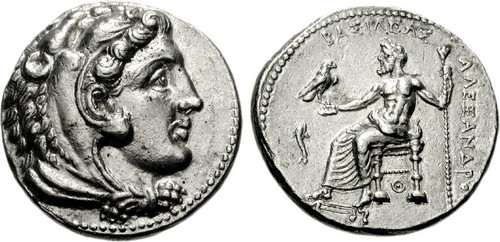
Alexander the Great Tetradrachm identified by the community
Real coins identified with Coin Identifier.
Other coins you may enjoy
Tetradrachm of Ptolemy XII
80-51 BC
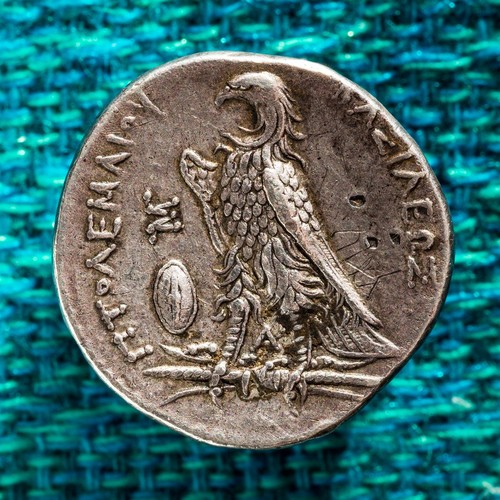
Tetradrachm of Ptolemy I
305-283 BC
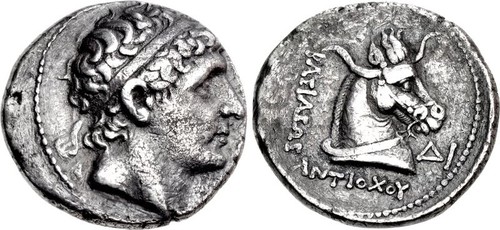
Tetradrachm of Antiochos I Soter
281-261 BC
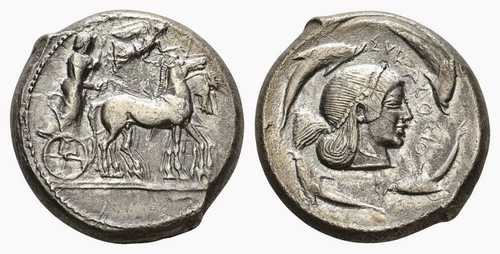
Syracuse Tetradrachm
c. 5th-4th century BC (Classical period)
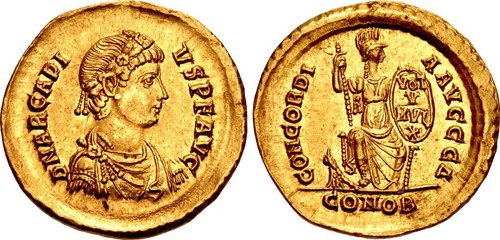
Solidus of Arcadius
AD 395-402
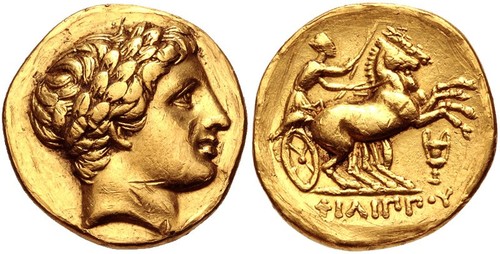
Philip III Gold Stater
323-317 BC
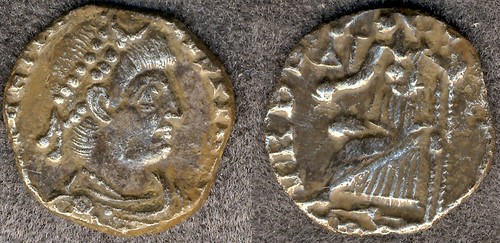
Siliqua of Gratian
AD 367-383
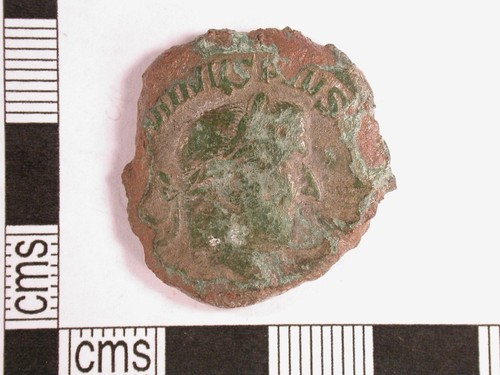
Sestertius of Maximinus Thrax
235-238 AD
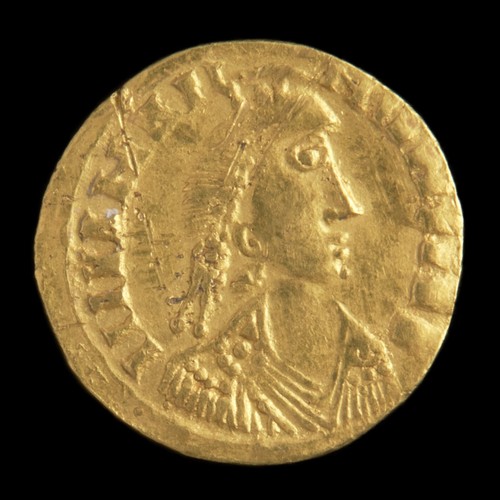
Solidus of Valentinian III
AD 425-455
Seleucus I Nicator Tetradrachm
Late 4th-3rd century BC
Nummus of Magnentius
AD 350-353
Follis of Galerius
AD 308-310