
Alexander the Great Silver Drachm
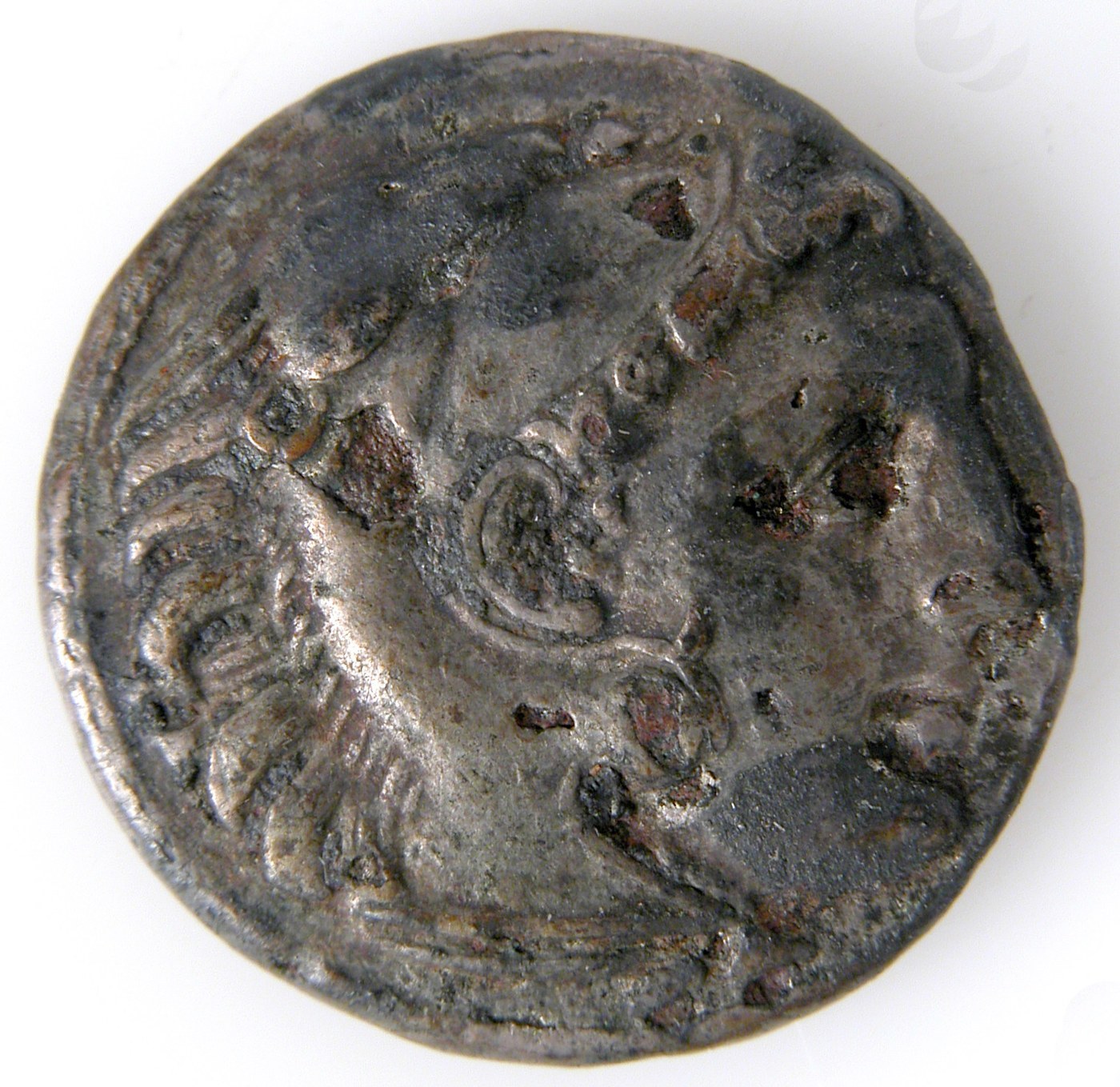
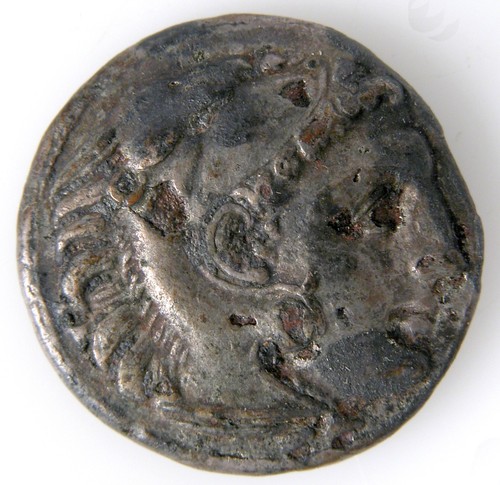
Silver drachm in the name of Alexander the Great, with the head of young Herakles in a lion skin and Zeus enthroned on the reverse.
- Country
- Ancient Macedon
- Denomination
- Drachm
- Metal
- Silver
Got a coin like this?
Identify any coin from a photo, free.
Overview
The Alexander the Great silver drachm is an ancient Greek coin struck in the name of Alexander III of Macedon. The obverse shows the head of the young Herakles wearing the scalp of the Nemean lion as a headdress, a portrait long popularly read as Alexander himself in the guise of the hero. The reverse shows Zeus seated on a throne, holding an eagle in his outstretched right hand and a long scepter in his left, with the name of Alexander in Greek beside him.
This example belongs to the vast "Alexandrine" coinage that continued to be minted after Alexander's death in 323 BC, into the era of his successors down to roughly 310 BC and beyond. The drachm is the smaller silver denomination of the series, struck to the same designs as the famous tetradrachm but on a lighter, thinner flan.
Because the types stayed essentially unchanged across dozens of mints and many years, the drachm is identified by its Herakles/Zeus design rather than by any date. Individual coins are told apart by the small symbols and monograms placed in the reverse field, which point to the mint and issue.
History & Background
Alexander III of Macedon (reigned 336-323 BC) created an enormous empire stretching from Greece to the edge of India, and he introduced a unified silver coinage to pay and provision his armies. The Herakles-and-Zeus design became one of the most widely produced coin types of the ancient world, struck at mints across Macedon, Greece, Asia Minor, the Levant, Egypt, and Mesopotamia.
The lion-headed Herakles reflected the Macedonian royal house's claimed descent from the hero, while the enthroned Zeus echoed established Greek coin imagery and asserted the king's divine backing. Many scholars see the youthful, idealized features of Herakles as deliberately evoking Alexander himself, which helped make the type an enduring image of his rule.
After Alexander died in 323 BC his generals, the Diadochi, fought over the empire but continued striking coins in his name and types for decades, because the "Alexanders" were trusted everywhere as international money. The drachms of roughly 323-310 BC therefore belong to this posthumous phase, when the design outlived the king and circulated widely under his successors.
How to Identify
Start with the obverse. It shows the head of Herakles facing right, wearing the Nemean lion's skin as a close-fitting headdress, the lion's scalp over the crown of the head and its paws sometimes knotted at the neck. The features are youthful and idealized, and there is no legend on this side. This lion-scalp head is the single most recognizable marker of the type.
The reverse shows Zeus seated on a throne, nude to the waist, holding an eagle on his extended right hand and a long vertical scepter in his left. Beside the figure runs the Greek name of Alexander (ALEXANDROY, and sometimes BASILEWS "of King"), reading vertically. Small symbols and monograms appear in the field or under the throne; these control marks identify the mint and issue and are the key to attributing a given drachm.
In hand the drachm is a small silver coin, on the order of about 4 grams and roughly 16-18 mm across, thinner and lighter than the well-known tetradrachm of the same design (which is about four times the weight). The metal is good silver, usually toned grey with age. Because thousands of dies were used across many mints, style and control marks vary widely from coin to coin.
Value & Collectibility
Alexander drachms are among the most accessible genuine ancient Greek silver coins, since they were produced in huge numbers and survive in quantity. Well-worn but clearly identifiable examples commonly trade in the low tens to low hundreds of dollars, while sharply struck, well-centered coins with a bold Herakles head and crisp Zeus can bring the mid-hundreds or more.
Value is driven by the strength of the portrait and reverse detail, centering, toning, the specific mint and control marks, and overall eye appeal. Coins struck during Alexander's lifetime, from famous mints, or with unusual symbols can carry premiums over the common posthumous issues, and specialist attribution to a mint and issue can add value.
The figures here are general context, not appraisals. Any particular coin's price depends heavily on condition, style, mint, and authenticity, and higher-value examples are often sold with specialist attribution or third-party certification.
Frequently asked questions
Is the portrait Alexander or Herakles?
Technically it is the hero Herakles wearing the Nemean lion's skin, but the youthful, idealized features are widely understood as evoking Alexander himself, whose royal house claimed descent from Herakles.
Who is the seated figure on the back?
It is Zeus, king of the gods, enthroned and holding an eagle on his outstretched hand and a long scepter. The Greek name of Alexander appears beside him.
Was this struck while Alexander was alive?
Not necessarily. The type was minted in Alexander's name for decades after his death in 323 BC. Coins of roughly 323-310 BC belong to this posthumous phase struck by his successors, though the designs stayed the same.
How is the drachm different from the famous Alexander tetradrachm?
They share the same Herakles-and-Zeus design, but the drachm is much smaller and lighter, about 4 grams versus roughly 17 grams for the tetradrachm. The drachm is the smaller everyday silver denomination.
What do the small symbols on the reverse mean?
They are control marks, symbols and monograms that identify the mint and issue that produced the coin. They are how specialists attribute an otherwise near-identical drachm to a particular city and date.
Alexander the Great Silver Drachm guides
In-depth guides for identifying, valuing, and collecting Alexander the Great Silver Drachm.
Other coins you may enjoy
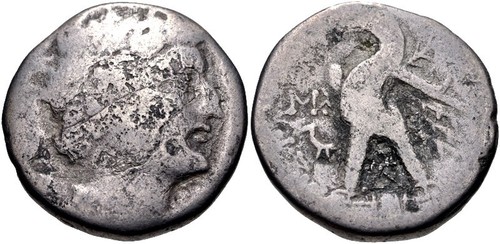
Tetradrachm of Ptolemy XII
80-51 BC
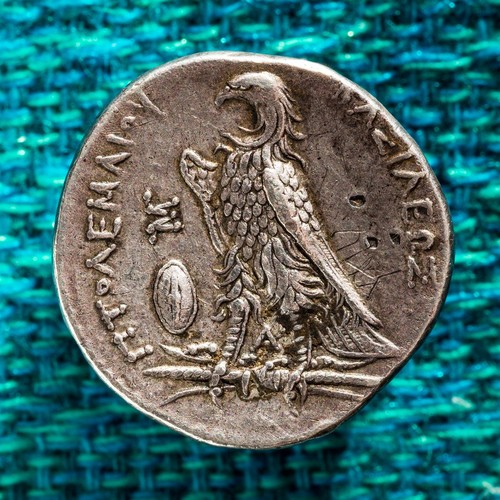
Tetradrachm of Ptolemy I
305-283 BC
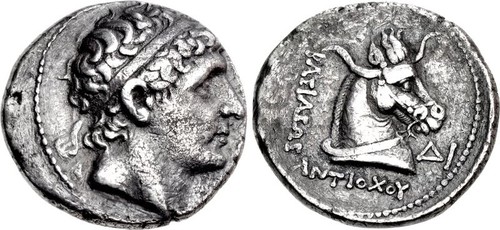
Tetradrachm of Antiochos I Soter
281-261 BC
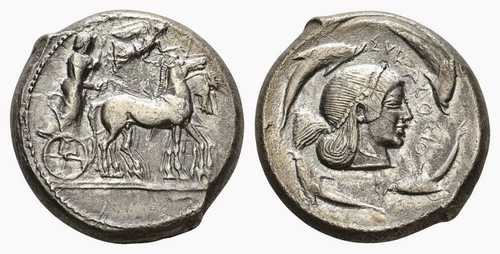
Syracuse Tetradrachm
c. 5th-4th century BC (Classical period)
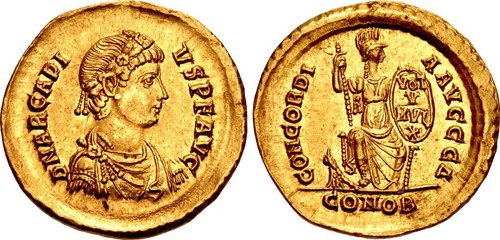
Solidus of Arcadius
AD 395-402
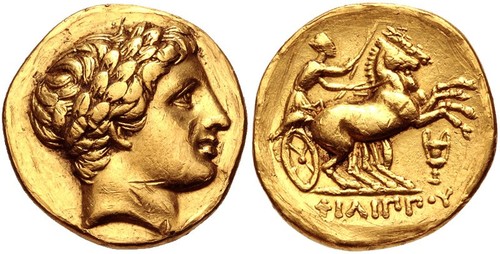
Philip III Gold Stater
323-317 BC
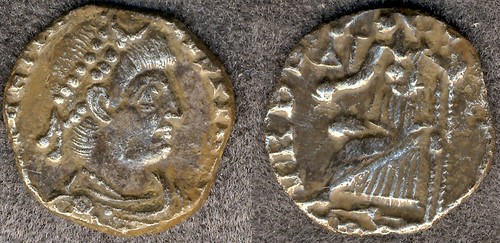
Siliqua of Gratian
AD 367-383
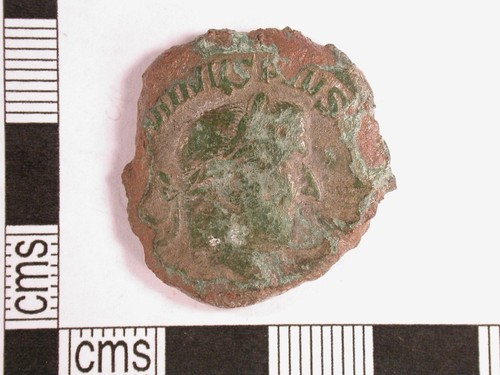
Sestertius of Maximinus Thrax
235-238 AD
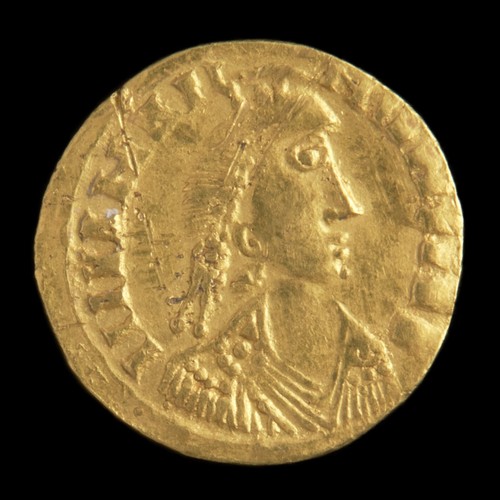
Solidus of Valentinian III
AD 425-455
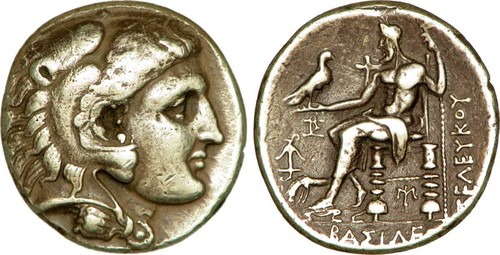
Seleucus I Nicator Tetradrachm
Late 4th-3rd century BC
Nummus of Magnentius
AD 350-353
Follis of Galerius
AD 308-310