
How to Identify the Alexander the Great Silver Drachm
A collector's guide to recognizing an Alexander drachm by its lion-scalp Herakles head, enthroned Zeus, silver weight, and control marks.
Read the full Alexander the Great Silver Drachm encyclopedia entry →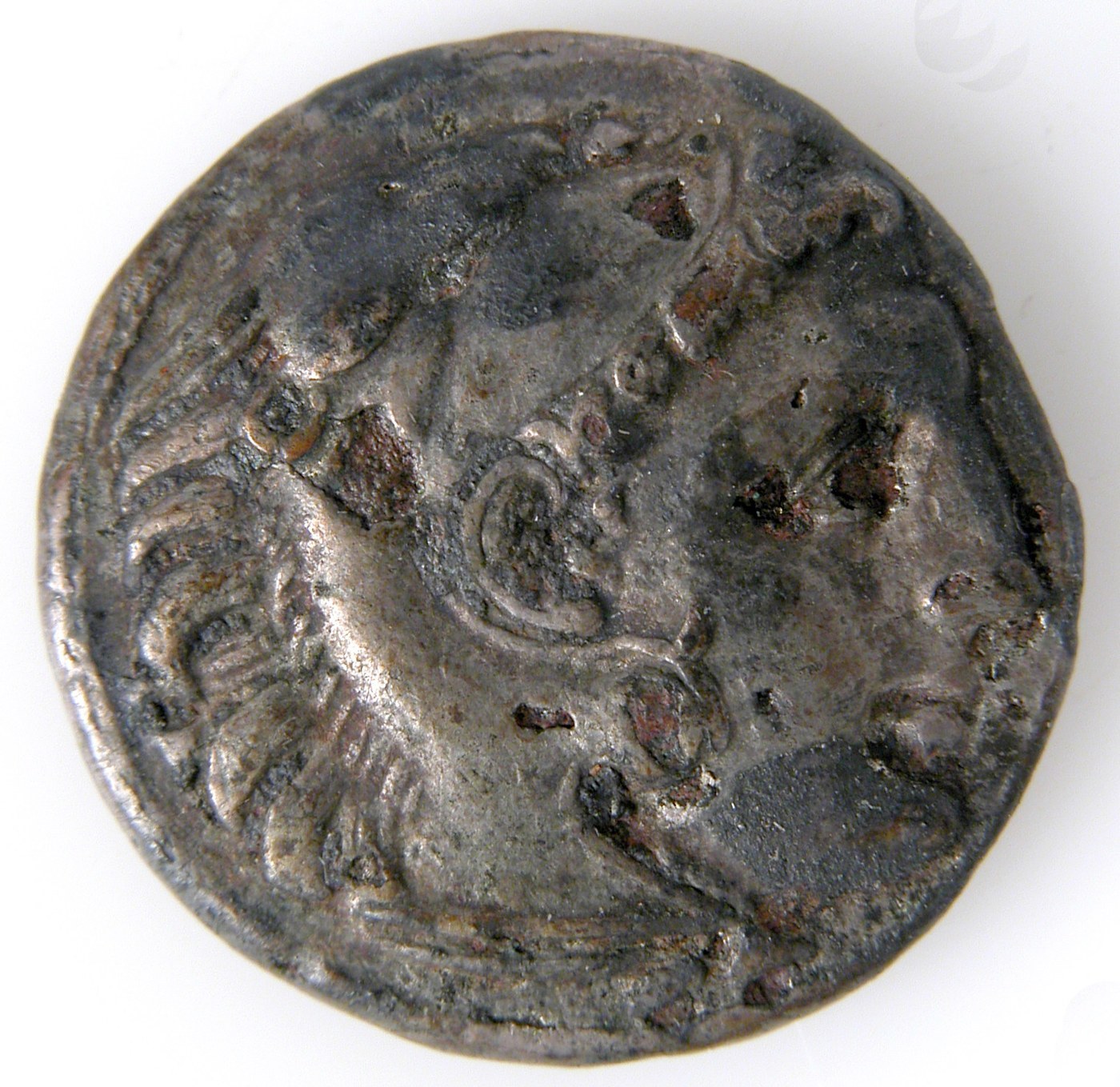
Begin with the obverse head. A genuine Alexander drachm shows the head of Herakles facing right wrapped in the Nemean lion's skin, with the lion's scalp fitted over the crown and the muzzle and ears visible above the forehead. The face is young and idealized and carries no inscription. This lion-scalp portrait, not a bare or laureate head, is the primary diagnostic that places a coin in the Alexandrine series.
Turn to the reverse and confirm the enthroned Zeus. He sits on a throne, bare to the waist, with an eagle perched on his outstretched right hand and a tall scepter in his left. The Greek name of Alexander should run vertically in the field, usually ALEXANDROY, sometimes with the title BASILEWS. The exact throne form, the position of Zeus's legs, and the placement of the legend vary by mint and help narrow down the issue.
Use size and weight to fix the denomination. The drachm is a small, thin silver coin of roughly 4 grams and about 16-18 mm across. If a coin with the same design weighs around 17 grams and spans 25 mm or more, it is a tetradrachm, not a drachm; lighter pieces may be hemidrachms or smaller fractions. Weighing the coin is the reliable way to separate the drachm from its larger and smaller relatives that share the identical types.
Read the control marks to attribute and sanity-check the coin. The symbols and monograms in the reverse field or beneath the throne identify the mint and issue, and standard references catalogue them. A drachm whose style, legend, and control marks do not match any recorded combination deserves closer scrutiny, since the type has been imitated both in antiquity and in modern times.
Finally, watch for authenticity problems. Cast forgeries show a seam around the edge, soft mushy detail, and a dull, non-metallic surface, while modern struck fakes and tooled coins may show unnaturally sharp or scratchy detail added to worn metal. Because Alexander drachms are common and often inexpensive, most are genuine, but higher-grade or higher-priced examples are worth confirming through specialist attribution or third-party certification and, where possible, documented provenance.
Frequently asked questions
How do I tell a drachm from an Alexander tetradrachm?
Weigh and measure it. The drachm is small and thin at roughly 4 grams and about 16-18 mm, while the tetradrachm is about 17 grams and 25 mm or more. The designs are identical, so size and weight are the way to tell the denominations apart.
There is no name on the front. Is that normal?
Yes. The obverse lion-scalp head of Herakles carries no legend on this type. The name of Alexander appears only on the reverse beside the seated Zeus, so the identification rests on the imagery plus that reverse legend.
What are the little letters and symbols on the reverse?
They are control marks that identify the mint and issue. Matching the specific symbol and monogram combination against reference catalogues is how a near-identical drachm is attributed to a particular city and date.
What are the main warning signs of a fake?
An edge seam, soft blurry detail, and a dull cast-looking surface suggest a forgery, and unnaturally sharp scratchy detail on otherwise worn metal suggests tooling. For a more valuable example, seek specialist attribution or certification.