
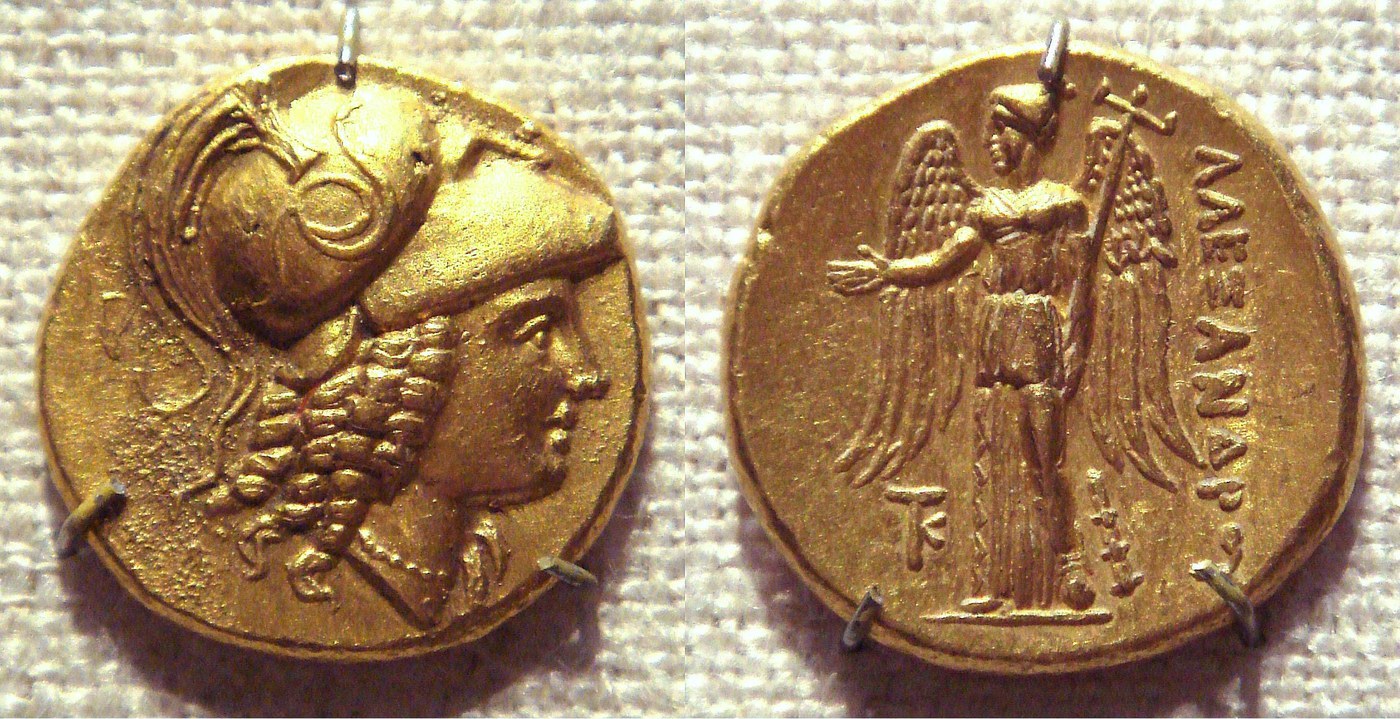
Alexander the Great Gold Stater
Gold stater struck in the name of Alexander the Great, with a helmeted Athena obverse and Nike holding a wreath on the reverse; this example c. 323-315 BC.
- Country
- Ancient Macedon
- Denomination
- Stater
- Metal
- Gold
Got a coin like this?
Identify any coin from a photo, free.
Overview
The Alexander the Great gold stater is a high-purity gold coin of ancient Macedon issued in the name of Alexander III ("the Great"). It pairs a helmeted head of the goddess Athena on the obverse with the winged victory-goddess Nike standing on the reverse, holding a wreath, alongside the Greek legend of Alexander's name. The example here dates to roughly 323-315 BC, the years immediately after Alexander's death.
Struck on the Attic weight standard, the stater is a small, thick disc of bright gold, considerably heavier and denser than it looks for its size. It was the top gold denomination of a vast imperial coinage that Alexander introduced to fund and unify his empire, and it circulated widely from Macedon and Greece across the former Persian territories.
Coins of this type were produced at many mints over several decades, both during Alexander's reign and for years after his death. A piece dated 323-315 BC belongs to the early posthumous phase, struck by his successors who continued the familiar Athena-and-Nike design and Alexander's name to preserve confidence in the coinage.
History & Background
Alexander III of Macedon (reigned 336-323 BC) created one of the largest coinages of the ancient world, using a single recognizable set of types across an empire that stretched from Greece to the edge of India. For gold he adopted the stater with a helmeted Athena and a standing Nike, a design that projected divine favor and military victory and that stayed remarkably consistent from mint to mint.
The reverse figure of Nike, the personification of victory, and the goddess of war Athena on the obverse suited a coinage born of conquest. Enormous quantities of gold captured from the Persian empire flowed into these staters, giving Alexander's successors a trusted, uniform currency to pay armies and settle trade.
After Alexander died in 323 BC, his generals, the Diadochi, fought over the empire but kept striking coins in his name. The 323-315 BC issues shown here come from this early posthumous period, when mints across Macedon, Greece, and Asia Minor continued the Athena/Nike stater largely unchanged. The type endured for generations, making "Alexanders" among the most widely produced and imitated coins of antiquity.
How to Identify
The obverse shows the head of Athena facing right, wearing a crested helmet. On the classic Alexander stater the helmet is of Corinthian form pushed back on the head, usually decorated with a coiled serpent or a similar device on the bowl, and Athena's hair falls in locks behind. There is no obverse legend; the helmeted goddess alone identifies the type.
The reverse depicts Nike standing and facing left (or front-facing with head turned), winged, holding a wreath in one outstretched hand and a naval standard (stylis) in the other. Beside her runs the Greek legend of Alexander's name, and small symbols, monograms, or letters in the field mark the issuing mint. These control marks, not the main design, are what distinguish one mint or issue from another.
In hand the stater is a small, thick, bright-gold coin on the Attic standard, weighing on the order of about 8.5 grams and measuring roughly 17-19 mm across. Genuine gold shows no toning or tarnish and has real heft for its size. The pairing of helmeted Athena with a wreath-bearing Nike, together with Alexander's name, is the coin's core signature; well-worn pieces may lose fine helmet or drapery detail but retain these unmistakable types.
Value & Collectibility
Authentic Alexander the Great gold staters are genuine ancient gold with a famous name attached, and they sit at the higher end of the ancient-coin market. Worn but clearly identifiable examples generally trade in the four figures, while sharply struck, well-centered coins with bold Athena and Nike detail can reach into the mid four figures and beyond. Exceptional style, complete legends, or notable provenance push prices higher still.
Value is driven by the strength and centering of both types, the completeness of the legend and mint controls, the gold's surface quality and freedom from mounting or bending, the attributed mint, and overall eye appeal. Lifetime issues and certain mints can carry premiums over common posthumous strikes, though attribution requires specialist knowledge of the control marks.
The figures here are general context, not appraisals. Because these are valuable gold coins and are frequently imitated, any specific price depends heavily on authenticity, condition, and attribution, and significant examples are usually sold with third-party certification or specialist attribution.
Frequently asked questions
Does this coin actually show Alexander the Great?
No. The portrait is the goddess Athena in a helmet, not Alexander himself. The coin was struck in Alexander's name and carries the Greek legend of his name on the reverse, but the figures are Athena and the victory-goddess Nike.
Who is the winged figure on the back?
That is Nike, the Greek personification of victory. She stands holding a wreath in one hand and a naval standard in the other, a fitting emblem for the coinage of a conquering king.
Was this struck while Alexander was alive?
This example dates to about 323-315 BC, the years just after Alexander's death in 323 BC. His successors kept striking staters in his name using the same Athena and Nike design, so many surviving Alexanders are posthumous issues.
How much gold is in it and what does it weigh?
It is a high-purity gold coin on the Attic standard, weighing on the order of about 8.5 grams and roughly 17-19 mm across. It feels notably heavy and dense for its small size.
Why do these coins look slightly different from one another?
They were struck at many mints over several decades by hand-cut dies, and each issue carries small symbols, letters, or monograms in the reverse field. These control marks vary by mint and date even though the main Athena/Nike design stays the same.
Alexander the Great Gold Stater guides
In-depth guides for identifying, valuing, and collecting Alexander the Great Gold Stater.
Other coins you may enjoy
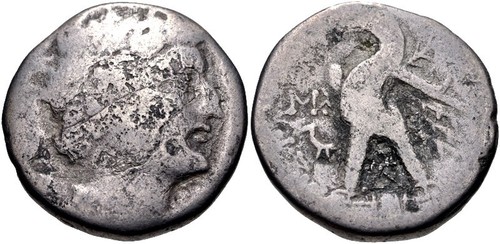
Tetradrachm of Ptolemy XII
80-51 BC
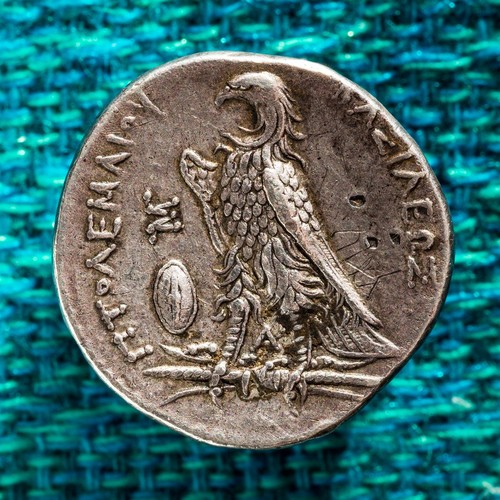
Tetradrachm of Ptolemy I
305-283 BC
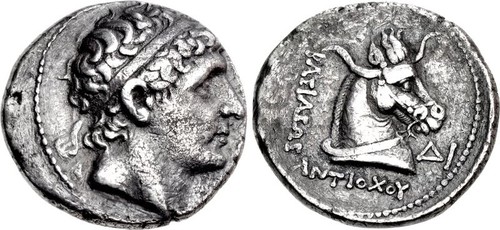
Tetradrachm of Antiochos I Soter
281-261 BC
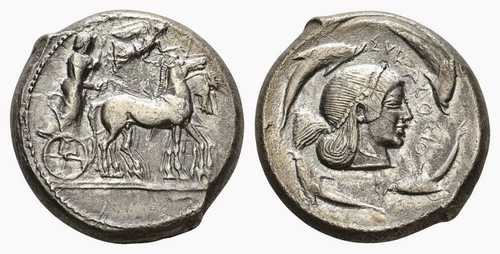
Syracuse Tetradrachm
c. 5th-4th century BC (Classical period)
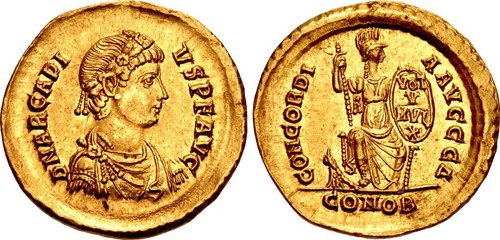
Solidus of Arcadius
AD 395-402
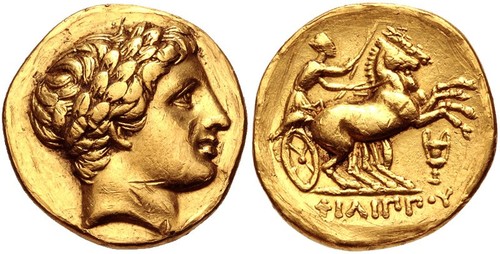
Philip III Gold Stater
323-317 BC
Siliqua of Gratian
AD 367-383
Sestertius of Maximinus Thrax
235-238 AD
Solidus of Valentinian III
AD 425-455
Seleucus I Nicator Tetradrachm
Late 4th-3rd century BC
Nummus of Magnentius
AD 350-353
Follis of Galerius
AD 308-310