
Coin Encyclopedia
Search and identify coins from around the world — with country, denomination, metal, mint, history, and how to tell them apart.
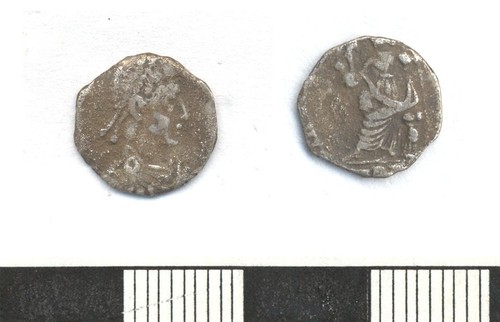
Roman Siliqua
Small late-Roman silver coin of the 4th century AD, with an emperor's portrait facing right and a standing robed figure on the reverse.
Ancient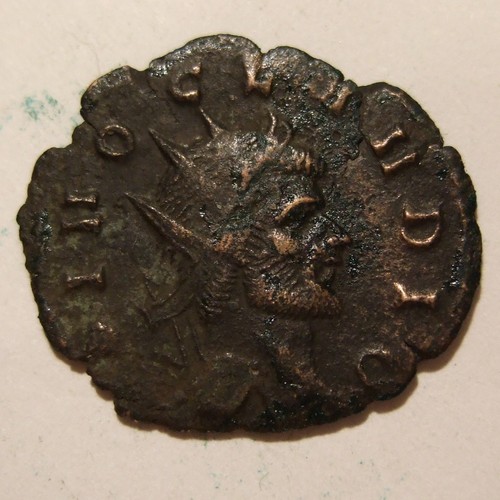
Roman Quadrans
A small Roman bronze quadrans, worth a quarter of an as, here a heavily corroded piece with a laureate head facing right.
Ancient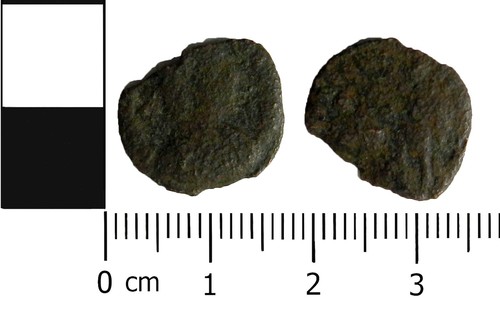
Roman Centenionalis
A small fourth-century Roman bronze coin, part of the reformed low-value currency struck across the empire's mints during a period of frequent monetary change.
Ancient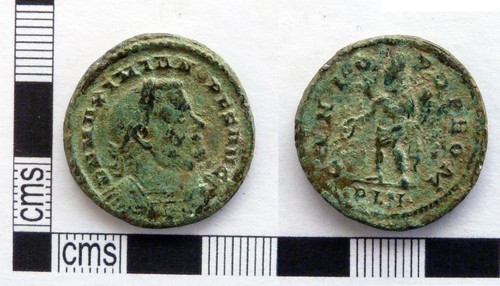
Roman Follis (AE3)
A small late Roman bronze follis of the Constantine I era (AD 320-330), with an emperor's profile obverse and a Victory or vota-in-wreath commemorative reverse.
Ancient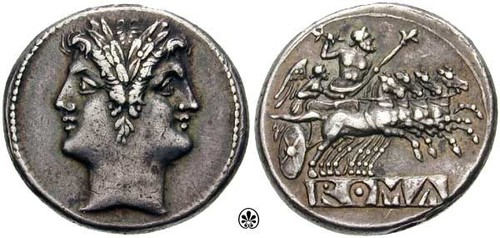
Roman As/Dupondius (Uncertain)
An uncertain Roman bronze As or Dupondius: a double-faced Janus head on one side and a ship (galley/prow) with ROMA below on the other.
Ancient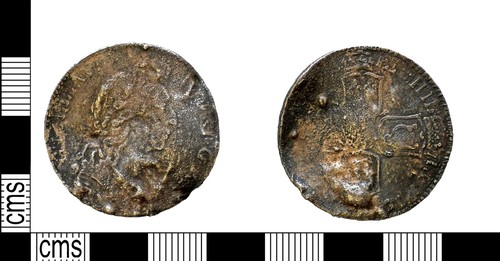
Ancient Roman Coin
An unattributed ancient bronze coin of the Roman Empire, showing a right-facing portrait head on the obverse and a figure or heraldic design on the reverse.
Ancient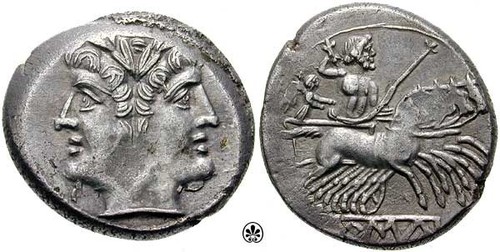
Roman As
A base-metal As of ancient Rome, showing the double-faced head of Janus on one side and a chariot with ROMA on the other.
Ancient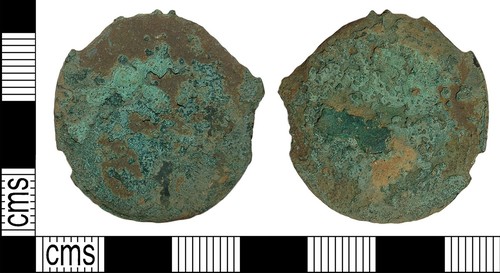
Roman Sestertius (Uncertain Emperor)
A large Roman imperial sestertius in bronze or orichalcum, heavily patinated with a bearded emperor's portrait and a reverse too worn to identify.
Ancient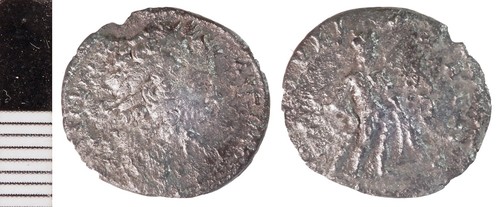
Roman Imperial Denarius (Unidentified)
A silver denarius of the Roman Empire, 2nd century AD, showing an emperor's right-facing curly-haired portrait and a standing imperial reverse type.
Ancient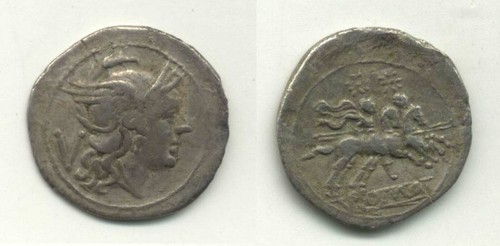
Roman Quinarius
A small Roman silver quinarius, half the value of a denarius, here with a helmeted head of Roma and a prancing horse on the reverse.
Ancient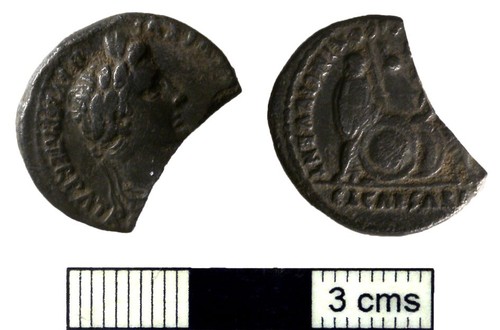
Roman Denarius
A small hammered silver coin of ancient Rome, showing an emperor's portrait and abbreviated Latin titles on one side and a deity or figure on the other.
Ancient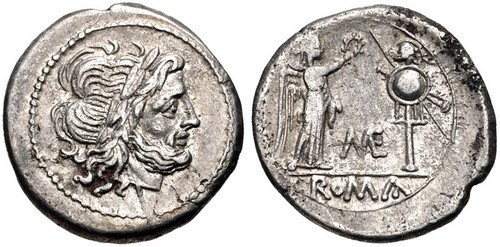
Roman Victoriatus
Silver Roman Republican victoriatus of the late 3rd–2nd century BC, with the laureate head of Jupiter and a Victory crowning a trophy above ROMA.
Ancient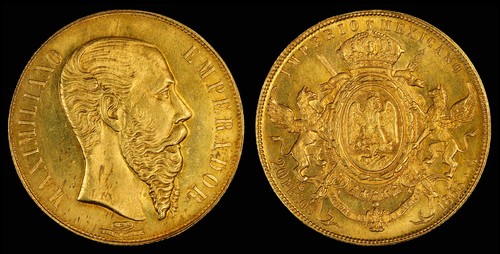
Empire 20 Pesos
A gold 20 pesos of the Second Mexican Empire, showing a bearded imperial portrait, the legend IMPERIO MEXICANO, and a crowned heraldic coat of arms.
Circulation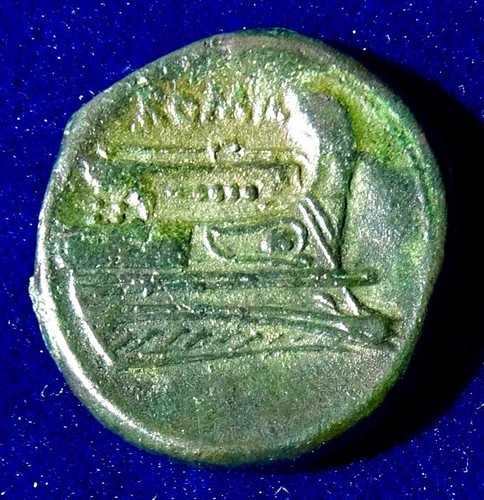
Roman Republic Semuncia
Smallest Roman Republican bronze denomination, worth half an uncia, struck around 217-215 BC with a Mercury head and a galley prow.
Ancient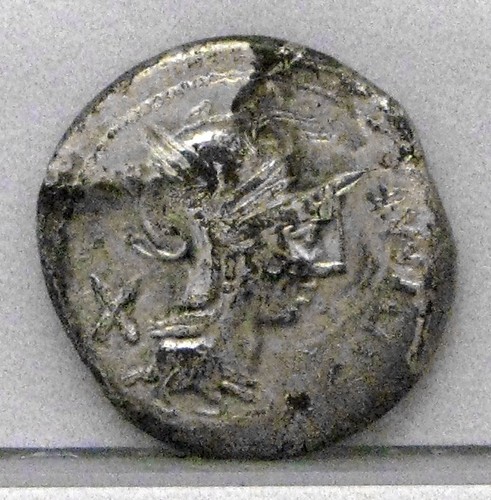
Roman Republican Denarius (Unidentified)
A silver Roman Republican denarius of about 115-114 BC: helmeted Roma on the obverse, Victory driving a two-horse chariot on the reverse.
Ancient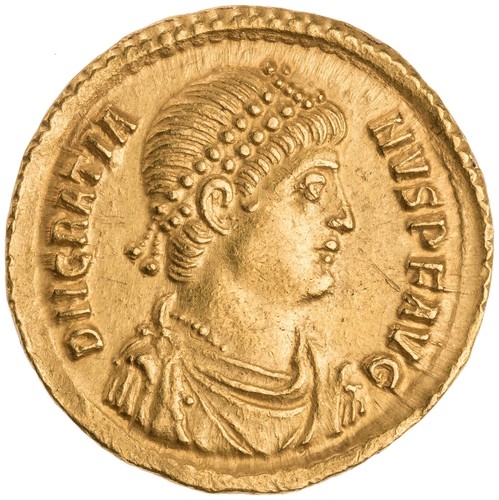
Solidus of Gratian
Late Roman gold solidus of Emperor Gratian (r. 367–383 CE), showing his curly-haired, diademed, draped and cuirassed portrait.
Ancient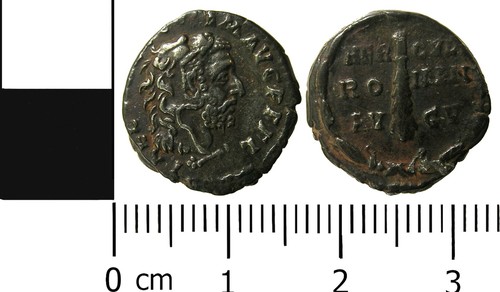
Denarius of Commodus
A silver denarius of the Roman emperor Commodus (180–192 AD), with his laureate bearded portrait and a standing deity or personification on the reverse.
Ancient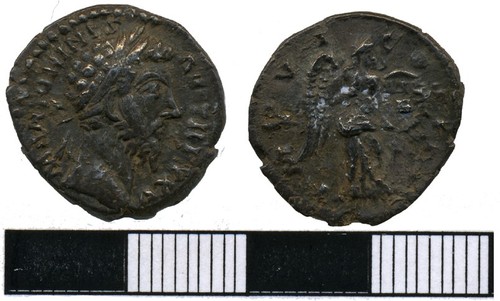
Denarius of Marcus Aurelius
Roman silver denarius of Marcus Aurelius (c. 170-171 AD): laureate bearded emperor on the obverse, a standing personification on the reverse.
Ancient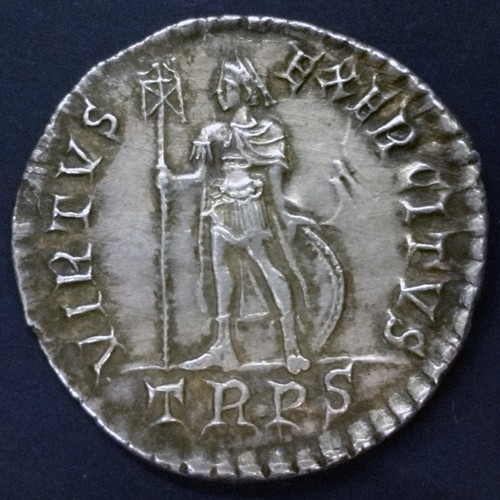
Hoxne Hoard Siliqua
A small late-Roman silver siliqua of the type found in Britain's Hoxne Hoard, with an imperial portrait and a standing figure or personified virtue.
Ancient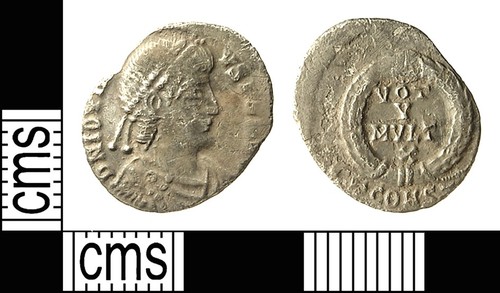
Siliqua of Jovian
Small late-Roman silver siliqua of Emperor Jovian (AD 363–364), with his right-facing portrait and a Victory or standing deity reverse.
Ancient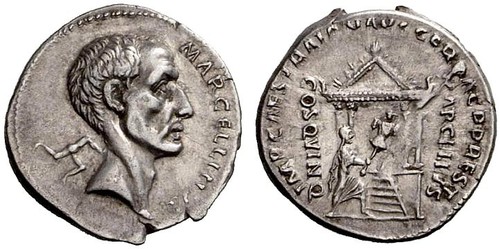
Denarius of Trajan
Silver denarius of the emperor Trajan (98–117 AD), showing his laureate bust and, on this piece, Libertas standing with patera and rod.
Ancient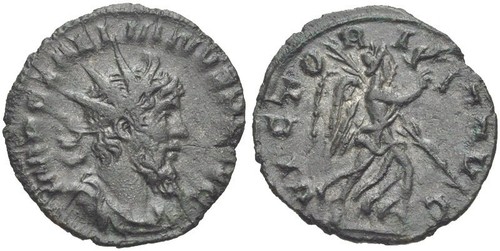
Antoninianus of Laelianus
Rare billon antoninianus of the short-lived Gallic usurper Laelianus, showing his radiate-crowned bust and a Roman deity or personified virtue.
Ancient Coins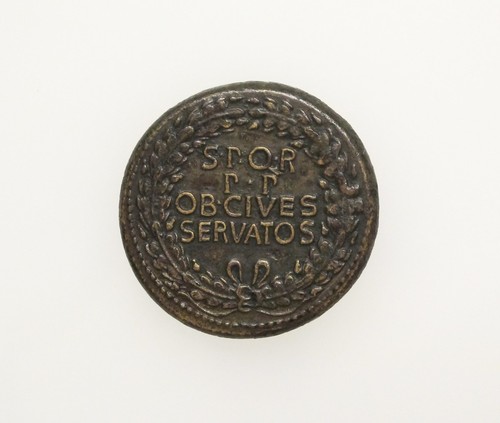
Sestertius of Caligula
Large Roman imperial bronze sestertius bearing the head of Gaius, better known as Caligula, struck during his short reign from 37 to 41 AD.
Ancient Coins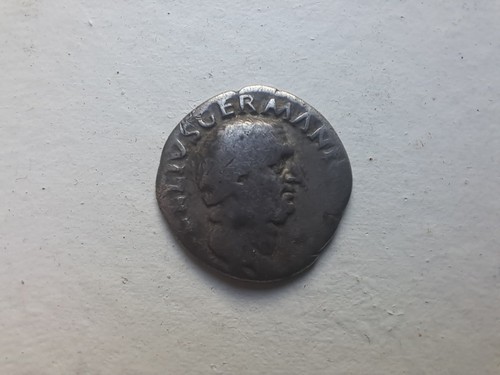
Denarius of Vitellius
A silver denarius of the emperor Vitellius, struck during his brief reign in AD 69, showing his heavy-jowled portrait with curly hair.
Ancient