
Roman As
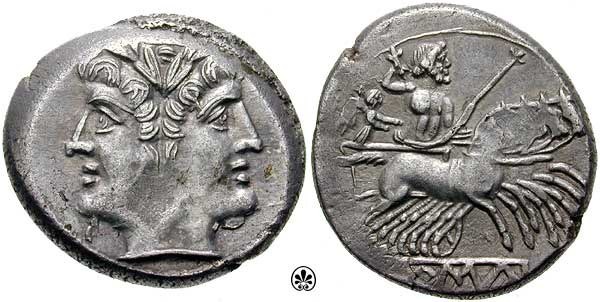
A base-metal As of ancient Rome, showing the double-faced head of Janus on one side and a chariot with ROMA on the other.
- Country
- Rome
- Denomination
- As
- Metal
- Bronze
Got a coin like this?
Identify any coin from a photo, free.
Overview
The As was the standard bronze coin of the Roman world, the everyday small change that Romans used for ordinary purchases. The example shown here carries the distinctive double-faced head of Janus, the two-faced Roman god of beginnings and doorways, on the obverse, and a chariot with its driver together with the inscription ROMA on the reverse. It dates to the last century of the Roman Republic, the 1st century BC.
Struck in bronze (an alloy of copper with tin and lead), the As is a heavy, dark coin whose surfaces usually carry an earthen or green-brown patina from centuries in the ground. The two-headed Janus was one of the most recognizable and long-lived designs used on Roman bronze, and coins like this one are among the most sought-after and evocative of all ancient Roman pieces because of that unmistakable double portrait.
History & Background
The As began as a unit of cast bronze in early Rome and evolved over the Republic into a struck coin of steadily reduced weight. Throughout its history the obverse was strongly associated with the head of Janus, the god depicted with two faces looking in opposite directions, a design that endured for generations as a symbol of the city itself.
By the 1st century BC the Republican coinage was largely the responsibility of annually appointed moneyers (the tresviri monetales), who placed a wide variety of images and legends on the bronze and silver. Reverse designs on the era's coinage ranged from the traditional prow of a warship to figural scenes such as deities, mythological subjects, and chariots, frequently accompanied by the abbreviation ROMA naming the issuing state. The specimen here belongs to this world of late-Republican bronze, produced in the decades before the Republic gave way to the rule of the emperors.
Enormous quantities of Roman bronze were produced across the Republic and early Empire, and As coins circulated widely, which is why worn examples still survive in large numbers today.
How to Identify
The clearest diagnostic is the obverse: a single head bearing two faces, one looking left and one looking right. This is Janus, and the double-faced portrait is the signature of the Roman As. The reverse of this coin shows a chariot driven by a charioteer, with the letters ROMA identifying the issuing authority. On many bronze Asses a mark of value, the letter I (for one As), also appears in the field.
Expect a substantial, thick bronze disc, considerably heavier and darker than most modern small change, typically with an irregular flan and centering rather than the perfectly round, machine-struck look of later coins. Surfaces are usually covered by a natural patina in shades of green, brown, or near-black.
Genuine ancient strikes show hand-cut die work: lettering and portraits with slight unevenness, occasional off-center images, and edges that are not perfectly circular. The metal is a base bronze, not silver or gold, so a bright silvery or yellow appearance would point to a different coin or to surface treatment.
Value & Collectibility
Because Roman bronze was produced in vast quantities, ordinary worn examples of the As are among the more affordable ancient coins, and many circulate in the collector market for modest sums, often from a few tens of dollars to low hundreds depending on preservation.
Condition drives value strongly. A coin with a clear, well-centered Janus head, sharp reverse detail, an attractive patina, and full legends can command a substantial premium over a worn, corroded, or off-center piece where the design is hard to read. Rarer moneyers, unusual reverse types, and exceptional eye appeal push prices higher.
Because this is a heavily reproduced and forged area of the market, provenance and expert attribution matter to value. Coins accompanied by a reputable dealer's identification, an auction pedigree, or authentication carry more confidence and typically realize stronger prices than unattributed finds.
Frequently asked questions
What is the two-faced head on this Roman coin?
It is Janus, the Roman god of doorways, beginnings, and transitions, traditionally shown with two faces looking in opposite directions. The double-faced Janus head is the classic obverse of the bronze As.
What does ROMA mean on the coin?
ROMA simply names Rome as the issuing authority. It is one of the most common inscriptions on Republican coinage and appears here alongside the chariot on the reverse.
Is a Roman As made of silver or bronze?
The As is a base-metal bronze coin, an alloy of copper with tin and lead. It is heavy and dark, quite different from the silver denarius or any gold Roman coinage.
How old is this coin?
This example dates to the 1st century BC, the final century of the Roman Republic, making it roughly two thousand years old.
Are Roman As coins valuable?
As a widely produced type, common worn examples are relatively affordable, while well-preserved pieces with clear detail and attractive patina bring higher prices. Authentication and provenance strongly affect value.
Roman As guides
In-depth guides for identifying, valuing, and collecting Roman As.
Other coins you may enjoy
Tetradrachm of Ptolemy XII
80-51 BC
Tetradrachm of Ptolemy I
305-283 BC
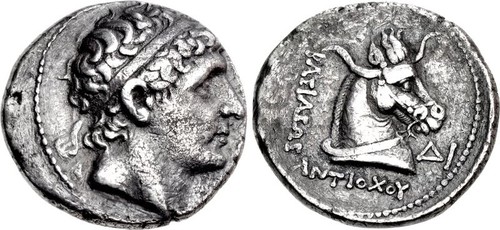
Tetradrachm of Antiochos I Soter
281-261 BC
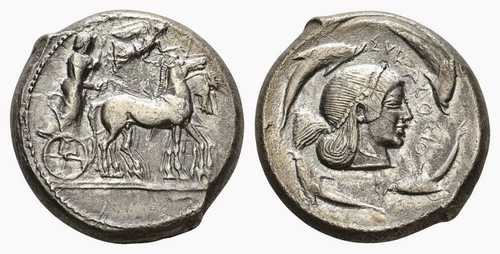
Syracuse Tetradrachm
c. 5th-4th century BC (Classical period)
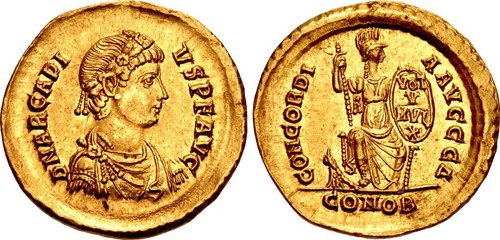
Solidus of Arcadius
AD 395-402
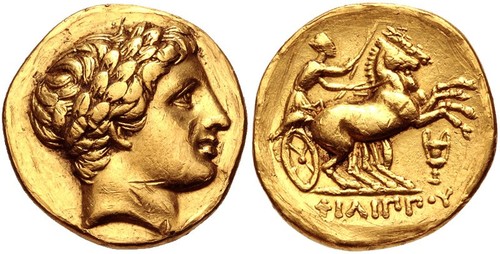
Philip III Gold Stater
323-317 BC
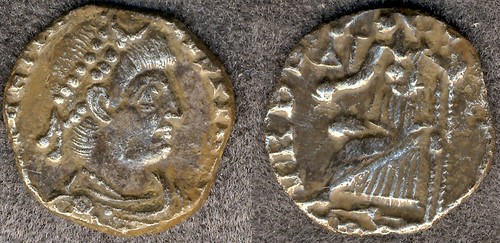
Siliqua of Gratian
AD 367-383
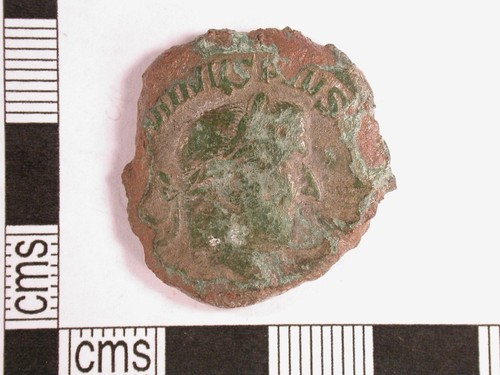
Sestertius of Maximinus Thrax
235-238 AD
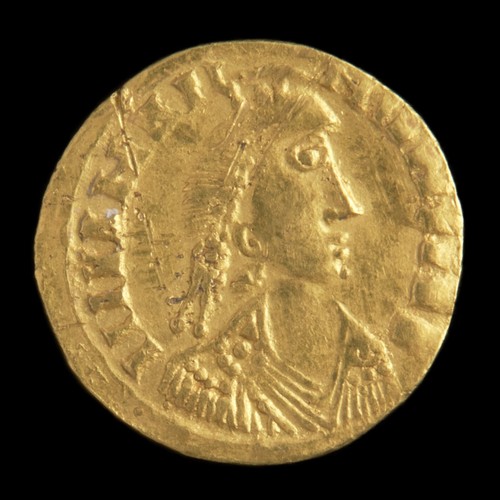
Solidus of Valentinian III
AD 425-455
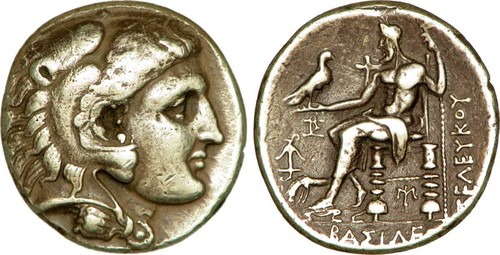
Seleucus I Nicator Tetradrachm
Late 4th-3rd century BC
Nummus of Magnentius
AD 350-353
Follis of Galerius
AD 308-310