
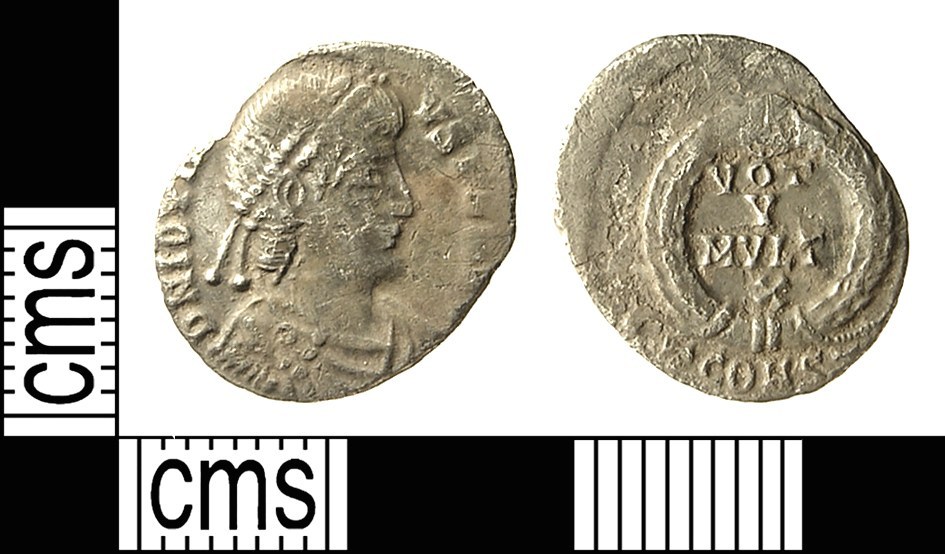
Siliqua of Jovian
Small late-Roman silver siliqua of Emperor Jovian (AD 363–364), with his right-facing portrait and a Victory or standing deity reverse.
- Country
- Roman Empire
- Denomination
- Siliqua
- Metal
- Silver
Got a coin like this?
Identify any coin from a photo, free.
Overview
The siliqua was a small, thin silver coin of the late Roman Empire, and this example was struck during the brief reign of Emperor Jovian (AD 363–364). The obverse shows Jovian's diademed, right-facing portrait accompanied by a legend naming him as emperor, rendered here as IOVIANVS AVG. The reverse carries a figure of Victory or a standing deity holding attributes, a common theme on late-Roman silver.
Because Jovian ruled for only about eight months, coins in his name form a compact and historically distinct issue. The siliqua is physically modest, roughly the size of a fingernail and struck on a broad, flat flan, but it belongs to one of the most recognizable silver denominations of the fourth century. Examples like the one shown here are prized as tangible relics of a very short imperial reign.
History & Background
Jovian was proclaimed emperor by the army in June AD 363, in the field in Mesopotamia, immediately after the death of Julian the Apostate during the retreat from a Persian campaign. He negotiated a peace with the Sasanian Persians and began the journey back toward Constantinople, but died suddenly in February AD 364, having reigned only around eight months.
The siliqua denomination was a staple of the reformed silver coinage of the fourth-century empire, issued from mints across the Roman world to pay soldiers and officials. Jovian's coins were produced at several imperial mints during his short reign, so surviving pieces reflect a limited but genuine wartime and transitional issue struck as power passed from Julian to Jovian and then to the Valentinianic dynasty that followed.
As a Christian ruler who reversed some of Julian's pagan-favoring policies, Jovian is a notable if fleeting figure in the transition of the later Roman Empire, and his coinage is collected as a marker of that pivotal moment.
How to Identify
The obverse is the key diagnostic: a right-facing imperial bust, typically diademed and draped, with a Latin legend around the rim naming Jovian. On this coin the legend reads as a form of IOVIANVS AVG (Latin often renders the initial J as I). The portrait style is the stylized, late-Roman type rather than the naturalistic look of earlier centuries.
The reverse shows a standing figure, either a winged Victory advancing or a standing deity, holding attributes such as a wreath, palm, or standard, usually with a legend and a mint mark in the exergue beneath. The coin is silver, small in diameter, thin, and often struck on a slightly irregular or clipped flan, which is normal for siliquae of this period.
Confirm the identity through the combination of the Jovian obverse legend, the compact silver fabric, and a late-fourth-century reverse type. The short reign means the date is effectively fixed to AD 363–364 once the emperor's name is read correctly.
Value & Collectibility
Silver siliquae of Jovian are genuinely scarce because of his short reign, and they generally command more than the common bronze issues of the period. Values depend heavily on condition, completeness of the flan (siliquae were frequently clipped in antiquity), strike quality, and how clearly the legend and portrait read.
Modest examples with wear, clipping, or weak strikes typically trade in the low-to-mid hundreds of dollars, while well-centered, sharply struck, and unclipped pieces can reach substantially higher. Provenance, mint mark, and eye appeal all add premiums, and a clean full-flan portrait is the single biggest driver of price.
As with all ancient coins, condition grading and authentication matter more than any headline figure, and prices are best understood as ranges set by the market for comparable specimens rather than fixed catalog values.
Frequently asked questions
Who was Emperor Jovian?
Jovian was a Roman emperor who reigned only about eight months, from June AD 363 to February AD 364. The army proclaimed him after Julian died on campaign against Persia, and he is remembered for restoring favor to Christianity before his sudden death.
Why does the legend say IOVIANVS instead of Jovianus?
Latin inscriptions use I where modern English uses J, and V where we use U. So IOVIANVS AVG is simply the Roman spelling of Jovianus Augustus, meaning Jovian the emperor.
What is a siliqua?
The siliqua was a small, thin silver coin of the late Roman Empire, part of the reformed fourth-century silver coinage used to pay soldiers and officials. It is much smaller and lighter than earlier Roman silver denarii.
Are Jovian's coins rare?
Because he reigned for less than a year, all of Jovian's coins are relatively scarce, and his silver siliquae are especially sought after by collectors of late-Roman coinage.
Why are so many siliquae clipped around the edge?
Clipping, the shaving of silver from a coin's rim, was common in the late Roman and early post-Roman period as people trimmed off small amounts of precious metal. A full, unclipped flan is therefore more desirable and more valuable.
Siliqua of Jovian guides
In-depth guides for identifying, valuing, and collecting Siliqua of Jovian.
Other coins you may enjoy
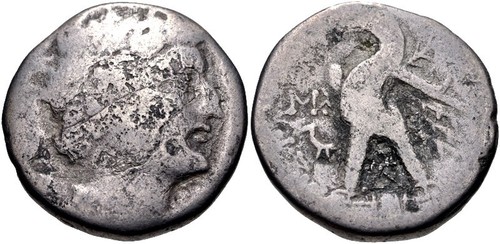
Tetradrachm of Ptolemy XII
80-51 BC
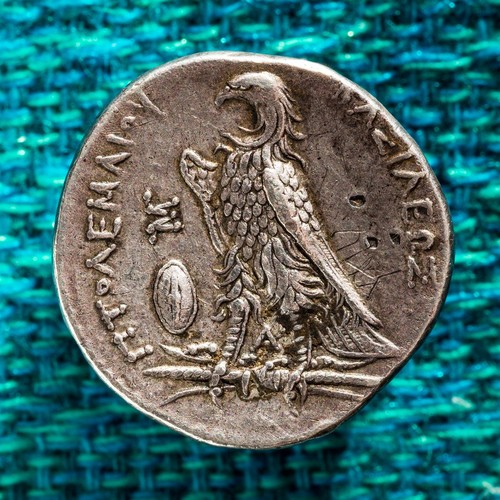
Tetradrachm of Ptolemy I
305-283 BC
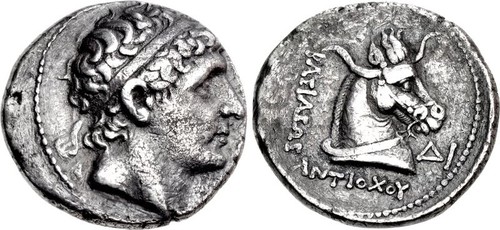
Tetradrachm of Antiochos I Soter
281-261 BC
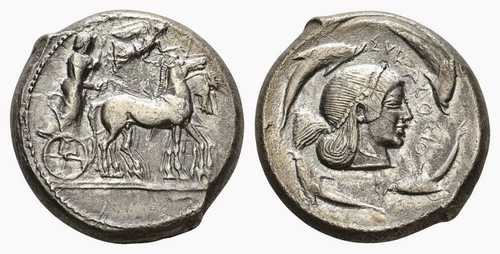
Syracuse Tetradrachm
c. 5th-4th century BC (Classical period)
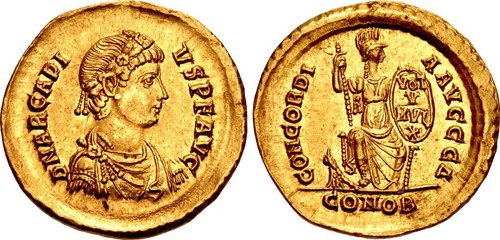
Solidus of Arcadius
AD 395-402
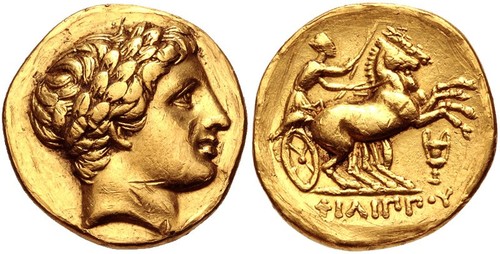
Philip III Gold Stater
323-317 BC
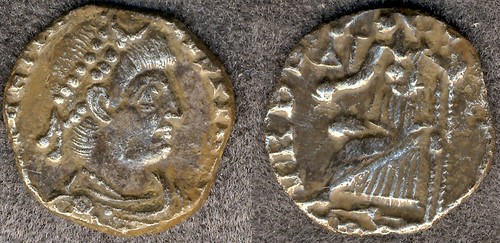
Siliqua of Gratian
AD 367-383
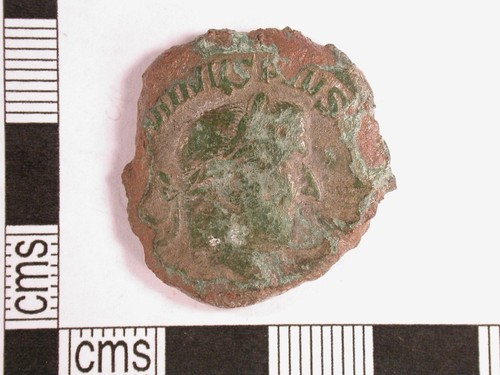
Sestertius of Maximinus Thrax
235-238 AD
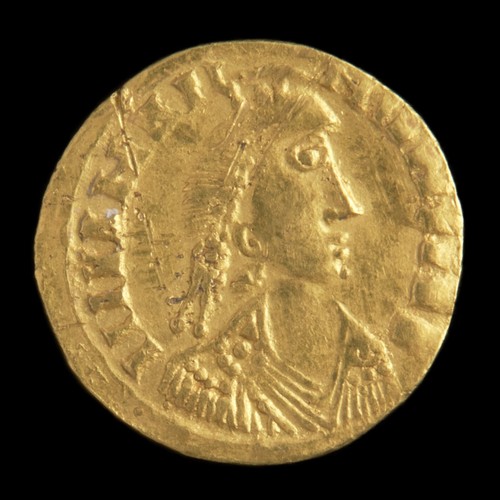
Solidus of Valentinian III
AD 425-455
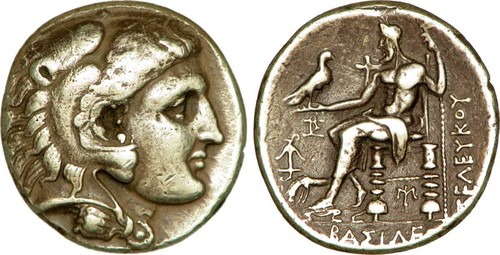
Seleucus I Nicator Tetradrachm
Late 4th-3rd century BC
Nummus of Magnentius
AD 350-353
Follis of Galerius
AD 308-310