
How to Identify the Siliqua of Jovian
A collector's guide to recognizing Jovian's late-Roman silver siliqua by its portrait, IOVIANVS legend, reverse type, and silver fabric.
Read the full Siliqua of Jovian encyclopedia entry →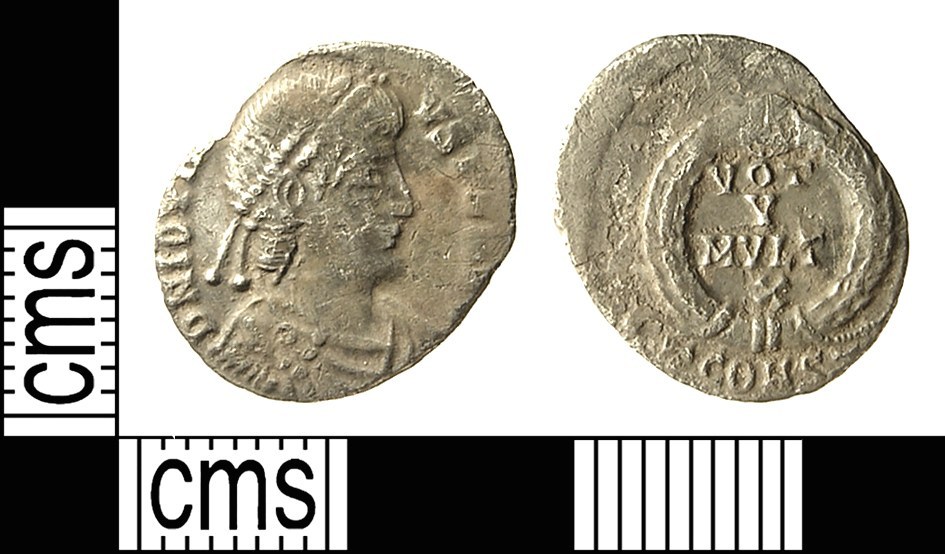
Begin with the obverse legend, which is the decisive clue. Read the letters around the right-facing bust: a siliqua of Jovian will name him in Latin as a form of IOVIANVS AVG, remembering that Roman engraving uses I for J and V for U. Confirming the emperor's name is what fixes the coin to the narrow window of AD 363–364, since his reign lasted only about eight months.
Study the portrait and fabric together. The bust faces right and is rendered in the stylized late-Roman manner, usually diademed and draped, not the lifelike style of earlier imperial coinage. The coin should be silver, small in diameter, thin, and often struck on a broad but slightly irregular flan. Weigh and measure it if you can: a genuine siliqua is light and delicate, and a heavy or thick piece suggests a different denomination or a modern copy.
Turn to the reverse to check the type. Expect a standing figure, either a winged Victory advancing with wreath and palm or a standing deity holding attributes, with a legend around and a mint mark in the exergue beneath the figure. Note the mint mark and reverse legend, as these help attribute the coin to a specific mint and confirm it matches known Jovian issues rather than a mismatched or tooled piece.
Watch for clipping and surface problems. Many authentic siliquae were clipped in antiquity, leaving an undersized or slightly polygonal edge; that is normal and does not by itself indicate a fake, though it reduces value. Be more cautious about tooled details, smoothed fields, or cast surfaces with bubbles and a soft, mushy strike, which point to modern reproductions.
Rule out look-alikes and fakes carefully. Siliquae of neighboring emperors such as Julian, Valentinian I, and Valens share the same size and reverse themes, so the obverse legend is what separates them from Jovian. Because his coins carry a premium, they are worth authenticating: seek a clear reading of the legend, compare against published examples, and when value is significant, rely on a reputable dealer or third-party expert rather than the seller's attribution alone.
Frequently asked questions
What single feature confirms the coin is Jovian's?
The obverse legend naming IOVIANVS AVG around the right-facing bust is the definitive identifier. Since Jovian reigned only from AD 363 to 364, reading his name reliably dates and attributes the coin.
How can I tell a real siliqua from a modern copy?
Genuine siliquae are thin, light silver with a crisp hand-struck look and often ancient clipping. Cast fakes show bubbles, seams, and soft mushy detail, while tooled pieces have unnaturally sharp recut lines. When in doubt, get an expert opinion.
Does a clipped or irregular edge mean the coin is fake?
No. Clipping the rim to shave off silver was common in antiquity, so many authentic siliquae have undersized or uneven edges. It lowers value but is not a sign of forgery on its own.
How do I distinguish Jovian's siliqua from those of Julian or Valentinian?
They share the same small silver fabric and similar Victory or standing-figure reverses, so the reverse alone will not decide it. Read the obverse legend: only a coin naming Jovian (IOVIANVS) belongs to him.