
Roman Quinarius
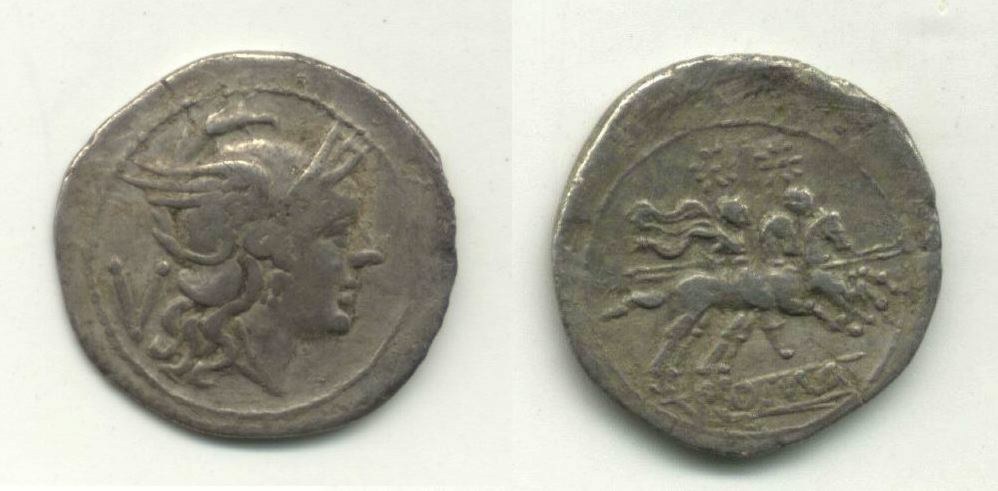
A small Roman silver quinarius, half the value of a denarius, here with a helmeted head of Roma and a prancing horse on the reverse.
- Country
- Roman
- Denomination
- Quinarius
- Metal
- Silver
Got a coin like this?
Identify any coin from a photo, free.
Overview
The quinarius was a small silver denomination of ancient Rome, valued at half a denarius. It is one of the smaller silver coins of the Roman world, and surviving examples are notably tiny and light compared with the more familiar denarius. The piece shown here carries a helmeted head of Roma facing right on the obverse and a horse prancing right on the reverse.
On this example the obverse shows Roma wearing a Corinthian-style helmet with curled hair beneath, a classic personification of the city and its martial identity. The reverse horse is a common Roman coin motif tied to victory, cavalry, and imperial imagery. Because the quinarius was struck intermittently rather than continuously, individual issues can vary considerably in design, and any given piece is best read from its own obverse and reverse types rather than a single fixed pattern.
History & Background
The quinarius originated in the Roman Republic as a silver coin marked with the numeral V, standing for five asses, exactly half the value of the denarius. Its production was never as steady as that of the denarius; it appeared in bursts, faded from use, and was periodically revived, so quinarii are far scarcer than the everyday denarius.
Under the Empire the silver quinarius continued as an occasional issue, often struck to mark specific events, reigns, or commemorations rather than as a mainstay of daily commerce. Reverse types drawn from Roman iconography, including figures of Victory and horses, recur across many of these issues. The example here, attributed to the 1st–2nd century AD, sits within this imperial-era tradition of small, sporadically minted silver.
Because the denomination was produced in comparatively limited numbers and over scattered periods, exact mintage figures are not recorded, and the historical picture is pieced together from surviving coins, hoards, and ancient references rather than from precise production records.
How to Identify
Size is the first clue: the quinarius is a small, light silver coin, roughly half the weight of a denarius, so a very small ancient silver piece is a strong starting point. The metal should read as silver, though ancient examples are often toned, patinated, or slightly debased in appearance.
On this coin, identify the obverse by the head of Roma facing right wearing a Corinthian-style helmet, with curled hair visible beneath the helmet. The reverse shows a horse prancing to the right. Look also for traces of Latin lettering, legends, or control marks in the fields and around the rim, which on quinarii can name authorities or carry the denomination mark; these are frequently worn or off-center on small ancient flans.
Ancient hand-struck coins like this are typically irregular in shape, with uneven borders and centering, and no two are identical. Weight, diameter, and the specific obverse and reverse types together are what pin down a quinarius versus a denarius or another small silver denomination.
Value & Collectibility
Values for Roman silver quinarii vary widely with issue, condition, and the strength of the strike. As a scarcer denomination than the denarius, an identifiable, reasonably preserved silver quinarius commonly falls somewhere in the low tens to low hundreds of dollars, while worn, corroded, or poorly centered pieces sit at the lower end.
Exceptional examples with sharp detail, clear legends, attractive toning, and well-documented attribution to a specific issuer or reign can command higher prices, particularly for rarer types. Conversely, damage, tooling, smoothing, or heavy wear reduce value substantially.
Because ancient coins are actively forged, provenance and authentication weigh heavily on price. A quinarius accompanied by a credible attribution, dealer record, or third-party certification will generally be worth considerably more than an unattributed piece of similar apparent grade.
Frequently asked questions
What is a Roman quinarius worth?
It depends on the issue and condition. Many identifiable silver quinarii sell in the low tens to low hundreds of dollars, with worn or damaged pieces lower and sharp, well-attributed examples higher. Authentication and provenance strongly affect price.
How is a quinarius different from a denarius?
The quinarius was worth half a denarius and is a smaller, lighter silver coin. It was struck far less often, so quinarii are considerably scarcer than the common denarius.
Who is on the obverse of this coin?
This example shows the head of Roma, the personification of the city of Rome, facing right and wearing a Corinthian-style helmet with curled hair beneath it.
Are Roman quinarii often faked?
Ancient Roman silver is a common target for forgeries and altered coins. Because of this, weight, style, strike, and above all provenance or third-party certification matter a great deal when judging authenticity.
Roman Quinarius guides
In-depth guides for identifying, valuing, and collecting Roman Quinarius.
Other coins you may enjoy
Tetradrachm of Ptolemy XII
80-51 BC
Tetradrachm of Ptolemy I
305-283 BC
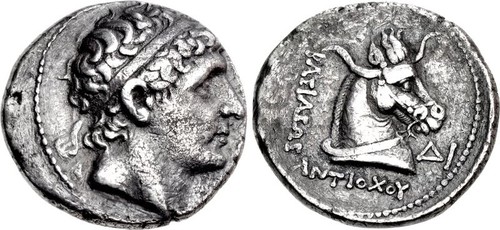
Tetradrachm of Antiochos I Soter
281-261 BC
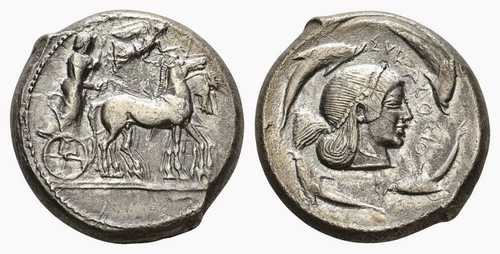
Syracuse Tetradrachm
c. 5th-4th century BC (Classical period)
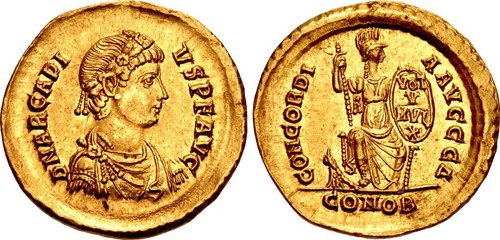
Solidus of Arcadius
AD 395-402
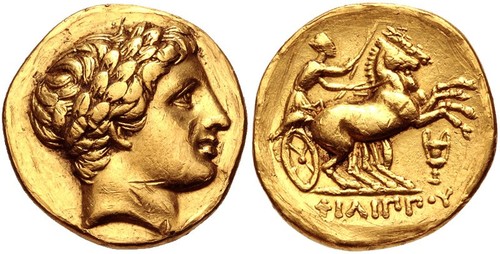
Philip III Gold Stater
323-317 BC
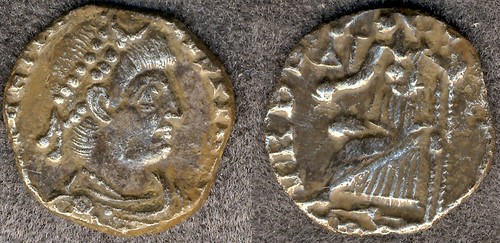
Siliqua of Gratian
AD 367-383
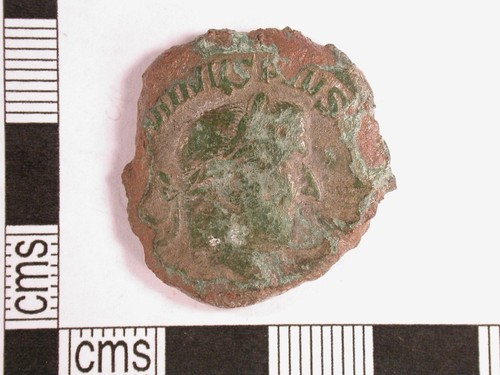
Sestertius of Maximinus Thrax
235-238 AD
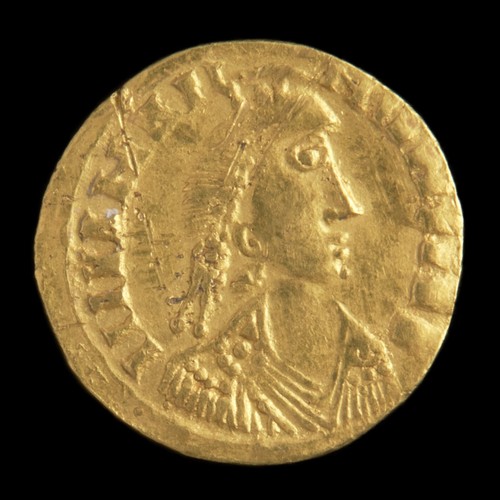
Solidus of Valentinian III
AD 425-455
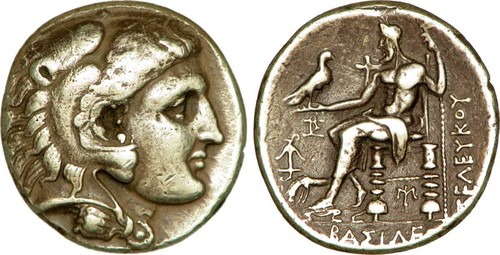
Seleucus I Nicator Tetradrachm
Late 4th-3rd century BC
Nummus of Magnentius
AD 350-353
Follis of Galerius
AD 308-310