
How to Identify the Roman Quinarius
A collector's guide to recognizing a Roman silver quinarius by its small size, half-denarius weight, and obverse and reverse types.
Read the full Roman Quinarius encyclopedia entry →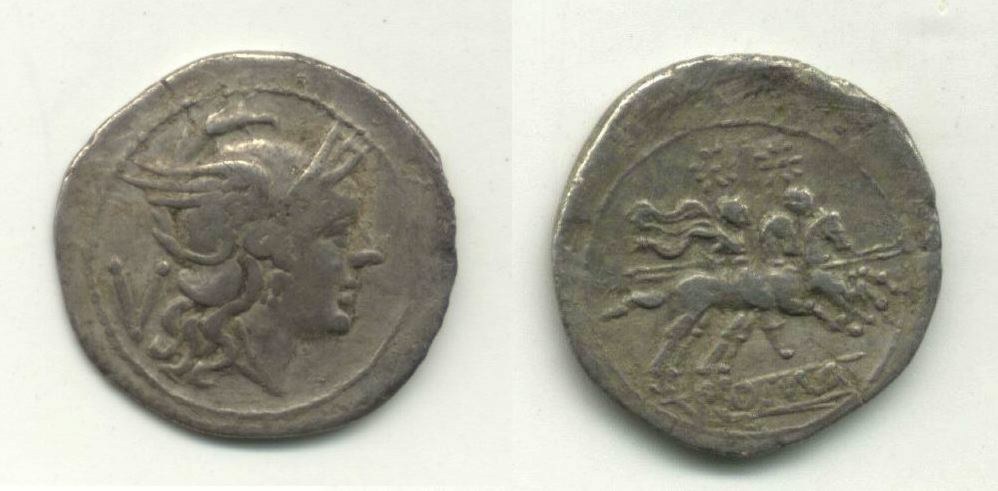
Begin with size and weight, because they do most of the identification work. The quinarius is a small silver coin struck at roughly half the weight of a denarius, so a distinctly tiny, light ancient silver piece is the first sign you may have one rather than a denarius or a larger denomination. Weigh and measure it if you can, and compare against reference figures for small Roman silver.
Read the two faces carefully. On this coin the obverse carries a head of Roma facing right in a Corinthian-style helmet, with curled hair beneath, a personification used across Roman coinage. The reverse shows a horse prancing to the right. Note the direction the head and horse face, the style of the helmet, and any objects, figures, or symbols in the field, since these details separate one quinarius issue from another and from look-alike denarii that use similar motifs.
Search for legends and control marks. Quinarii can carry Latin inscriptions naming an authority, a denomination mark, or small control symbols in the fields and along the rim. On small flans these are often weak, off-center, or partly missing, so examine the coin under good light and magnification and record whatever letters survive; even fragments help attribute the piece.
Expect irregularity. Being hand-struck on a small flan, a genuine quinarius will usually be somewhat uneven in shape, centering, and border, with natural toning or patina rather than the flawless, uniform look of a machine-made coin. Be cautious of pieces that look too perfect, unusually smooth, or artificially sharp, as these can indicate tooling or a modern forgery. Given how heavily ancient silver is faked, treat authentication, expert opinion, and documented provenance as part of the identification, not an afterthought.
Frequently asked questions
What is the quickest way to tell a quinarius from a denarius?
Size and weight. The quinarius is markedly smaller and lighter, at about half the weight of a denarius. If a small Roman silver coin is much lighter than a typical denarius, a quinarius is a strong possibility.
What should I look for on the two faces?
On this coin, a right-facing head of Roma in a Corinthian-style helmet on the obverse and a horse prancing right on the reverse. Note facing direction, helmet style, and any field symbols or letters to narrow down the specific issue.
Why are the legends hard to read?
Quinarii are small, hand-struck coins, so inscriptions and control marks are often weak, off-center, or worn. Use magnification and good lighting, and record any surviving letters to help with attribution.
How do I avoid buying a fake?
Ancient Roman silver is frequently forged or tooled. Favor coins with credible provenance, dealer records, or third-party certification, and be wary of pieces that look unnaturally smooth, sharp, or perfectly centered.