
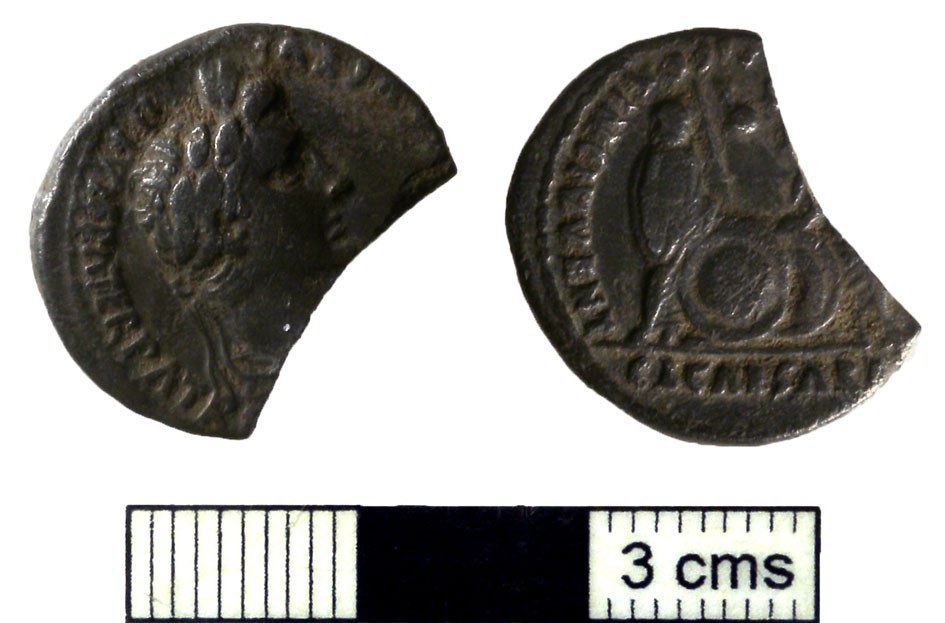
Roman Denarius
A small hammered silver coin of ancient Rome, showing an emperor's portrait and abbreviated Latin titles on one side and a deity or figure on the other.
- Country
- Ancient Rome
- Denomination
- Denarius
- Metal
- Silver
Got a coin like this?
Identify any coin from a photo, free.
Overview
The denarius was the standard silver coin of ancient Rome for centuries, the everyday high-value money of the Republic and then the Empire. The example seen here is an imperial issue, roughly of the 1st to 2nd century AD, with a male portrait in profile on the obverse and a standing figure or deity on the reverse. The clipped legend reading like 'PONTIF' or 'PONTIFF' reflects the imperial title PONTIF MAX (pontifex maximus, chief priest), one of the offices routinely listed in an emperor's titulature.
Because it was struck by hand from hand-engraved dies, no two denarii are exactly alike. Portraits, lettering, and centering vary, and the flans are often slightly irregular and off-round. This is normal for ancient coinage and is part of how genuine pieces are recognized.
Denarii were produced in enormous numbers over a very long period, so the type as a whole is common, but individual coins range from worn, affordable specimens to sharp, sought-after portraits of specific emperors. They are among the most collected of all ancient coins.
History & Background
The denarius was introduced during the Roman Republic, traditionally around 211 BC, as a silver coin whose name means 'containing ten' (originally valued at ten bronze asses). It quickly became the backbone of Roman coinage and the principal silver denomination for daily commerce, soldiers' pay, and state expenditure.
Under the Empire, from Augustus onward, the denarius carried the ruling emperor's portrait and an ever-changing array of reverse designs, gods, personifications such as Pax or Fortuna, military and dynastic themes, and commemorations of buildings or victories. The legends spelled out imperial names and honors in heavy abbreviation, including titles like PONTIF MAX, TR POT, COS, and IMP. Over the 1st and 2nd centuries the coin's silver content was gradually reduced.
By the mid-3rd century AD the denarius had been debased and largely superseded by the antoninianus, and it faded from regular production. Later Roman monetary reforms replaced the old silver system entirely. The surviving denarii, buried in hoards and scattered across the former empire, are what collectors handle today.
How to Identify
Look first at the obverse: a bare or laureate male head in profile, usually facing right, ringed by an abbreviated Latin legend running clockwise around the rim. Fragments such as PONTIF, MAX, TR POT, COS, or IMP are the emperor's titles rather than his personal name alone, and reading the full legend (even partially) is the key to attributing the coin to a specific ruler.
The reverse typically shows a single standing or seated figure, a deity or a personification, holding attributes like a scepter, cornucopia, patera, or spear, with its own abbreviated legend naming the theme. The coin is small, roughly 17-20 mm across and light, on the order of about 3 to 4 grams, and struck in silver that on ancient pieces often tones to gray with darker recesses.
Diagnostic traits of a genuine denarius include a hand-struck, slightly irregular flan, high-relief but individualized portraiture, and evidence of die-striking rather than casting (no seam around the edge, no bubbles). Centering is frequently imperfect, so parts of the legend may run off the flan, exactly as on the coin photographed here.
Value & Collectibility
Denarii span a very wide value range. Common, heavily worn coins of frequently seen emperors are among the most affordable genuine ancient coins and often trade in the low tens of dollars. Well-centered examples with clear portraits and legends, or coins of scarcer rulers, command substantially more, and exceptional or rare types can reach into the hundreds or beyond.
Value is driven by the identifiable emperor, the reverse type, the sharpness of the strike, centering, and overall preservation of the silver surface. A readable legend that pins down the ruler matters greatly, since an unattributable worn coin is worth far less than the same emperor's coin with a crisp portrait and inscription.
Because exact figures depend on attribution, grade, and the market, treat any single number as context rather than a fixed price. For a coin like this one, professional attribution of the emperor and reverse is the single biggest factor in establishing a realistic value.
Frequently asked questions
Does 'PONTIF' on the coin mean it is religious?
Not in the modern sense. PONTIF is short for pontifex maximus, 'chief priest,' a standard title held by Roman emperors. It is part of the ruler's official titulature on the coin, not a reference to a pope or a church.
How can I tell which emperor is on my denarius?
Read the obverse legend around the portrait. The abbreviated Latin names and titles identify the ruler. Even a partial legend, combined with the portrait style and the reverse type, is usually enough for a specialist to attribute it.
Is the denarius solid silver?
Early imperial denarii are good silver, but the metal was gradually debased over the 1st to 3rd centuries. A genuine piece is a silver alloy that typically tones gray; it is not a modern coin metal, and its exact fineness depends on when it was struck.
Why is the coin not perfectly round?
Denarii were struck by hand on individually prepared blanks, so irregular, off-center, and slightly oval flans are normal and expected. Perfectly round, seamless uniformity would instead be a warning sign of a modern cast copy.
Are Roman denarii rare?
As a type they are common because they were minted in huge quantities for centuries. However, specific emperors, reverse designs, and high-grade examples can be genuinely scarce, so rarity depends on the individual coin, not the denomination.
Roman Denarius guides
In-depth guides for identifying, valuing, and collecting Roman Denarius.
Other coins you may enjoy
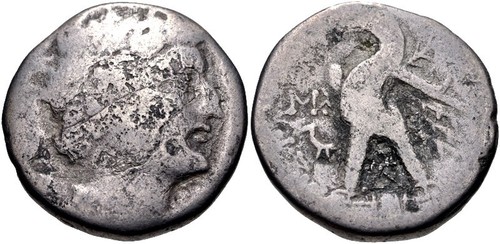
Tetradrachm of Ptolemy XII
80-51 BC
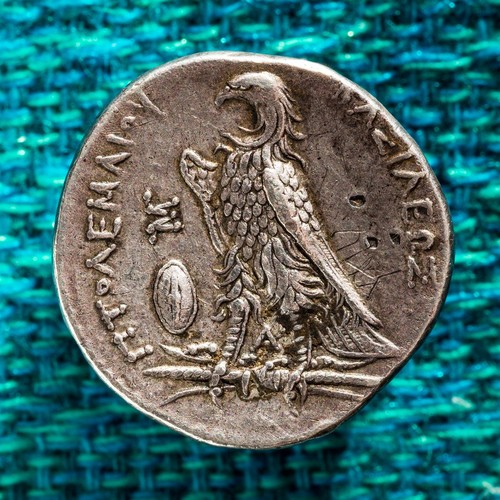
Tetradrachm of Ptolemy I
305-283 BC
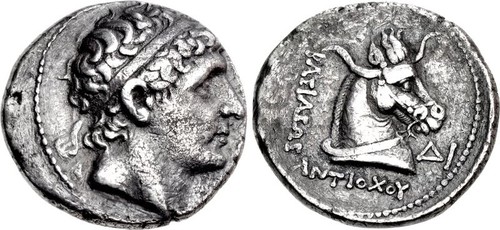
Tetradrachm of Antiochos I Soter
281-261 BC
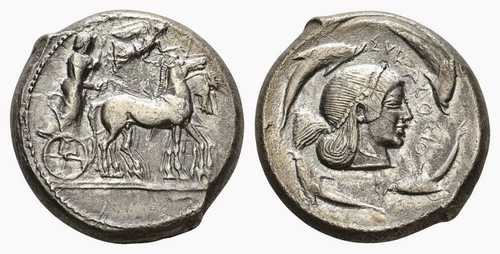
Syracuse Tetradrachm
c. 5th-4th century BC (Classical period)
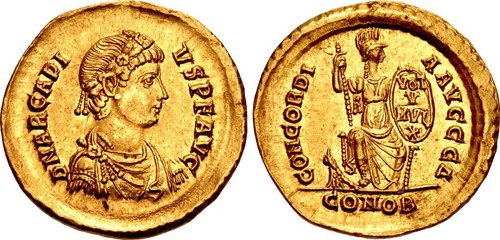
Solidus of Arcadius
AD 395-402
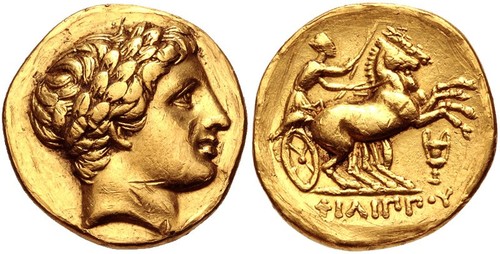
Philip III Gold Stater
323-317 BC
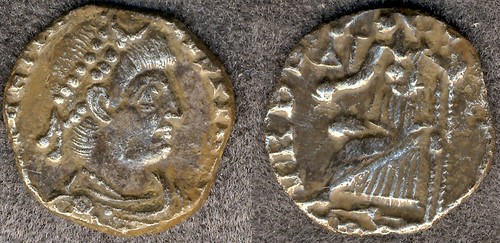
Siliqua of Gratian
AD 367-383
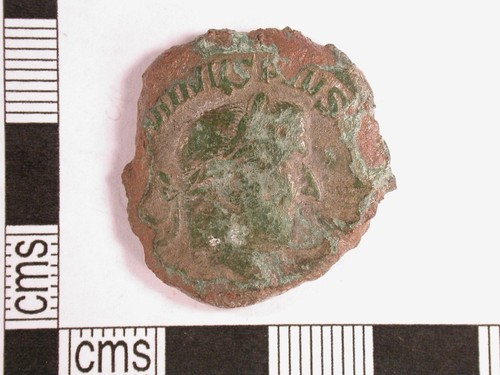
Sestertius of Maximinus Thrax
235-238 AD
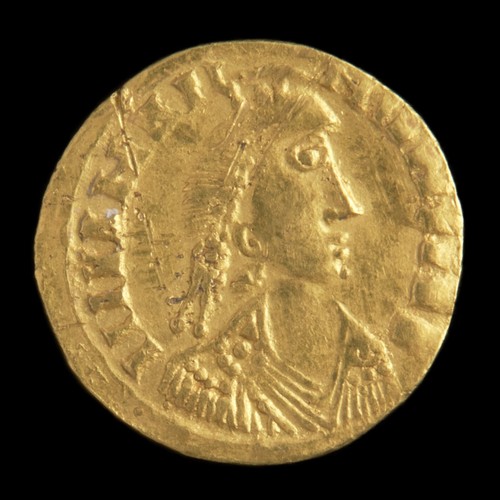
Solidus of Valentinian III
AD 425-455
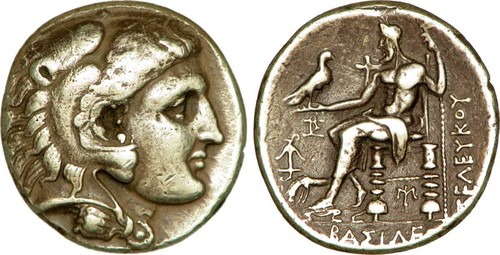
Seleucus I Nicator Tetradrachm
Late 4th-3rd century BC
Nummus of Magnentius
AD 350-353
Follis of Galerius
AD 308-310