
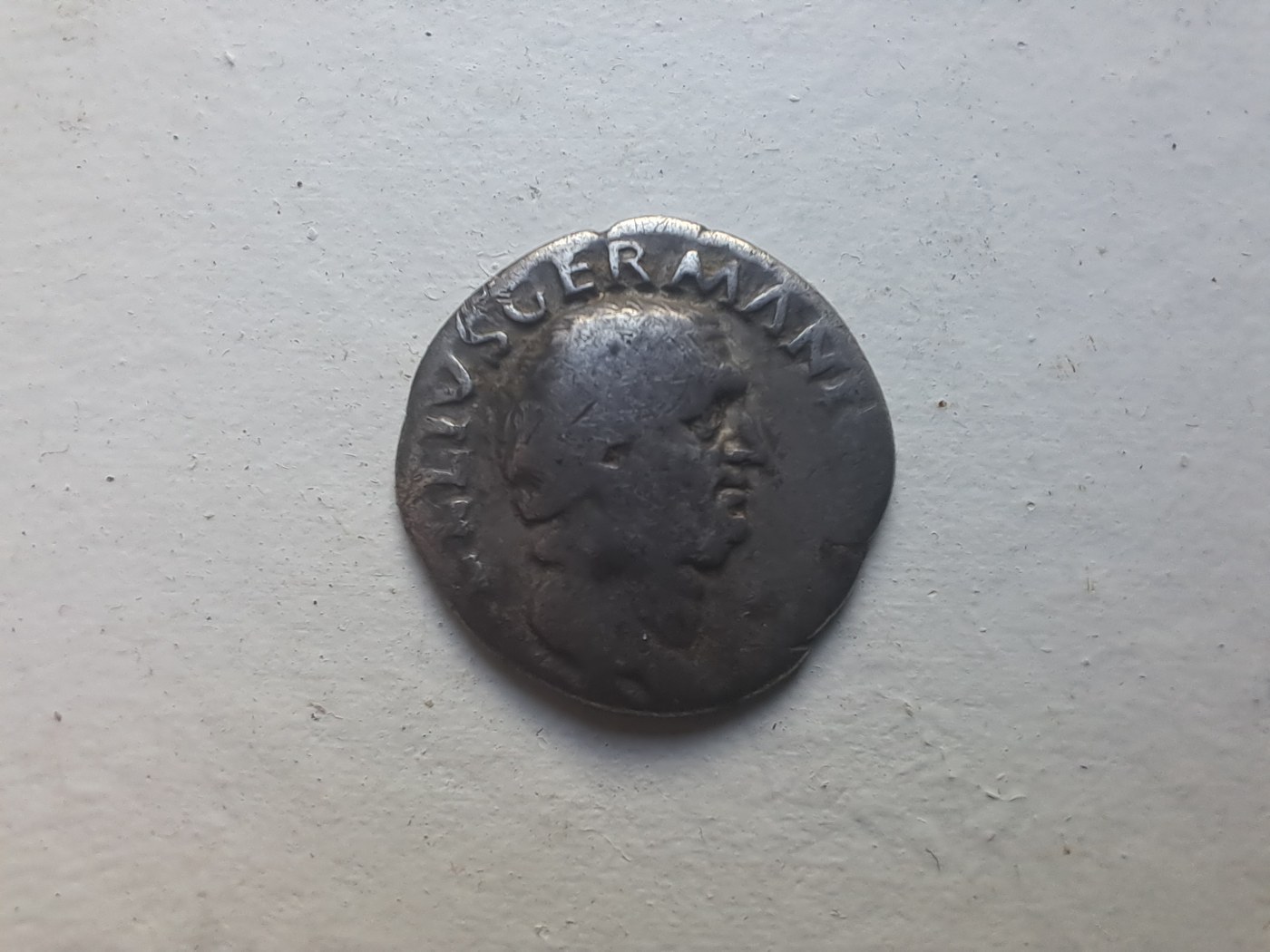
Denarius of Vitellius
A silver denarius of the emperor Vitellius, struck during his brief reign in AD 69, showing his heavy-jowled portrait with curly hair.
- Country
- Roman Empire
- Denomination
- Denarius
- Metal
- Silver
Got a coin like this?
Identify any coin from a photo, free.
Overview
The denarius of Vitellius is a Roman imperial silver coin issued during the reign of Aulus Vitellius, who held power for only a few months in AD 69, the tumultuous "Year of the Four Emperors." The example photographed here shows the obverse: a bust of Vitellius facing right, rendered with the emperor's characteristically full face and curly hair, surrounded by an abbreviated Latin legend giving his name and titles.
The denarius was the standard silver coin of the Roman world, and Vitellius issues were struck at Rome and, in the earliest phase, at mints in Gaul and Spain that supported his bid for power. Because his reign was so short, coinage bearing his portrait was produced for only a brief window, making genuine denarii of Vitellius a sought-after prize among collectors of the twelve Caesars and of the civil-war period.
Reverse designs on Vitellius denarii vary and are not visible on this obverse-only photograph; common types feature deities, tripods, and dynastic references to his children, but this entry describes the coin as seen, by its portrait side.
History & Background
Vitellius rose to the purple in AD 69 after the fall of Galba and the suicide of Otho, proclaimed emperor by the legions of the Rhine. His reign is remembered less for administration than for the speed of his rise and fall: within months the eastern legions declared for Vespasian, and Vitellius was killed in Rome in December of that same year as the Flavian forces took the city.
His coinage was struck against this turbulent backdrop. Mints in Gaul and Spain (often attributed to Lugdunum and Tarraco) produced the earliest issues while he marched on Italy, and the mint of Rome struck the bulk of the imperial coinage once he controlled the capital. The silver denarius carried his portrait and titles across the empire in the ordinary channels of pay and trade, as Roman denarii had done for centuries.
Because production spanned only part of a single year, Vitellius denarii are far scarcer than those of long-reigning emperors. They remain historically important as tangible relics of the civil wars that ended the Julio-Claudian era and brought the Flavian dynasty to power.
How to Identify
The defining feature seen here is the obverse portrait: a bare head or draped bust of Vitellius facing right, with a fleshy face, prominent jowls, and curly hair, a likeness quite different from the leaner profiles of many other emperors. The surrounding legend is in abbreviated Latin and typically opens with A VITELLIVS and continues with imperial titles such as GERM(anicus) IMP(erator) AVG(ustus) and TR P, the exact wording varying by issue.
The coin is a small silver disc, roughly 17 to 19 mm across and generally in the area of 3 grams, consistent with denarii of the mid-first century AD. The metal is silver, though the fineness of this period is somewhat lower than earlier issues, so genuine examples can show a slightly grayer tone. Strikes are hand-made, so centering, flan shape, and legend completeness differ from coin to coin.
The reverse, not shown in this photograph, would carry the design that distinguishes the specific type. To fully attribute a Vitellius denarius, the reverse legend and image (for example a seated deity, a tripod, or figures of his children) must be read against a standard reference such as RIC I.
Value & Collectibility
Vitellius denarii are genuinely scarce because of his months-long reign, and they command a clear premium over common Roman silver. Actual prices depend heavily on portrait quality, centering, wear, and the specific reverse type, so figures should be treated as broad context rather than fixed quotes.
As a general guide, worn or lower-grade authentic examples often trade from the low hundreds of dollars, while well-centered coins with a strong portrait and clear legends can reach the high hundreds to several thousand dollars. Exceptional pieces, rare reverse types, or coins with distinguished provenance can go well beyond that at specialist auction.
Because the name recognition of Vitellius as one of the twelve Caesars drives demand, this is a type where authenticity and grade matter enormously to value. Buyers should favor coins with documented pedigree or reputable dealer attribution rather than relying on price alone.
Frequently asked questions
How rare is a denarius of Vitellius?
They are genuinely scarce. Vitellius reigned only a few months in AD 69, so his coinage was struck for a very short time, making his denarii far less common than those of long-reigning emperors, though they do appear regularly in the specialist market.
Why does the portrait look so full-faced?
Vitellius is portrayed with a fleshy, jowled face and curly hair, a realistic likeness that ancient sources associated with the man himself. This distinctive heavy portrait is one of the quickest ways to recognize his coins.
What is on the reverse of a Vitellius denarius?
Reverses vary by issue and include deities, a tripod, and dynastic types referencing his children. This entry is based on an obverse-only photograph, so the specific reverse of this coin is not shown; the reverse is needed for full attribution.
Is a Vitellius denarius made of pure silver?
It is a silver coin, but the denarius of this period was struck at a somewhat reduced fineness compared with earlier issues, so genuine examples can show a slightly grayer tone rather than bright white silver.
Where were Vitellius denarii minted?
The earliest issues are attributed to mints in Gaul and Spain that backed his rise, while the mint of Rome produced the bulk of the coinage once he controlled the capital in AD 69.
Denarius of Vitellius guides
In-depth guides for identifying, valuing, and collecting Denarius of Vitellius.
Other coins you may enjoy
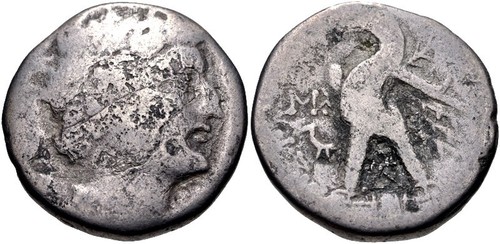
Tetradrachm of Ptolemy XII
80-51 BC
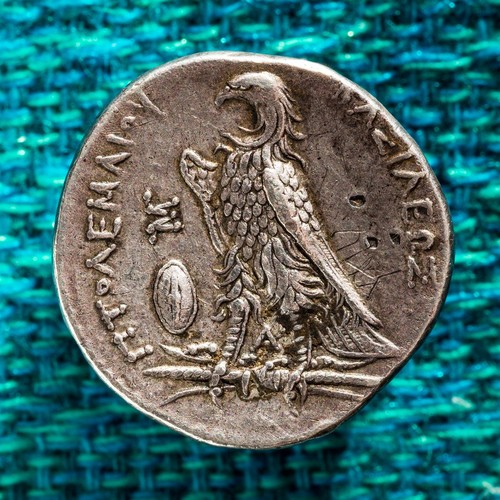
Tetradrachm of Ptolemy I
305-283 BC
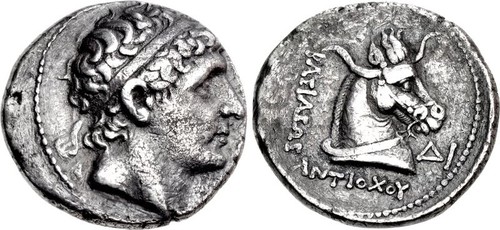
Tetradrachm of Antiochos I Soter
281-261 BC
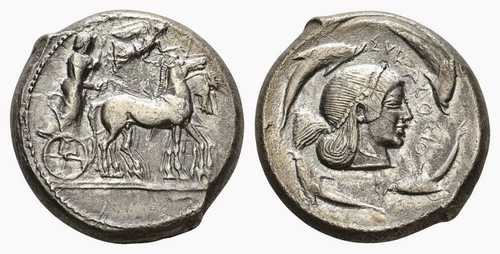
Syracuse Tetradrachm
c. 5th-4th century BC (Classical period)
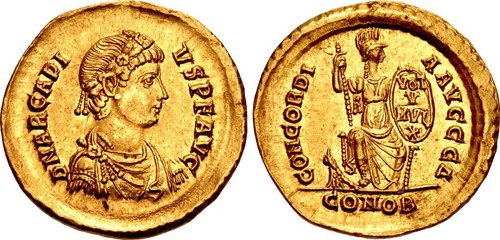
Solidus of Arcadius
AD 395-402
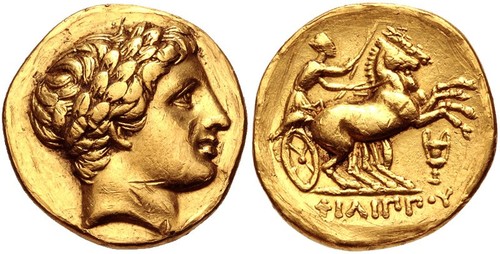
Philip III Gold Stater
323-317 BC
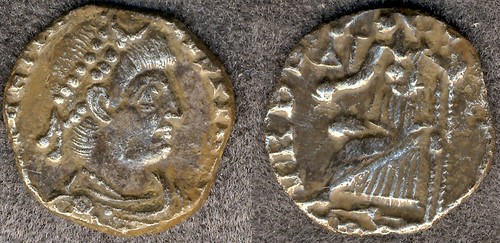
Siliqua of Gratian
AD 367-383
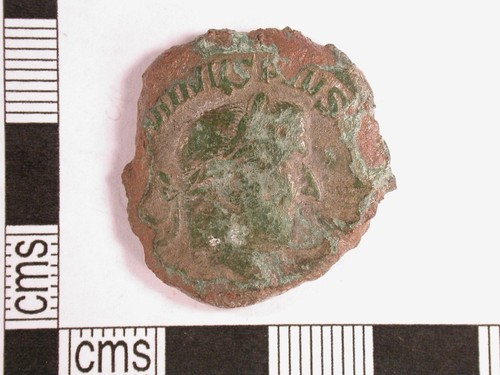
Sestertius of Maximinus Thrax
235-238 AD
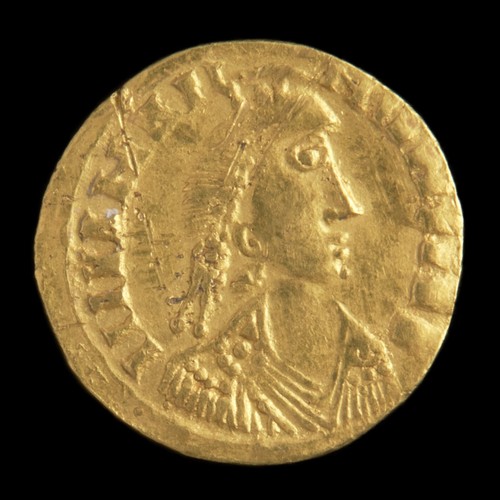
Solidus of Valentinian III
AD 425-455
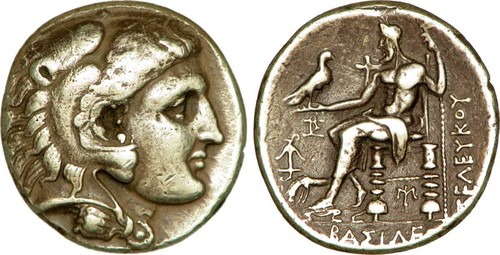
Seleucus I Nicator Tetradrachm
Late 4th-3rd century BC
Nummus of Magnentius
AD 350-353
Follis of Galerius
AD 308-310