
Roman Republic Semuncia
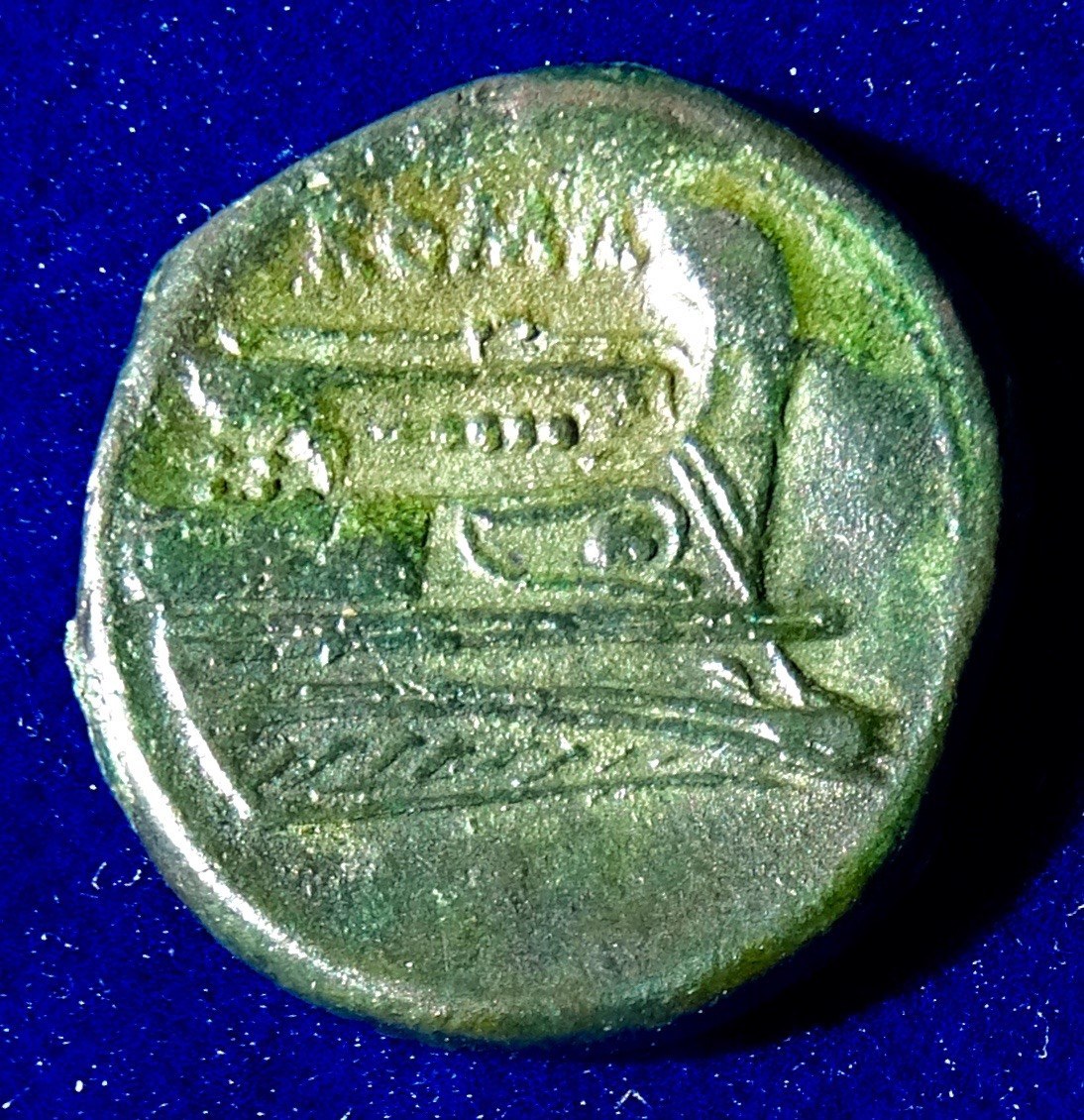
Smallest Roman Republican bronze denomination, worth half an uncia, struck around 217-215 BC with a Mercury head and a galley prow.
- Country
- Roman Republic
- Denomination
- Semuncia
- Metal
- Bronze
Got a coin like this?
Identify any coin from a photo, free.
Overview
The Semuncia is the smallest of the Roman Republic's bronze denominations, its name meaning "half an uncia" — that is, half of one twelfth of the as, the base unit of the Roman bronze coinage. The example here is a small cast-or-struck bronze from the turbulent years of the Second Punic War, around 217-215 BC.
The photographed side shows the coin's classic reverse: the prow of a Roman galley facing right, with the oar or steering-rudder detail still visible along the hull. This ship's-prow motif is the shared signature of Republican bronze coinage. The obverse of the type carries the head of Mercury in a winged cap, though that side is not clearly legible on this specimen.
History & Background
Roman bronze coinage began as heavy cast pieces reckoned by weight, but the financial strain of the Second Punic War (218-201 BC) against Hannibal forced Rome to shrink its bronze denominations repeatedly. The years 217-215 BC fall in this period of reduction, when the as and its fractions were cut far below their original weights to stretch scarce metal.
The semuncia sat at the very bottom of the bronze ladder: at one twenty-fourth of an as, it was small-change money for everyday transactions. Because it carried so little metal, it was among the fractions that Rome could still afford to strike in quantity while the state poured resources into the war effort.
Many bronzes of this era were issued anonymously, without a moneyer's name or symbol, which is why they are dated by style and weight standard rather than by an inscription. The semuncia was eventually discontinued as Rome's coinage system reorganized later in the Republic, leaving these small wartime pieces as relics of a hard-pressed economy.
How to Identify
The most reliable clue on this coin is the galley prow on the reverse — a stylized warship's bow facing right, with the ram, deck structure, and an oar or rudder rendered as raised lines. The word ROMA normally appears above the prow, though it can be worn or off-flan on small fractions like this one.
The obverse of a semuncia shows the head of Mercury wearing a winged petasos (traveler's cap). Crucially, the semuncia carries no marks of value — unlike the larger bronzes, which use pellets or letters (the sextans has two pellets, the uncia one, the as the letter I). The absence of value pellets, combined with the coin's very small size, is what pins it as a semuncia rather than a larger fraction.
Expect a small bronze flan, on the order of 15-19 mm across and only a few grams, with the brown, green, or earthen patina typical of ancient bronze. The metal should look like aged copper alloy, not bright yellow brass or silvery lead.
Value & Collectibility
As a common small bronze from a heavily produced wartime series, the Republican semuncia is one of the more affordable ancient Roman coins. Worn examples with a readable prow but soft detail generally trade in the low tens of dollars, while pieces with a clear Mercury head, sharp prow, and attractive patina bring more.
Condition and legibility drive price far more than rarity here. A coin where both the Mercury portrait and the prow are crisp, with the ROMA legend intact, sits well above a corroded or partially struck example. Original, stable patina is prized; smoothing, tooling, or aggressive cleaning reduces value.
Because ancient bronze fractions vary so much in survival quality, prices are best judged against recent sales of comparable grade rather than a fixed figure. For higher-value or uncertain pieces, an attribution to a standard reference (such as Crawford's catalog of Republican coinage) and a reputable dealer or auction provenance add confidence and value.
Frequently asked questions
What is a semuncia worth in the Roman system?
The name means "half an uncia." Since an uncia was one twelfth of the as, a semuncia was one twenty-fourth of an as — the smallest bronze denomination the Republic struck, used as everyday small change.
What is the ship on the back of the coin?
It is the prow, or front bow, of a Roman galley (warship), shown facing right. This prow design is the standard reverse for Republican bronze coins, usually with ROMA above it.
Who is on the front of the semuncia?
The obverse shows the head of Mercury, the messenger god, wearing a winged cap called a petasos. On worn or poorly struck examples this side can be hard to read, as on the coin pictured here.
Why is this coin dated 217-215 BC?
That range falls during the Second Punic War, when Rome sharply reduced the weight of its bronze coins. The semuncia's weight standard and style place it in this wartime reduction period rather than the earlier heavy bronze era.
Is a Roman semuncia rare or valuable?
It is common rather than rare. These were produced in quantity, so value depends mainly on condition and legibility. Worn coins are inexpensive, while well-preserved examples with clear detail and good patina command a premium.
Roman Republic Semuncia guides
In-depth guides for identifying, valuing, and collecting Roman Republic Semuncia.
Other coins you may enjoy
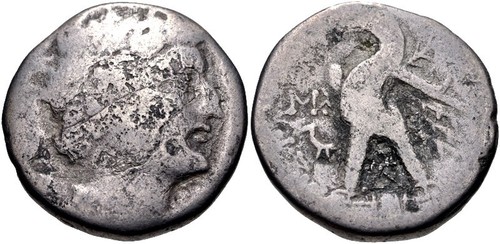
Tetradrachm of Ptolemy XII
80-51 BC
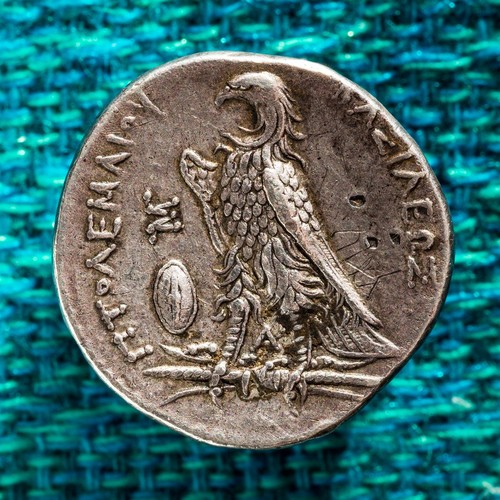
Tetradrachm of Ptolemy I
305-283 BC
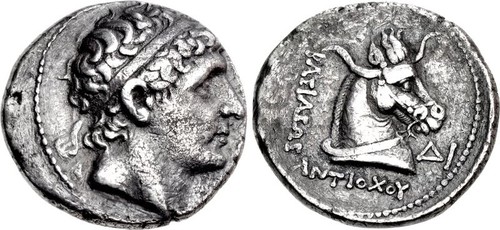
Tetradrachm of Antiochos I Soter
281-261 BC
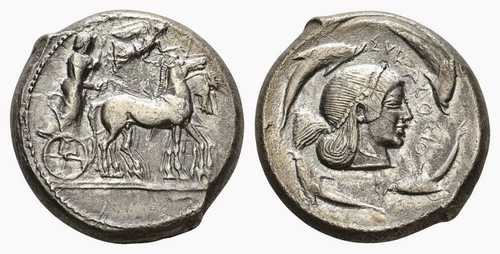
Syracuse Tetradrachm
c. 5th-4th century BC (Classical period)
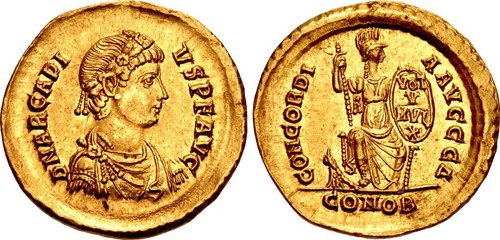
Solidus of Arcadius
AD 395-402
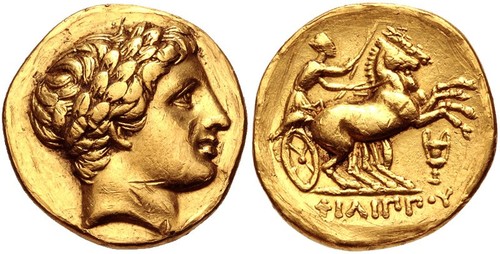
Philip III Gold Stater
323-317 BC
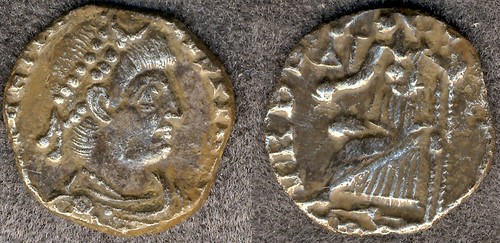
Siliqua of Gratian
AD 367-383
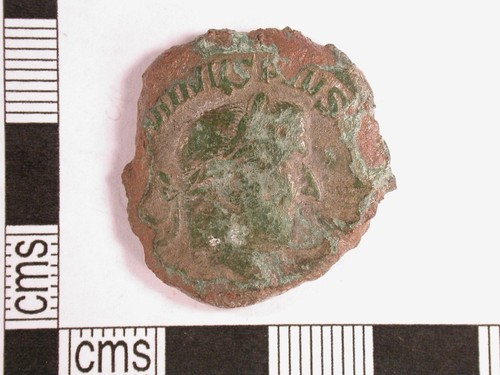
Sestertius of Maximinus Thrax
235-238 AD
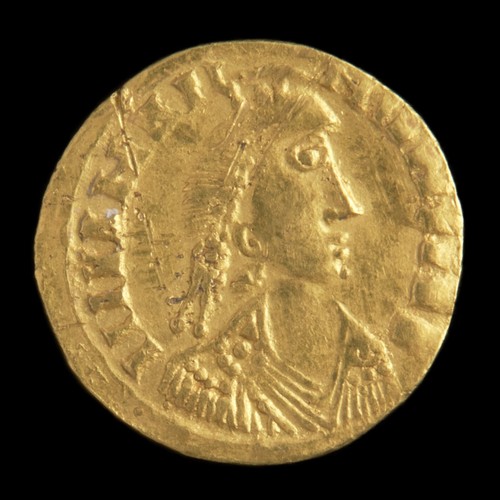
Solidus of Valentinian III
AD 425-455
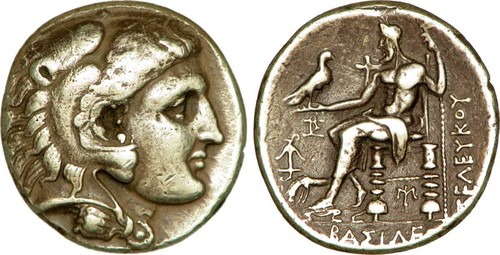
Seleucus I Nicator Tetradrachm
Late 4th-3rd century BC
Nummus of Magnentius
AD 350-353
Follis of Galerius
AD 308-310