
Coin Encyclopedia
Search and identify coins from around the world — with country, denomination, metal, mint, history, and how to tell them apart.
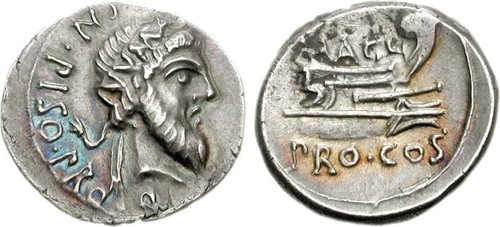
Denarius of Cn. Pompeius Magnus
Silver Roman Republican denarius of the Pompeian party (46–45 BC), with a bearded portrait of Pompey the Great and a galley reverse reading PRO COS.
Ancient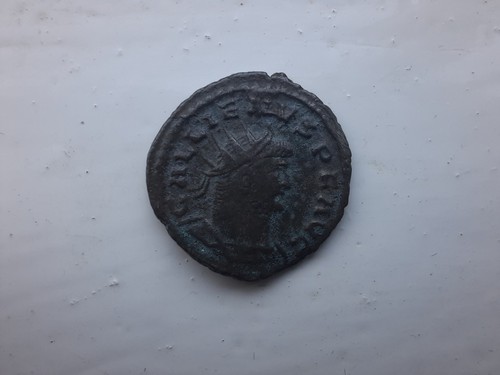
Antoninianus of Gallienus
Billon double-denarius of the emperor Gallienus, marked by a radiate crown; this piece shows a radiate male head and a standing deity on the reverse.
Ancient Coins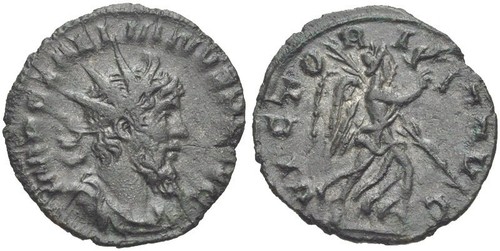
Antoninianus of Laelianus
Rare billon antoninianus of the short-lived Gallic usurper Laelianus, showing his radiate-crowned bust and a Roman deity or personified virtue.
Ancient Coins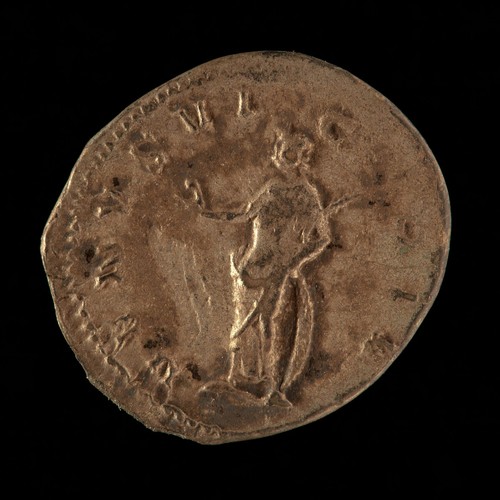
Antoninianus of Salonina
Billon antoninianus of the empress Salonina, wife of Gallienus, showing her draped bust and a standing deity on the reverse (256-257 AD).
Ancient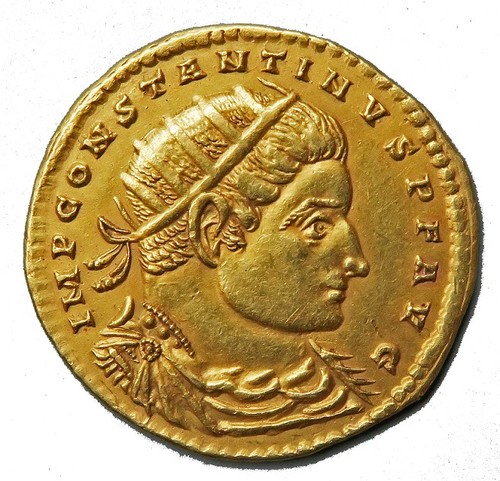
Aureus of Constantine I the Great
A Roman gold aureus struck for Constantine I the Great, showing his laureate portrait, from the era of his rise to sole power around AD 313.
Ancient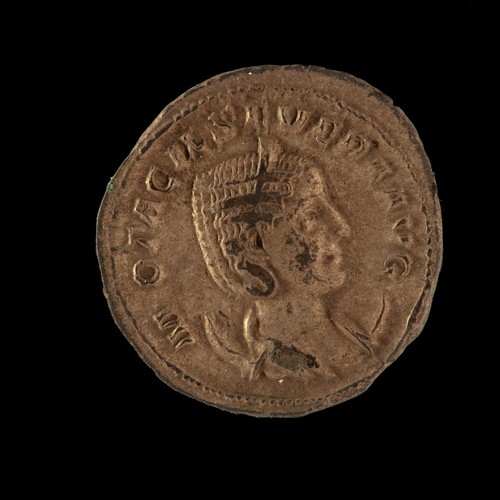
Antoninianus of Otacilia Severa
Roman double-denarius of the empress Otacilia Severa, wife of Philip I (246-248 AD), with her draped bust and a standing personification on the reverse.
Ancient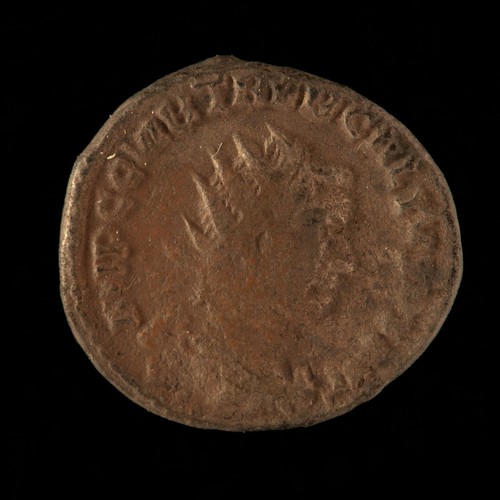
Antoninianus of Trebonianus Gallus
A radiate-crowned billon antoninianus of the emperor Trebonianus Gallus, struck AD 251-253 with a standing deity or personification on the reverse.
Ancient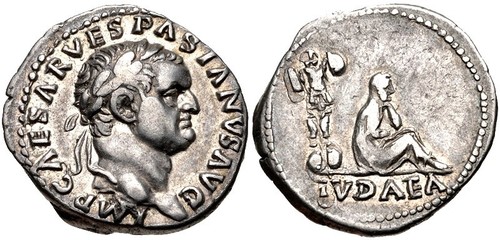
Vespasian Judaea Capta Denarius
Silver denarius of Emperor Vespasian (71–79 AD) with his laureate bust and a Judaea Capta reverse showing a mourning seated captive.
Ancient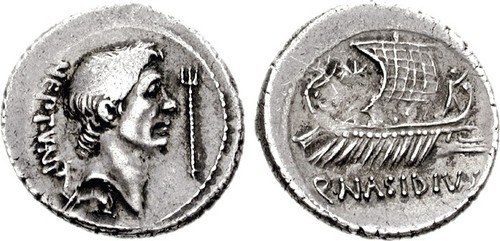
Nasidius Denarius
Roman Republican silver denarius struck for Sextus Pompey's admiral Q. Nasidius, showing Pompey the Great's head and a galley marked NASIDIVS.
Ancient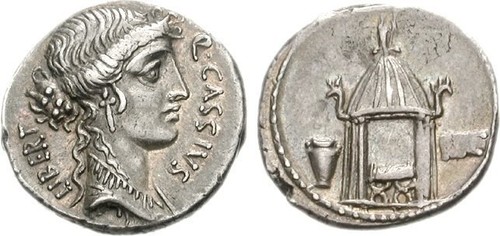
Denarius of Cassius Longinus
Silver denarius struck in 42 BC by Gaius Cassius Longinus, one of Caesar's assassins, to pay his legions before the Battle of Philippi.
Ancient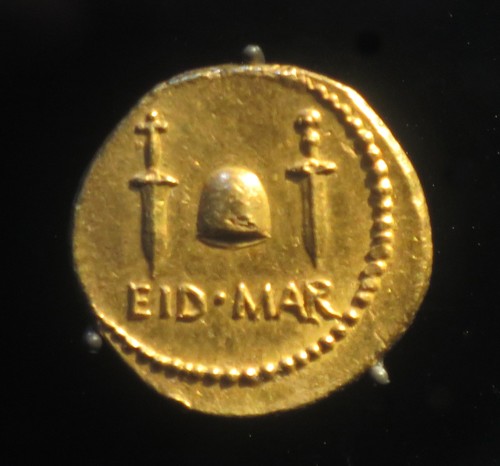
Brutus Aureus
The gold aureus of Marcus Junius Brutus, struck 42 BC, whose reverse celebrates Caesar's assassination with EID MAR, a cap of liberty, and two daggers.
Ancient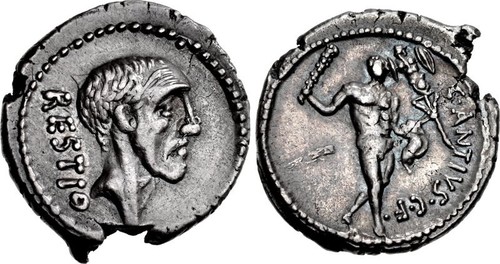
Denarius of C. Antius Restio
Silver Roman Republican denarius struck at Rome in 47 BC by the moneyer C. Antius Restio, pairing an ancestor's portrait with a striding figure and trophy.
Ancient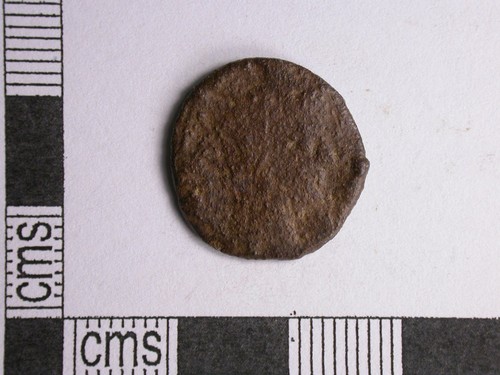
Caesar Elephant Denarius
Silver denarius of Julius Caesar (49–48 BC) showing an elephant trampling a serpent above CAESAR, paired with priestly pontifical emblems.
Ancient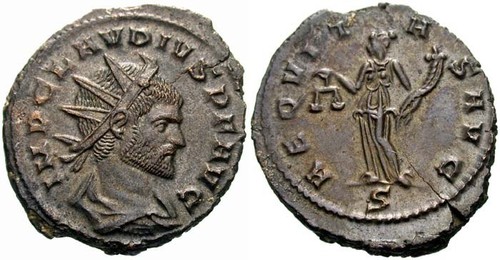
Antoninianus of Claudius II
A billon antoninianus of the Roman emperor Claudius II Gothicus (268–270 AD), showing his radiate bust on one side and a standing deity on the other.
Ancient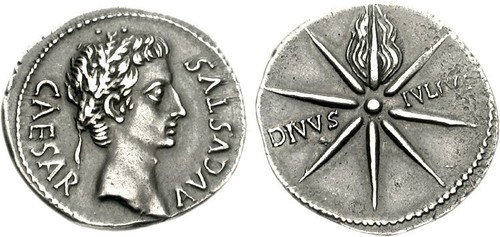
Denarius of Augustus
Silver denarius of Augustus (c. 19-18 BC) with his bare head and a comet-star of the deified Julius Caesar, inscribed DIVVS IVLIVS.
Ancient Coins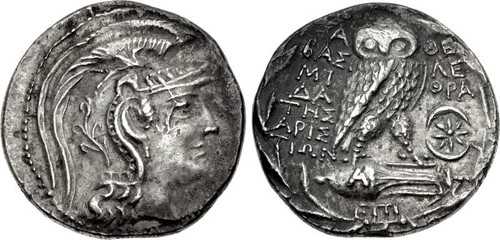
Athens New Style Tetradrachm
Athens' late silver tetradrachm on a broad thin flan: a helmeted Athena obverse and an owl perched on an amphora within an olive wreath.
Ancient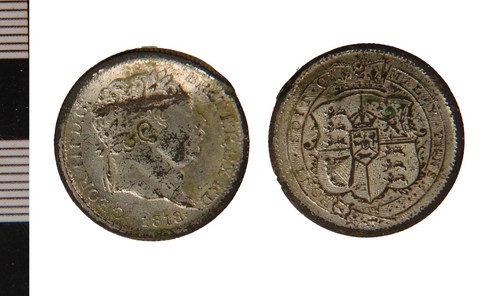
British Bank Token
Copper token of the late George III period bearing the king's left-facing bust and a quartered royal-arms reverse, dated 1819.
British Isles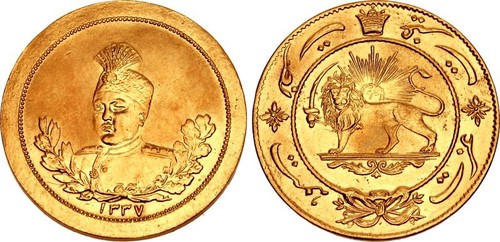
Qajar 5 Tomans Commemorative
A late Qajar gold 5 Tomans of Persia showing Ahmad Shah Qajar in a laurel wreath and the national Lion emblem, dated 1299.
Persia / Iran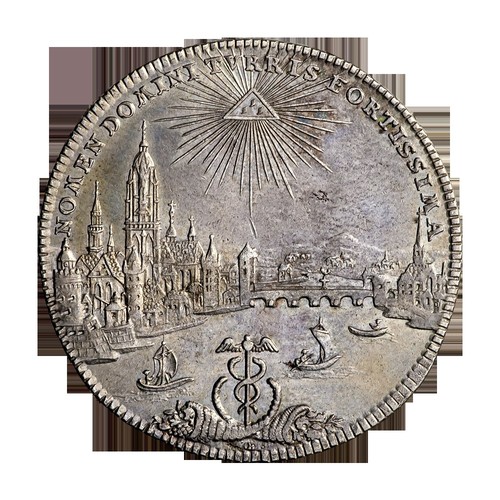
Frankfurt am Main Taler
A 1772 silver Taler of the Free Imperial City of Frankfurt am Main, famed for its detailed city-view reverse with walls, towers and radiant sun.
German States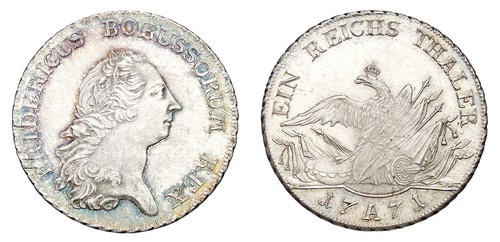
Prussian Taler
A large silver taler of the Kingdom of Prussia showing the crowned profile of Frederick II and a heraldic coat of arms, struck through the mid-to-late 1700s.
German States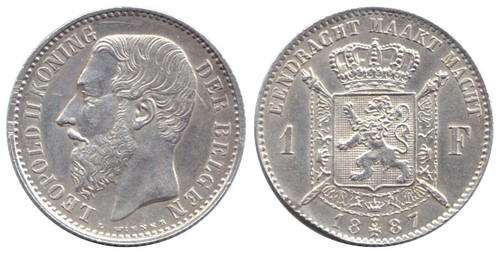
1 Franc (Leopold II)
A late-19th-century Belgian silver franc of King Leopold II, with his left-facing profile on the obverse and a crowned coat of arms on the reverse.
Modern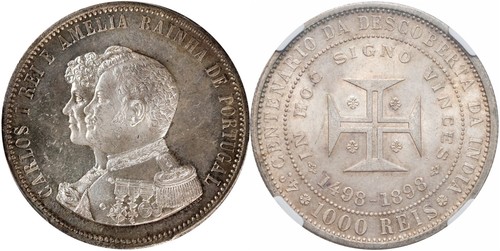
1000 Reis (Discovery of India)
A late Kingdom of Portugal 1000 Reis of the Carlos I period, showing a king's right-facing profile and the crowned Portuguese royal arms on the reverse.
Modern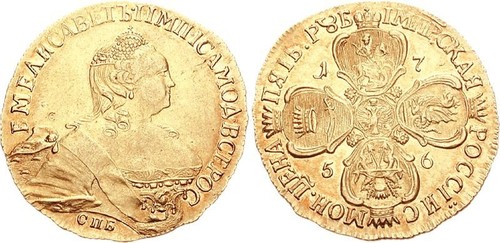
5 Roubles (Alexander III)
An Imperial Russian gold 5 Roubles of Alexander III, showing the tsar's bearded profile and the crowned double-headed eagle, struck in the late 1880s.
Modern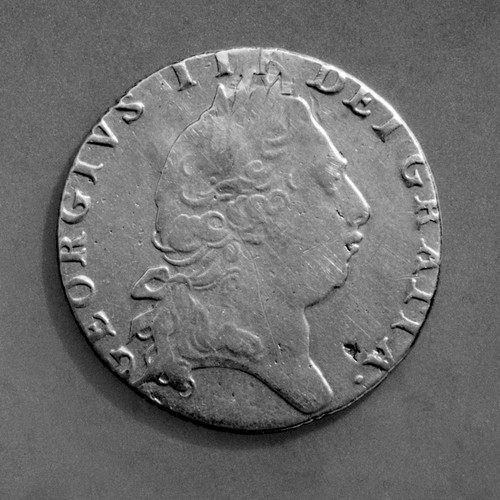
Spade Guinea
A late George III gold guinea named for the distinctive spade-shaped shield on its reverse, struck in England from 1787 into the early 1800s.
Milled