
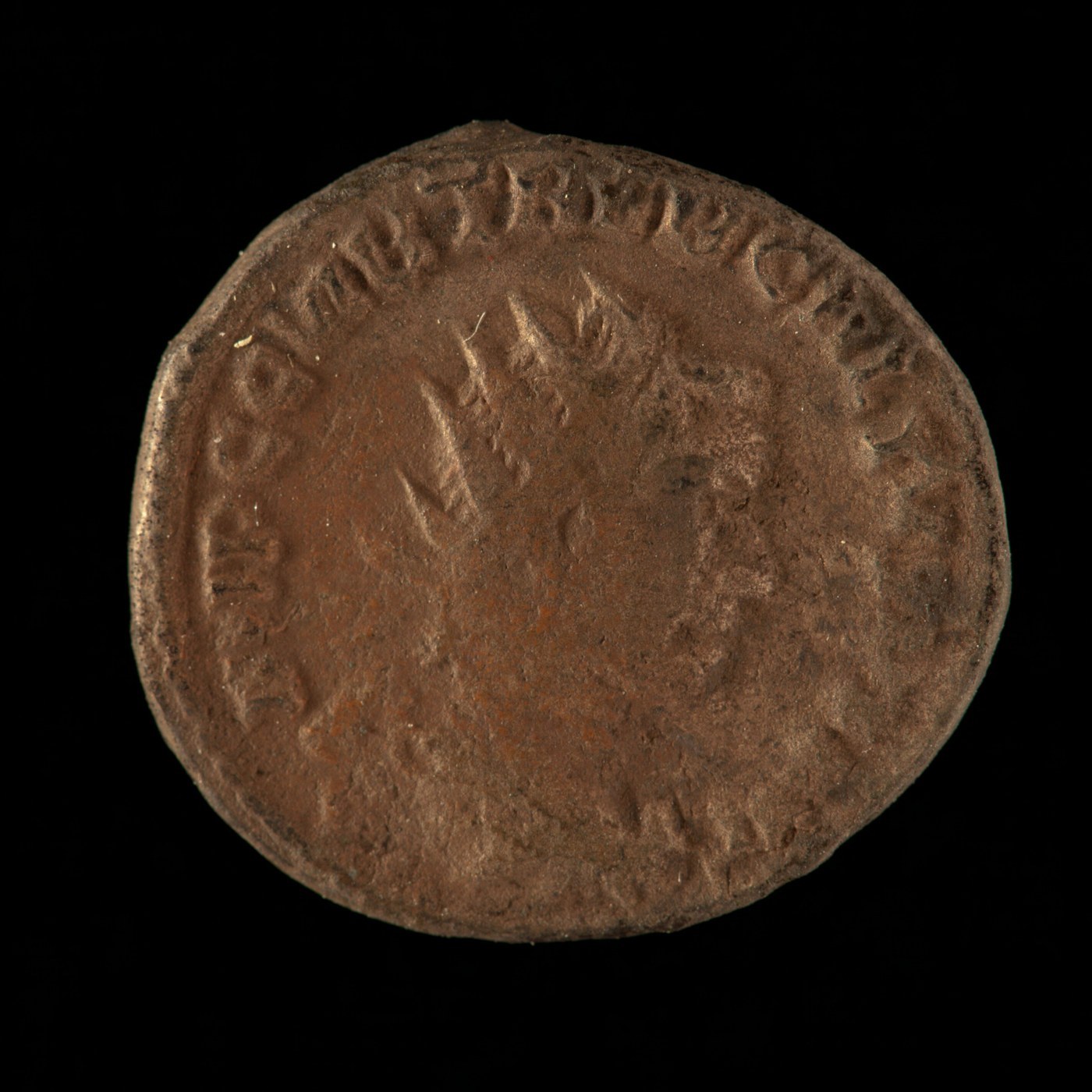
Antoninianus of Trebonianus Gallus
A radiate-crowned billon antoninianus of the emperor Trebonianus Gallus, struck AD 251-253 with a standing deity or personification on the reverse.
- Country
- Roman Empire
- Denomination
- Antoninianus
- Metal
- Billon
Got a coin like this?
Identify any coin from a photo, free.
Overview
The antoninianus was the principal silver-alloy coin of the mid-third-century Roman Empire, and this example was struck for Trebonianus Gallus, who reigned from AD 251 to 253. Like all antoniniani, it is marked by the radiate (spiked) crown worn by the emperor, the device that identified the coin as a double denarius.
The obverse shows a radiate, draped and cuirassed bust of Gallus facing right, surrounded by a Latin legend giving his name and titles. The reverse carries a single standing figure, typically a deity or personification such as Libertas, Pax, Juno, Felicitas, or a martial figure, holding attributes that identify the type.
Struck during a turbulent stretch of the "Crisis of the Third Century," coins of Gallus circulated as everyday money. By this date the antoninianus contained only a small fraction of silver, so surviving pieces often look pale, greyish, or coppery rather than bright silver.
History & Background
Gaius Vibius Trebonianus Gallus was governor of Moesia when the emperor Decius and his son were killed fighting the Goths at Abrittus in AD 251. The army proclaimed Gallus emperor, and he ruled jointly with his own son Volusian until both were killed by their soldiers in AD 253 as the usurper Aemilianus advanced.
His short reign fell in the depths of the third-century crisis, a period of military pressure, plague, and financial strain. To meet the cost of the army the mints struck the antoninianus in large quantities, and its silver content continued the long slide toward debasement that characterized the era.
Coins of Gallus were produced chiefly at Rome, with additional output from an eastern mint usually identified as Antioch. Reverse types stressed reassuring themes of peace, liberty, security, and divine favor, propaganda messages aimed at a population living through instability.
How to Identify
The defining feature is the radiate crown: a circle of pointed spikes rather than a laurel wreath marks the coin as an antoninianus. On this piece the obverse is a radiate bust of Gallus facing right, draped and cuirassed, with a legend that typically reads IMP CAE C VIB TREB GALLVS AVG or IMP C C VIB TREB GALLVS AVG. Reading the name in the legend is the surest way to attribute the coin to this emperor.
The reverse shows a single standing draped figure, usually a deity or personification holding identifying attributes, with the type named in the surrounding legend (for example LIBERTAS AVGG, PAX AVGG, IVNONI MARTIALI, or FELICITAS PVBLICA). Matching the figure's attributes to the legend is how the specific type is identified.
In hand the coin is roughly 20-23 mm across and about 3-4 grams. Although often catalogued as silver, the metal is heavily debased billon with a low silver content, so the surfaces frequently appear grey, brown, or coppery and may show a thin surface silvering that has partly worn away.
Value & Collectibility
Antoniniani of Trebonianus Gallus are relatively common and remain accessible to most collectors. Worn examples with legible legends often trade in the low tens of dollars, while well-centered coins with sharp portraits and clear reverse types generally bring the mid-tens to low hundreds.
Value is shaped by the strength of the portrait, the completeness of the legends, the reverse type and its scarcity, surviving surface silvering, and overall eye appeal. Scarcer reverse types and eastern-mint issues can carry a premium over the common Rome-mint pieces.
The figures given here are general ranges for context, not appraisals. Condition, reverse type, and provenance can move an individual coin well outside these bands, and specialist attribution to a specific issue can add value.
Frequently asked questions
Who was Trebonianus Gallus?
He was a Roman emperor who reigned from AD 251 to 253, raised to the throne by the army after Decius fell fighting the Goths. He ruled jointly with his son Volusian before both were killed in AD 253.
What makes this coin an antoninianus rather than a denarius?
The radiate crown of pointed spikes worn by the emperor marks the antoninianus, which was tariffed as a double denarius. A denarius instead shows a laurel wreath. The antoninianus is also the standard silver-alloy coin of this period.
Why does the coin look coppery or grey instead of silver?
By the 250s the antoninianus was heavily debased billon with only a small percentage of silver. Many coins were given a thin surface silvering that has since worn off, leaving grey, brown, or coppery metal exposed.
Are coins of Trebonianus Gallus rare?
No, they are fairly common and affordable, since large quantities were struck during his reign. Scarcer reverse types, eastern-mint issues, and especially well-preserved examples command higher prices.
Antoninianus of Trebonianus Gallus guides
In-depth guides for identifying, valuing, and collecting Antoninianus of Trebonianus Gallus.
Other coins you may enjoy
Tetradrachm of Ptolemy XII
80-51 BC
Tetradrachm of Ptolemy I
305-283 BC
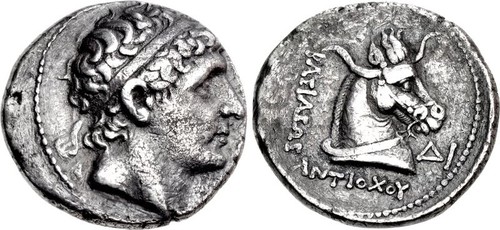
Tetradrachm of Antiochos I Soter
281-261 BC
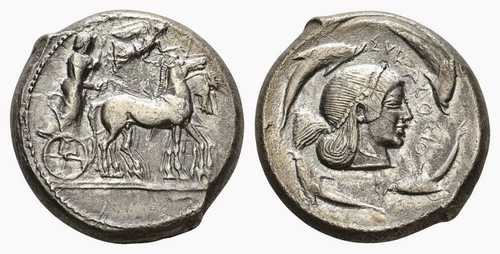
Syracuse Tetradrachm
c. 5th-4th century BC (Classical period)
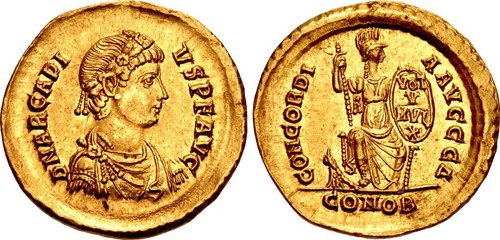
Solidus of Arcadius
AD 395-402
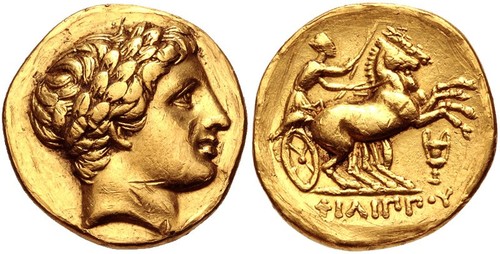
Philip III Gold Stater
323-317 BC
Siliqua of Gratian
AD 367-383
Sestertius of Maximinus Thrax
235-238 AD
Solidus of Valentinian III
AD 425-455
Seleucus I Nicator Tetradrachm
Late 4th-3rd century BC
Nummus of Magnentius
AD 350-353
Follis of Galerius
AD 308-310