
How to Identify the Antoninianus of Trebonianus Gallus
A collector's guide to the radiate portrait, TREB GALLVS legend, billon fabric, and standing-figure reverses of this mid-third-century antoninianus.
Read the full Antoninianus of Trebonianus Gallus encyclopedia entry →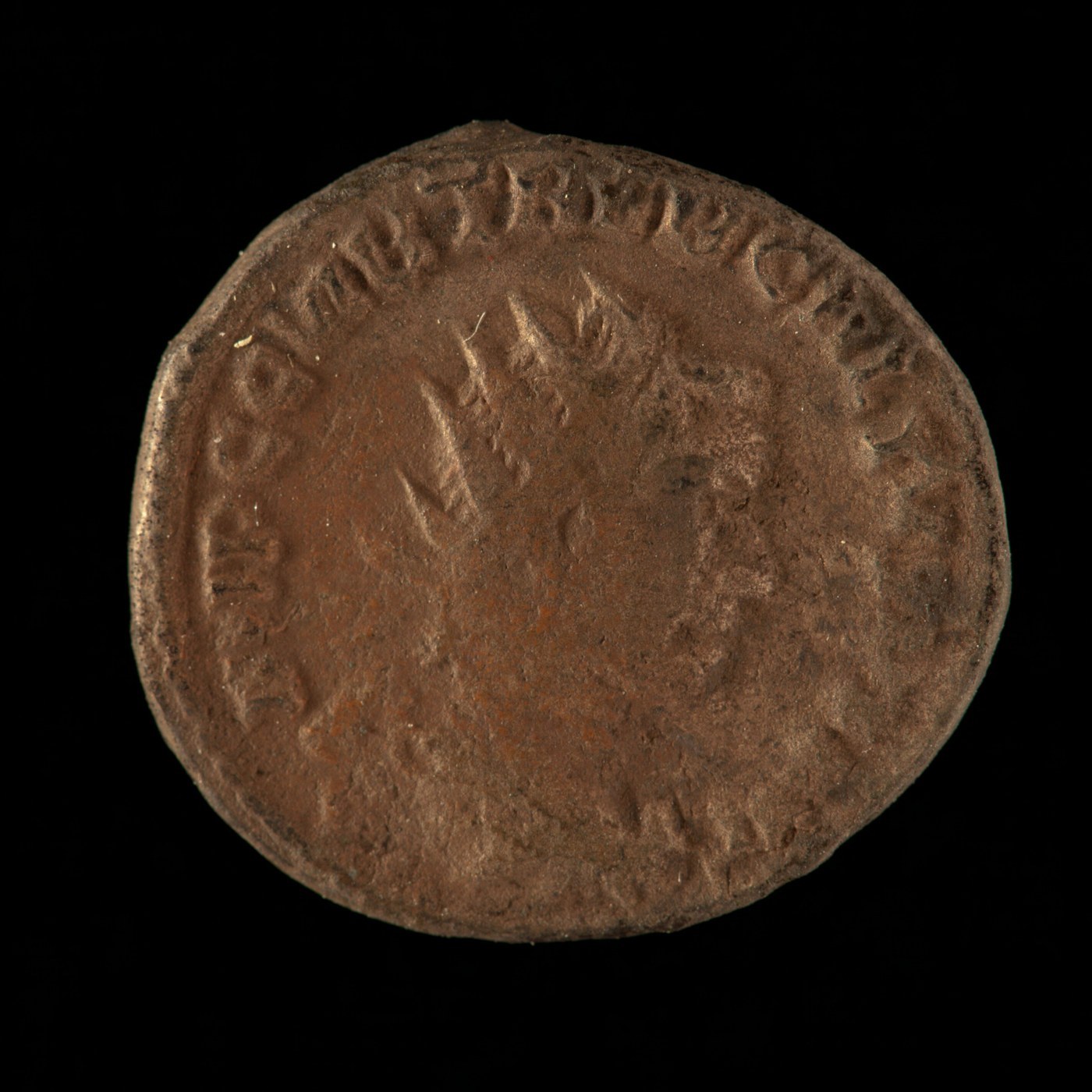
Begin with the crown and the legend, which together confirm both the denomination and the emperor. A radiate crown of pointed spikes marks the coin as an antoninianus; a laurel wreath would mean a denarius. Then read the obverse legend around the radiate, draped and cuirassed bust: for this emperor it carries the distinctive name TREB GALLVS, usually as IMP CAE C VIB TREB GALLVS AVG or a close variant. Because many third-century emperors wore the radiate crown, it is the name in the legend, not the crown alone, that identifies Gallus.
Measure and weigh the coin. A genuine antoninianus of this reign is roughly 20-23 mm in diameter and about 3-4 grams. The metal is debased billon, so expect grey, brown, or coppery surfaces rather than bright silver; traces of an original thin silvering may survive in protected areas of the design. Hand-struck fabric, slightly irregular flans, and off-center strikes that push part of the legend off the edge are all normal and are not signs of a fake.
Work out the reverse type by matching the standing figure to its legend. Gallus reverses typically show one draped deity or personification holding attributes: Libertas with a pileus (cap) and staff, Pax with an olive branch, Felicitas with a caduceus, Juno with a patera and scepter, or a martial figure. The surrounding legend names the type (LIBERTAS AVGG, PAX AVGG, FELICITAS PVBLICA, IVNONI MARTIALI, and so on), and the double G in AVGG signals the joint reign with Volusian.
Distinguish this coin from look-alikes. Antoniniani of his son Volusian and of the preceding emperor Decius share the same radiate format and similar reverse types, so always confirm the obverse name. Coins struck at an eastern mint (usually identified as Antioch) can differ slightly in style and lettering from Rome-mint pieces. For authentication, be wary of cast copies and tooled or artificially silvered surfaces; warning signs include a seam around the edge, a soft or granular texture, mismatched portrait and legend styles, and weight well outside the normal range. For a significant purchase, favor coins with clear attribution or reputable provenance.
Frequently asked questions
How do I confirm the coin is Trebonianus Gallus and not another radiate emperor?
Read the obverse legend. Coins of this ruler carry the name TREB GALLVS, typically as IMP CAE C VIB TREB GALLVS AVG. The radiate crown alone is not enough, because many third-century emperors used it; the name in the legend is decisive.
What size and weight should a genuine example be?
About 20-23 mm across and roughly 3-4 grams. The metal is debased billon, so grey, brown, or coppery surfaces are normal, sometimes with remnants of a thin original silvering.
How do I tell his coins apart from those of Volusian or Decius?
The reverse types and radiate format are very similar across these related issues, so always check the obverse name. Volusian and Decius are named in their own legends; only coins reading TREB GALLVS belong to Gallus.
What should make me suspect a forgery?
Look for a casting seam around the edge, a soft or grainy surface, portrait and lettering styles that do not match known issues, or a weight far outside the 3-4 gram range. Tooled details and freshly applied silvering are also warning signs; seek specialist attribution when in doubt.