5 Roubles (Alexander III)
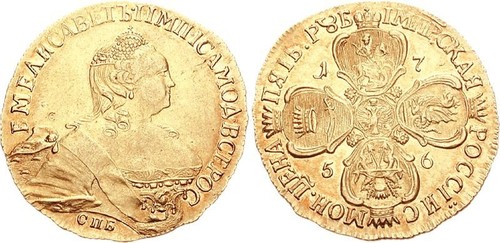
An Imperial Russian gold 5 Roubles of Alexander III, showing the tsar's bearded profile and the crowned double-headed eagle, struck in the late 1880s.
- Country
- Russia
- Denomination
- 5 Roubles
- Metal
- Gold
Got a coin like this?
Identify any coin from a photo, free.
Overview
The 5 Roubles of Alexander III is a small Imperial Russian gold coin issued during his reign in the late nineteenth century. It pairs a right-facing portrait of the bearded tsar on the obverse with the crowned double-headed imperial eagle on the reverse, all lettered in Cyrillic. The observed example is dated 1888.
This type is notable because it reintroduced a realistic ruler's portrait to Russian circulating gold, a break from the portraitless eagle-and-value designs used through much of the century. As a result it is collected both as a gold bullion-grade issue and as a compact historical portrait coin of the Romanov dynasty.
Struck in high-fineness gold on the pre-1897 monetary standard, the 5 Roubles is a modest, thick little coin roughly 21 to 22 mm across. It sits at the heart of Alexander III's gold coinage alongside the larger 10 Roubles (imperial) denominations.
History & Background
Alexander III ruled Russia from 1881 to 1894, following the assassination of his father, Alexander II. His reign is remembered for political conservatism and industrial expansion, and his coinage reflected a deliberate return to traditional imperial imagery, including the tsar's own likeness on the nation's gold.
During the mid-1880s Russia reorganized its gold coinage, and from 1886 the 5 Roubles was struck to a defined weight and fineness bearing Alexander III's portrait. The 1888 date on the observed coin falls squarely within this portrait series, produced at the Saint Petersburg mint that supplied the empire's precious-metal coinage.
The denomination continued under his successor, Nicholas II, until the sweeping Witte monetary reform of 1897 altered Russia's gold standard and coin weights. The Alexander III 5 Roubles therefore belongs to the last generation of Russian gold struck on the older, heavier pre-reform standard.
How to Identify
The obverse shows the head of Alexander III in profile facing right, bearded, with a surrounding Cyrillic legend naming him as emperor and autocrat of all the Russias. The realistic bearded portrait is the single most distinctive marker of the type and separates it from the portraitless Russian gold that came before.
The reverse displays the crowned double-headed imperial eagle, wings spread, bearing the central shield of Saint George and the arms of the constituent territories on its wings, with the value written in Cyrillic as 5 РУБЛЕЙ and the date, here 1888. The eagle is topped by imperial crowns and clutches the orb and sceptre.
This is a small, dense gold coin of high fineness, on the order of 21 to 22 mm in diameter and around 6.4 to 6.5 grams on the pre-1897 standard. Its warm gold color, heft for its size, and fine reeded edge all point to a genuine precious-metal strike rather than a base-metal token.
Value & Collectibility
As a small high-fineness gold coin, the 5 Roubles of Alexander III carries a base value tied to its gold content, with a collector premium on top. Because the type had a relatively short portrait run in the late 1880s and early 1890s, it generally trades above pure melt, with common dates in circulated grades bringing a moderate premium over bullion.
Condition and date drive the spread. Sharp, lustrous, high-grade examples with a well-defined portrait and crisp eagle command clear premiums, while worn, cleaned, or damaged pieces sell closer to gold value. Scarcer dates within the series can bring substantially more than common ones.
Exact prices move with the gold market and with grade, so treat any figure as a range rather than a fixed quote. Given its gold content and popularity, the type is also a frequent target for counterfeits, which makes authentication important before paying a numismatic premium.
Frequently asked questions
Is the Alexander III 5 Roubles real gold?
Yes. It is a genuine high-fineness Imperial Russian gold coin struck on the pre-1897 standard, which is why it is small but noticeably heavy and dense for its size.
Who is shown on the obverse?
It is Tsar Alexander III, who ruled Russia from 1881 to 1894, shown as a bearded profile facing right. His portrait marked a return of the ruler's likeness to Russian circulating gold.
What does the reverse show?
The reverse shows the crowned double-headed imperial eagle with the shield of Saint George at its center, the territorial arms on its wings, and the value 5 РУБЛЕЙ with the date.
What do the Cyrillic letters say?
The obverse legend names Alexander III as emperor and autocrat of all the Russias, and the reverse gives the denomination as 5 РУБЛЕЙ, meaning five roubles, above the year of striking.
Is this coin valuable?
It has both gold and collector value. Common dates in worn grades sell near a modest premium over gold, while high-grade or scarce-date examples bring more. Genuineness and condition matter most.
5 Roubles (Alexander III) guides
In-depth guides for identifying, valuing, and collecting 5 Roubles (Alexander III).