100 Dinara
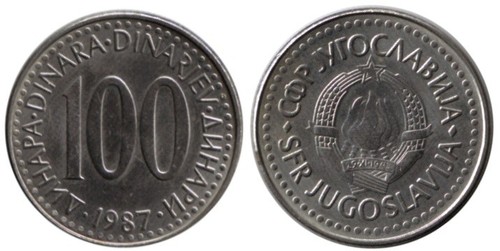
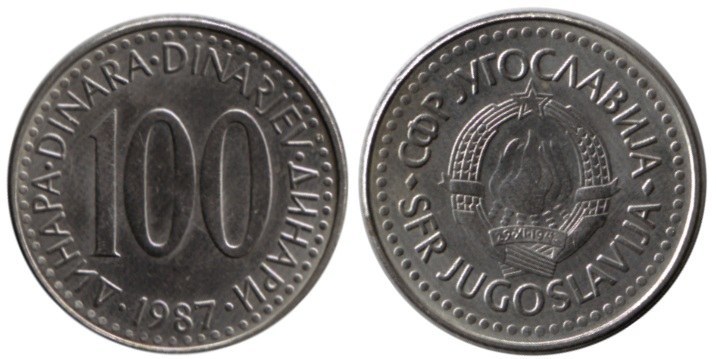
A copper-nickel 100 Dinara circulation coin of socialist Yugoslavia dated 1987, with a big numeral 100 on one face and the Yugoslav state emblem on the other.
- Country
- Yugoslavia
- Denomination
- 100 Dinara
- Metal
- Copper-nickel
Got a coin like this?
Identify any coin from a photo, free.
Overview
The 100 Dinara is a base-metal circulation coin of Yugoslavia, and the example shown is dated 1987. One face is dominated by a large numeral 100 with the denomination spelled out as dinara, while the other carries the Yugoslav coat of arms and the country name. It is a workaday piece of late-socialist Yugoslav small change rather than a commemorative or precious-metal issue.
Struck in a copper-nickel alloy, the coin has the pale silvery-gray look of a modern base-metal circulation strike, not the warmth of bronze or the weight of silver. The bold 100 is the coin's most recognizable feature and reflects the high face values that Yugoslav coinage carried in this period as inflation pushed denominations upward.
For collectors, the 1987 100 Dinara is an accessible, inexpensive representative of the last decades of the Yugoslav dinar. It is most often collected as part of a type set of socialist Yugoslav coinage or as a single example of the country's high-denomination base-metal circulation pieces.
History & Background
The coin was issued by the Socialist Federal Republic of Yugoslavia, the federation that united several South Slavic republics and existed until its breakup in the early 1990s. Its currency, the dinar, ran through repeated bouts of inflation, and by the mid-to-late 1980s ordinary transactions required ever larger denominations, which is why a 100 Dinara coin was needed for everyday use.
Because the dinar was steadily losing purchasing power in this era, high-value base-metal coins like the 100 Dinara were practical necessities rather than luxury pieces. They were made cheaply in copper-nickel and other base alloys, and Yugoslavia later revalued the dinar more than once, so coins of this exact face value belong to a specific short window of the currency's history.
The 1987 date places this coin near the end of a unified Yugoslavia. Within a few years the federation dissolved and its successor states introduced their own currencies, making late Yugoslav dinar coins a tangible relic of a country that no longer exists.
How to Identify
The obverse observed here is dominated by a large numeral 100 accompanied by the denomination text and the date 1987. The oversized value is the quickest identifier: if a coin shows a big 100 with dinara wording and a late-1980s date, it belongs to this Yugoslav high-denomination series.
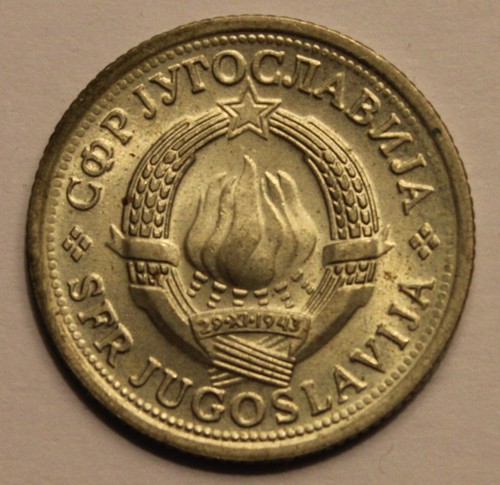
The reverse shows the Yugoslav coat of arms together with the country name for Yugoslavia. The socialist-era Yugoslav state emblem is the key marker, distinguishing this coin from post-breakup issues of Serbia, Croatia, Slovenia, or other successor states that use their own national arms.
In hand the coin is a modern base-metal strike in a copper-nickel alloy, with a plain silvery-gray tone rather than a golden or coppery color. Reading the numeral, the denomination word, the date, and the country name together confirms the type; the combination of a bold 100, the dinara denomination, the 1987 date, and the Yugoslav arms is what pins it down.
Value & Collectibility
As a common late-Yugoslav base-metal circulation coin, the 1987 100 Dinara carries only modest collector value. Worn and average circulated examples are inexpensive, typically trading for small change to a couple of dollars, and are readily available from world-coin dealers and mixed lots.
Condition drives what premium exists. Uncirculated pieces with full original luster and no wear are worth more than heavily circulated coins, but even top-grade examples of a common type like this remain affordable. There is no precious-metal content to add intrinsic value, so demand is driven purely by collector interest.
Exact prices vary with grade, market, and where you buy, so treat these as general ranges rather than fixed quotes. Cleaned, damaged, or corroded pieces trade below problem-free coins, while the strongest value is in crisp, original mint-state examples.
Frequently asked questions
What country and year is this coin from?
It is a coin of the Socialist Federal Republic of Yugoslavia, and the example shown is dated 1987. The Yugoslav coat of arms and country name on the reverse confirm its origin.
Is the 100 Dinara made of silver?
No. It is a base-metal circulation coin struck in a copper-nickel alloy, with a silvery-gray appearance. It contains no precious metal, so its value is driven by collector demand, not bullion content.
Why is the denomination so high?
Yugoslavia experienced significant inflation in the 1980s, which pushed everyday denominations upward. A 100 Dinara coin was needed for ordinary transactions during this period of a weakening dinar.
Is this coin rare or valuable?
It is common and inexpensive. Circulated examples are worth only a small amount, while uncirculated pieces bring a modest premium. It is collected mainly as a type example of late Yugoslav coinage.
100 Dinara guides
In-depth guides for identifying, valuing, and collecting 100 Dinara.