1 Dinar
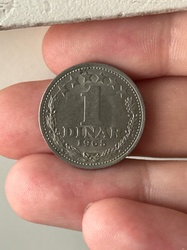
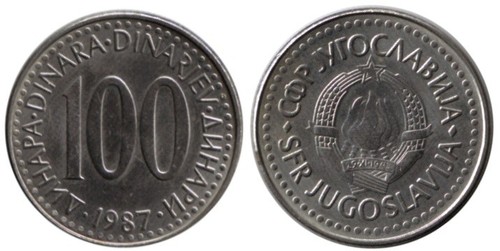
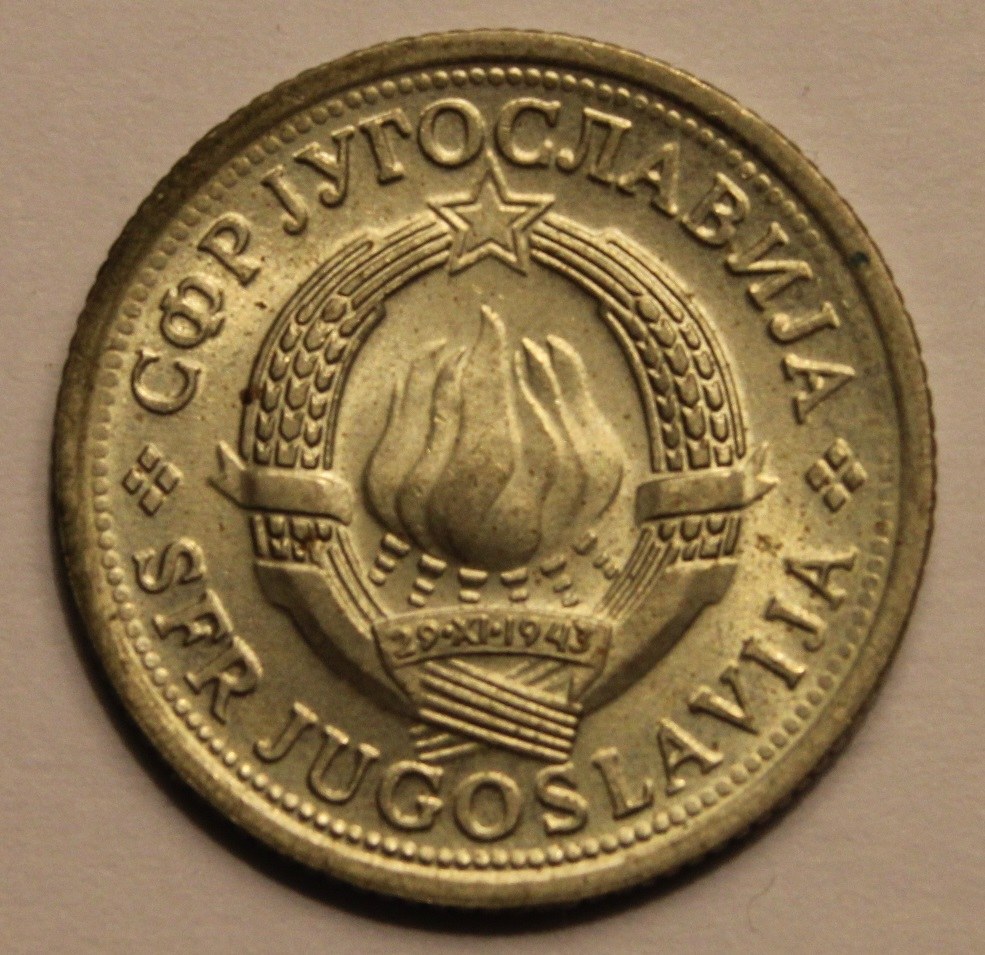
A base-metal 1 dinar of Socialist Yugoslavia, dated 1978, with a star and SFRJ legend on one side and the socialist state emblem of flaming torches on the other.
- Country
- Yugoslavia
- Denomination
- 1 Dinar
- Metal
- Base metal
Got a coin like this?
Identify any coin from a photo, free.
Overview
The 1 Dinar dated 1978 is a small base-metal circulation coin of the Socialist Federal Republic of Yugoslavia (SFRJ). It is an everyday workhorse denomination from the middle years of socialist Yugoslavia, produced in large numbers for general commerce rather than as a commemorative or precious-metal piece.
The design pairs a five-pointed star with the Cyrillic state name СФР ЈУГОСЛАВИЈА on one face against the socialist state emblem, a cluster of torches bound within a wreath, on the other. Both the star and the emblem are hallmarks of the communist-era coinage that circulated until Yugoslavia's breakup in the early 1990s.
Because it was struck for circulation in a non-precious alloy, the 1978 dinar is common and inexpensive. It is collected mainly as an affordable type example of socialist Yugoslav money and as a tangible relic of a country that no longer exists.
History & Background
The dinar was the currency of Yugoslavia across its royal and socialist periods. After the Second World War the country was reconstituted as a socialist federation, and from 1963 it took the name Socialist Federal Republic of Yugoslavia, abbreviated in Cyrillic as СФР ЈУГОСЛАВИЈА, the legend seen on this coin.
The 1978-dated 1 dinar belongs to the standard circulating coinage of that socialist state, whose imagery deliberately used revolutionary and federal symbolism: the red-star motif and the state emblem of torches representing the union of the constituent republics. Coins like this passed through daily hands during the Tito and post-Tito era of the 1970s and 1980s.
High inflation later in the 1980s and the violent dissolution of Yugoslavia in the early 1990s ended this coinage. The 1978 dinar survives today as a common but historically evocative artifact of that vanished federation.
How to Identify
One face carries a large five-pointed star with the country name СФР ЈУГОСЛАВИЈА (SFR Jugoslavija) in Cyrillic; the star is the socialist emblem that marks the coin as a communist-era Yugoslav issue rather than a royal or later Serbian one. The other face shows the state emblem, a bundle of flaming torches gathered together and framed by a wreath of wheat ears, again with the SFRJ legend and the value.
The coin is small and made of a base-metal alloy (a brass- or nickel-toned copper-based composition), not silver or gold, so it is light and lacks precious-metal weight. Expect a modest diameter of roughly 21 to 22 mm and a plain, low-value circulation feel. The date 1978 appears as part of the design.
Key identifiers are the Cyrillic СФР ЈУГОСЛАВИЈА legend, the five-pointed star, the torch-and-wreath state emblem, the 1 dinar denomination, and the base-metal fabric. Together these pin it to socialist Yugoslavia rather than to the earlier Kingdom of Yugoslavia or the later dinars of Serbia and successor states.
Value & Collectibility
As a common base-metal circulation coin, the 1978 1 dinar carries little monetary value. Worn examples are typically worth only a fraction of a dollar and are often sold in bulk world-coin lots rather than individually.
Condition is the main driver of what small premium exists. Heavily circulated pieces are essentially face-filler for collectors, while crisp, lustrous uncirculated examples with full detail on the star and torches command modestly more, though still only a few dollars at most. There is no precious-metal content to underpin the price.
Treat any figures as broad context rather than fixed quotes, since low-value world coins trade inconsistently. The coin's appeal is historical and thematic, as an inexpensive representative of socialist Yugoslav coinage, more than financial.
Frequently asked questions
What does СФР ЈУГОСЛАВИЈА mean?
It is Cyrillic for SFR Jugoslavija, the Socialist Federal Republic of Yugoslavia. The legend identifies the coin as an issue of communist-era Yugoslavia rather than the earlier kingdom or later successor states.
Is the 1978 1 dinar made of silver?
No. It is a base-metal circulation coin struck in a copper-based alloy, so it is light and has no precious-metal value. Its worth is historical and collector-driven rather than bullion-based.
What is the emblem with the torches?
It is the state emblem of socialist Yugoslavia, showing flaming torches bound together within a wreath. The torches symbolize the union of the federation's constituent republics.
Is this coin rare or valuable?
No. It was struck for everyday circulation and is common. Worn pieces are worth very little, while high-grade uncirculated examples bring only a small premium.
Can I still spend this coin?
No. Yugoslavia dissolved in the early 1990s and this currency is no longer legal tender. The coin now has only collector and historical value.
1 Dinar guides
In-depth guides for identifying, valuing, and collecting 1 Dinar.
1 Dinar identified by the community
Real coins identified with Coin Identifier.