1 Krona (Gold)
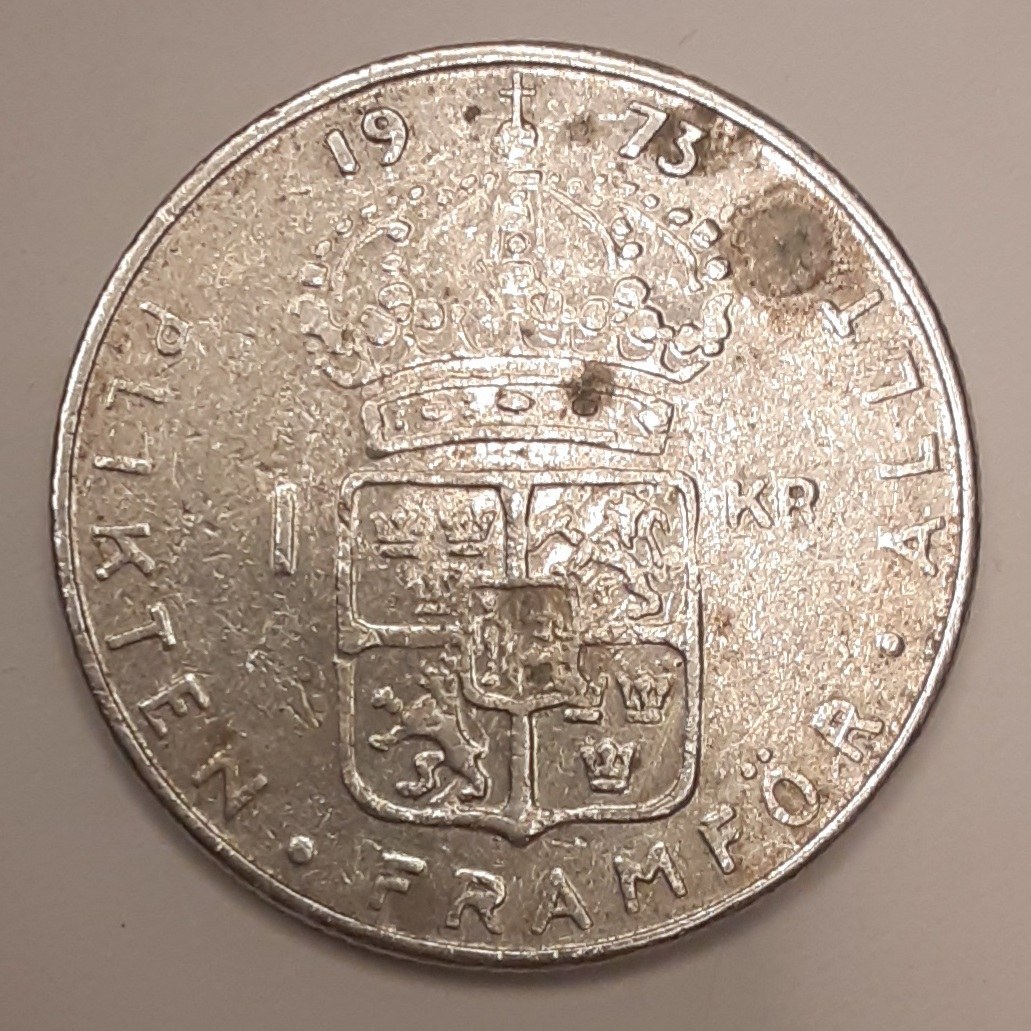
A gold 1 krona of Sweden dated 1906, bearing the left-facing portrait of King Oscar II and the Swedish royal coat of arms with lions and three crowns.
- Country
- Sweden
- Denomination
- 1 Krona
- Metal
- Gold
Got a coin like this?
Identify any coin from a photo, free.
Overview
This piece is a Swedish 1 krona dated 1906, from the reign of King Oscar II. The obverse shows his bust facing left encircled by OSCAR II SVERIGES KONUNG (Oscar II, King of Sweden), while the reverse carries the crowned Swedish royal coat of arms flanked by lions, the country name SVERIGE, and the date 1906.
The example here is a gold specimen of this krona type. The standard circulating 1 krona of Oscar II's later reign was a silver coin, so gold pieces of this design are encountered as special strikes, presentation or bullion-style pieces, or gilt examples rather than everyday change. In all cases the identifying imagery, the Oscar II portrait, the arms, SVERIGE, and the 1906 date, is the same.
The coin belongs to the late-monarchy Swedish coinage, produced after Sweden and Norway dissolved their union in 1905, which is why the legend names Oscar II only as King of Sweden.
History & Background
Sweden adopted the krona in 1873 as part of the Scandinavian Monetary Union, replacing the older riksdaler and tying the Swedish, Danish, and Norwegian crowns to a shared gold standard. The 1 krona became a core denomination of this decimal system, and coins were struck at the Royal Mint in Stockholm.
Oscar II reigned from 1872 to 1907 as King of Sweden and, until 1905, also of Norway. The 1906 date on this coin falls in the final years of his rule, immediately after the peaceful dissolution of the Swedish-Norwegian union in 1905, which is reflected in the legend styling him solely as SVERIGES KONUNG, King of Sweden.
The krona survived Oscar II and remains Sweden's currency today, though modern coins bear later monarchs and no precious metal. A 1906 krona with his portrait is therefore a tangible link to the close of Sweden's 19th-century monarchy and the Scandinavian Monetary Union era.
How to Identify
The obverse is the surest identifier: a male bust facing left surrounded by the legend OSCAR II SVERIGES KONUNG. That wording, naming Oscar II as King of Sweden without Norway, places the coin in the 1905-1907 window of his reign. The reverse shows the Swedish royal coat of arms, a crowned shield supported or flanked by lions and topped with the royal crown, with SVERIGE above and the year 1906 present in the design.
The denomination 1 KRONA appears with the arms. On this specimen the metal is gold-colored; note that the regular-issue krona of this period was struck in silver, so a genuinely gold piece is a special, presentation, gilt, or bullion-style strike rather than a normal circulation coin. Assess color, weight, and any edge or fineness marks to judge whether the gold is solid or a plating over a base or silver core.
Key diagnostics are the left-facing Oscar II portrait, the exact Latin-lettered legend, the lion-and-crown Swedish arms, the country name SVERIGE, and the 1906 date. Together these separate it from other Scandinavian kronor and from later Swedish monarchs such as Gustaf V.
Value & Collectibility
Value depends heavily on what the gold actually is. If the piece is solid gold, its worth is anchored largely by precious-metal content and weight, plus any premium for being an unusual or presentation strike of a normally-silver type. If it is a gilt or gold-plated example of the standard silver krona, the gold adds little and the value rests on the underlying coin and its condition.
Condition, originality, and verified fineness are the main variables. An unworn, sharply struck piece with clear portrait and arms detail is more desirable than a rubbed one, and confirmed solid-gold specimens command more than plated or fantasy strikes. Because 1906 gold kronor are not a standard catalog circulation issue, prices are best treated as case-by-case rather than a fixed market quote.
Treat any figures as broad context only. For a piece like this, having the metal and strike type confirmed by a specialist is the single biggest factor in establishing an accurate value.
Frequently asked questions
Who is on this coin?
King Oscar II of Sweden, who reigned from 1872 to 1907. His left-facing bust and the legend OSCAR II SVERIGES KONUNG, meaning Oscar II King of Sweden, identify him on the obverse.
Why does the legend say only King of Sweden and not Norway?
Sweden and Norway ended their union in 1905. From then Oscar II was styled King of Sweden alone, which matches the 1906 date and the SVERIGES KONUNG legend on this coin.
Was the 1 krona normally a gold coin?
No. The standard circulating 1 krona of this era was silver. A gold example of this design is a special, presentation, gilt, or bullion-style strike rather than an ordinary circulation piece, so the metal should be verified.
What is the emblem on the reverse?
It is the Swedish royal coat of arms: a crowned shield with lions and the three crowns of Sweden, accompanied by the country name SVERIGE and the year 1906.
Is it still legal tender?
No. This 1906 Oscar II krona is an obsolete collector coin. Sweden still uses the krona, but modern coins bear later designs and none of this precious-metal or historic type circulates today.
1 Krona (Gold) guides
In-depth guides for identifying, valuing, and collecting 1 Krona (Gold).