
How to Identify the 1 Krona (Gold)
A collector's guide to confirming a gold 1906 Swedish krona by its Oscar II portrait, royal arms, SVERIGE legend, date, and by testing whether the gold is solid or plated.
Read the full 1 Krona (Gold) encyclopedia entry →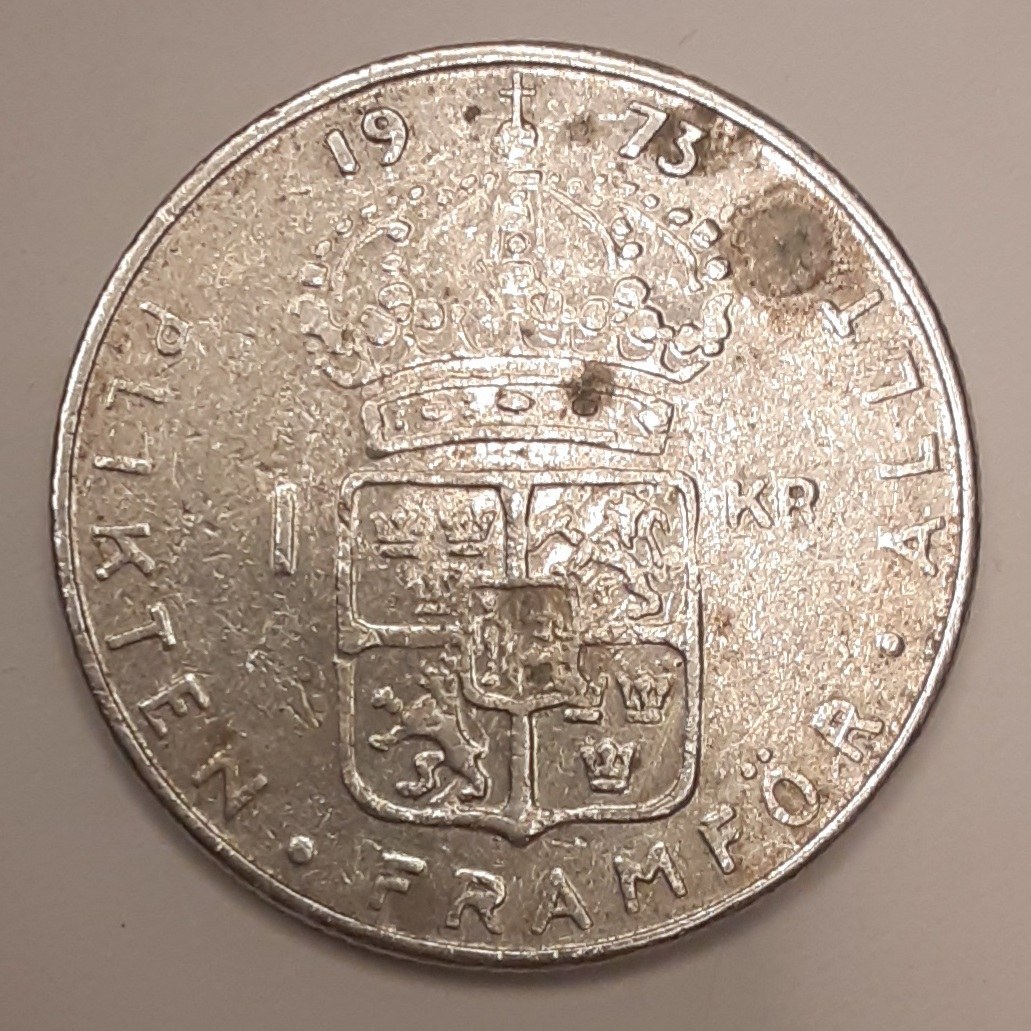
Start With the Obverse Legend and Portrait
The fastest confirmation is the obverse. Look for a male bust facing left ringed by OSCAR II SVERIGES KONUNG. That exact wording names Oscar II as King of Sweden and, by omitting Norway, dates the piece to the 1905-1907 close of his reign, consistent with the 1906 date. A different name, a right-facing bust, or a bare-headed later king points to another type entirely.
Confirm the Reverse Arms and Date
Turn to the reverse and check for the Swedish royal coat of arms: a crowned shield with lions and the three crowns of Sweden, with SVERIGE and the year 1906 in the field, plus the 1 KRONA value. All of these must be present together. If the coat of arms is a simpler small shield or a plain value-only design, you may be looking at a minor denomination or a different Scandinavian krona.
Judge the Metal Carefully
This is the critical step for a gold example. The regular 1 krona of this period was struck in silver, so a gold-colored piece is unusual by definition. Weigh it and compare against the known silver standard: solid gold is noticeably denser than silver of the same size, whereas a gilt or plated coin will weigh close to the silver original. Inspect high points and the edge for any wear that reveals a white silver or base-metal core beneath a thin gold layer, and look for any fineness or edge marking.
Rule Out Look-Alikes
Several things resemble this coin. Denmark and Norway issued their own kronor and kroner of the Scandinavian Monetary Union with similar layouts, so read SVERIGE and the Swedish arms specifically. Later Swedish kings, notably Gustaf V from 1907, used comparable designs but different portraits and dates. And gilt or gold-plated versions of the ordinary silver krona are common decorative treatments that mimic a solid-gold strike, so never assume solid gold from color alone.
Authentication Cautions
Because a gold 1906 krona is not a standard circulation issue, treat it with extra care. Fantasy strikes, modern replicas, and gilded silver originals all exist, so confirm weight, diameter, and metal by testing rather than eye. Avoid cleaning, which harms both value and the diagnostic surfaces you need to read. For anything represented as solid gold, seek verification of fineness and authenticity from a reputable dealer or grading service before assigning value, since the metal and strike type dominate what the piece is worth.
Frequently asked questions
How do I know the portrait is Oscar II and not a later king?
Read the legend. Oscar II's coins are inscribed OSCAR II SVERIGES KONUNG with a left-facing bust and dates up to 1907. Later Swedish kronor name Gustaf V or successors and carry different portraits and dates.
How can I tell solid gold from gold plating?
Weigh the coin and check density against the known silver standard, and inspect worn high points and the edge for a white or base-metal core showing through. Solid gold is markedly heavier than a plated silver original of the same size.
Could this be a Danish or Norwegian coin instead?
Yes, those neighbors struck similar union-era kronor. Confirm the country name SVERIGE and the Swedish royal arms with three crowns; the Danish and Norwegian pieces name their own countries and use different heraldry.
Is professional authentication worth it here?
For a gold example, yes. Because this is not a standard issue and gilt, fantasy, and replica pieces exist, having the metal, fineness, and authenticity verified by a specialist is the most reliable way to confirm what you have.