50 Öre (Silver)
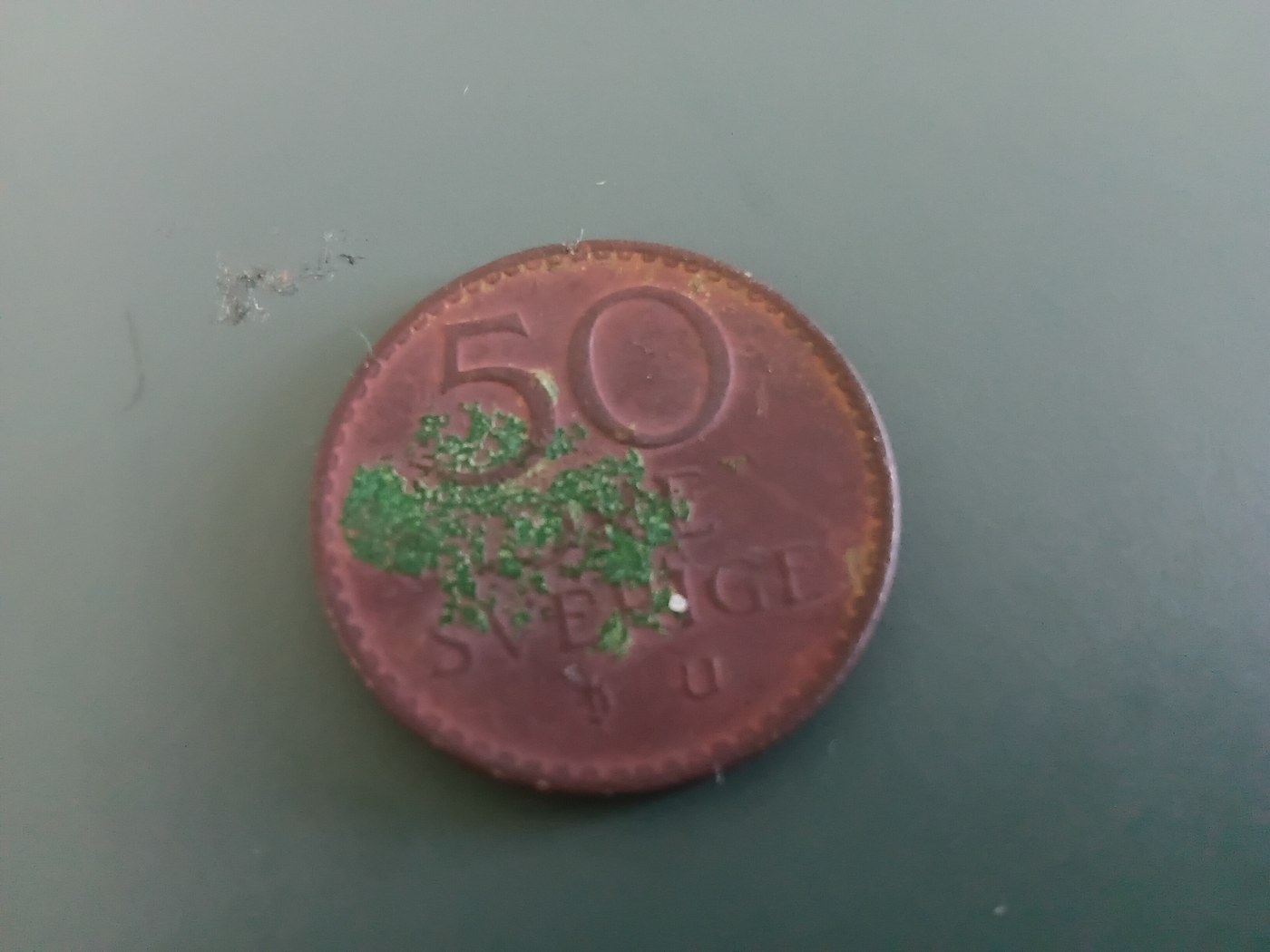
A small Swedish silver 50 ore of the Oscar II era, dated 1898, with the value and date in a laurel wreath on one side and the crowned Swedish arms on the other.
- Country
- Sweden
- Denomination
- 50 Öre
- Metal
- Silver
Got a coin like this?
Identify any coin from a photo, free.
Overview
The 50 Öre dated 1898 is a small silver minor coin of the Kingdom of Sweden, struck during the long reign of King Oscar II. It belongs to the everyday öre coinage that circulated alongside the larger silver krona pieces, serving as a mid-value fraction of the krona in daily commerce.
The design is deliberately plain and utilitarian: one face presents the denomination 50 ÖRE and the year 1898 encircled by laurel branches, while the other carries the crowned heraldic arms of Sweden. Unlike the higher denominations of the period, this small silver piece does not bear a royal portrait, relying instead on inscription and national arms.
As a modest silver coin produced for circulation, the 1898 50 öre is collected today as an affordable type example of late nineteenth-century Swedish money and as a compact piece of Oscar II-era history. Its small size and low silver content keep it accessible to beginning collectors.
History & Background
Sweden adopted the krona, divided into 100 öre, with the Scandinavian Monetary Union of the 1870s, which aligned the coinage of Sweden, Denmark, and Norway on a common standard. The 50 öre took its place as a small silver fraction within this new decimal system, and examples like the 1898 issue were struck for general circulation.
The coin dates from the reign of Oscar II, who ruled Sweden from 1872 to 1907 and, until 1905, Norway as well. His long reign produced a stable and familiar series of öre and krona coins. The crowned Swedish arms on the reverse tie the piece to the national heraldry of the united kingdom of the period rather than to any single provincial or commemorative theme.
Minor silver coins of this type were eventually superseded as fineness was reduced and, in the twentieth century, as silver gave way to base metal in the smaller denominations. The 1898 50 öre survives as a relic of the Scandinavian Monetary Union era and of Oscar II's coinage.
How to Identify
Look first at the inscribed face: it shows the value 50 ÖRE with the date 1898 below, framed by laurel or olive branches that curve up from the base. There is no portrait on this small denomination, so the wreath-and-value layout is a primary identifier. The opposite face bears the crowned coat of arms of Sweden, a heraldic shield beneath a royal crown.
The coin is small and struck in silver of the era, giving it a bright white tone and a light, thin feel; expect a diameter on the order of 15 mm and a low weight. This is a low-fineness minor silver rather than a heavy sterling piece, so it is delicate and easily worn. The spelling ÖRE with the Swedish o-umlaut and the Scandinavian styling of the arms distinguish it from similar-looking coins of neighboring countries.
Key identifiers are the 50 ÖRE denomination, the 1898 date within a laurel wreath, the crowned Swedish arms, the small silver format, and the absence of a royal portrait. Together these place the coin firmly in the Oscar II-era Swedish öre series rather than in the Danish or Norwegian coinages of the same monetary union.
Value & Collectibility
As a small circulating silver coin, the 1898 50 öre carries only modest value. Well-worn examples are inexpensive and trade for a few dollars, valued as much for their historical interest and small silver content as for rarity. Its low fineness and small size mean the intrinsic silver value is slight.
Condition drives most of the price. Heavily circulated pieces with soft detail are common and cheap, while sharp, lightly worn or uncirculated examples with full wreath and crisp arms command a clear premium. Some individual dates within the broader Oscar II 50 öre series are scarcer than others, so year and grade together determine where a given coin sits.
Treat any figures as general context rather than firm quotes, since minor world silver trades inconsistently and depends on the market. The appeal of this coin is chiefly as an affordable, attractive representative of late nineteenth-century Swedish silver coinage.
Frequently asked questions
Is the 1898 50 ore really silver?
Yes, but it is a low-fineness minor silver coin rather than a heavy sterling piece. It has a bright white tone and light weight, and its small size means the intrinsic silver content is modest.
Why is there no king's portrait on this coin?
The small öre denominations of the Oscar II era typically used the value and the crowned Swedish arms instead of a royal portrait. Portraits generally appeared on the larger krona coins of the period.
What do the laurel branches around the value mean?
They are a decorative wreath framing the denomination and date, a common motif on European minor coinage of the era. On this coin they surround the 50 ÖRE value and the year 1898.
How much is it worth?
As a common small silver coin, worn examples are worth only a few dollars, while sharp high-grade pieces bring a modest premium. Value depends on the exact date and condition rather than on bullion content.
Is this a Swedish or Norwegian coin?
It is Swedish. The ÖRE spelling with the o-umlaut, the crowned Swedish arms, and the Oscar II-era styling identify it as a Swedish issue, though Norway and Denmark struck similar-looking coins under the same monetary union.
50 Öre (Silver) guides
In-depth guides for identifying, valuing, and collecting 50 Öre (Silver).