
How to Identify the 50 Öre (Silver)
A collector's guide to confirming the Swedish silver 50 ore by its wreathed value and date, crowned arms, small silver format, and Scandinavian look-alikes.
Read the full 50 Öre (Silver) encyclopedia entry →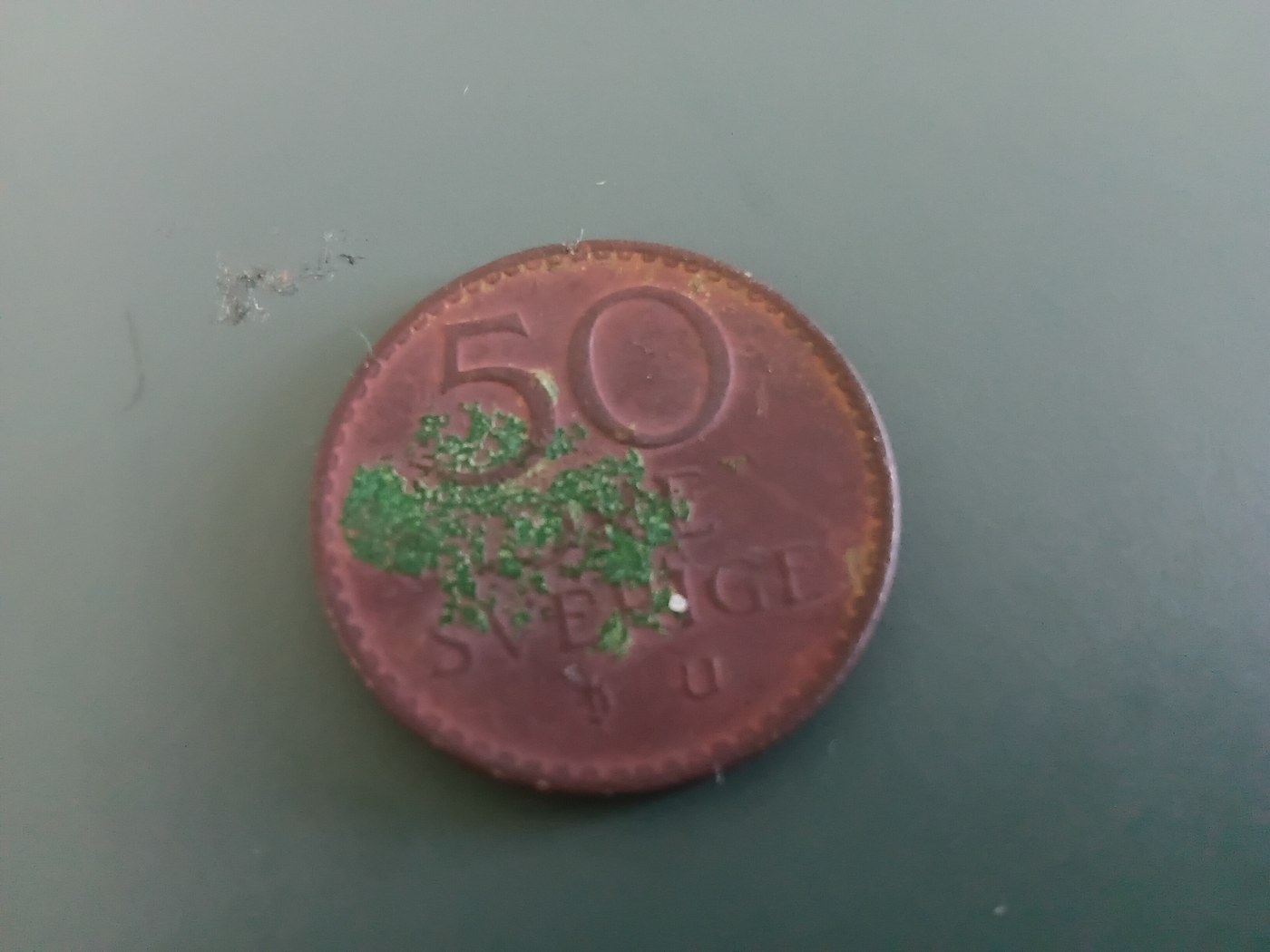
Read the Denomination and Date Face
Start with the inscribed side. A coin of this type shows 50 ÖRE with the date, here 1898, framed by a laurel or olive wreath curving up from the bottom. Note the Swedish spelling ÖRE with the o-umlaut. Because this small denomination carries no royal portrait, the value-in-wreath layout is one of your surest anchors for the type.
Confirm the Crowned Arms on the Reverse
Turn the coin over. The opposite face should display the crowned coat of arms of Sweden: a heraldic shield beneath a royal crown. If your coin instead shows a king's bust, a large denomination in KRONOR, or a different national emblem, you are looking at another coin. The pairing of wreathed value on one side and crowned Swedish arms on the other is the defining combination for this small silver piece.
Check Size, Metal, and Feel
This is a small, thin silver coin, roughly 15 mm across and light in the hand, with the bright white tone of low-fineness minor silver rather than the heft of a large sterling crown. Use size and weight together: a much larger or heavier coin of similar design is a higher denomination such as a krona or a 1 or 2 kronor piece. The delicate fabric also means these coins wear quickly, so expect softened detail on circulated examples.
Distinguish the Scandinavian Look-Alikes
Sweden, Norway, and Denmark shared the Scandinavian Monetary Union and struck small silver öre coins that can look alike at a glance. Read the legend and arms carefully: Swedish coins use ÖRE and the Swedish crowned arms, while Norwegian and Danish issues use their own national arms and, in Norway's case, the ØRE spelling. Also separate the 50 öre from the smaller 10 and 25 öre and larger krona coins of the same era by reading the stated value and measuring the diameter.
Authentication and Grading Cautions
Because it is a small, low-value silver coin, outright counterfeiting is uncommon, so the practical work is correct attribution and grading rather than deep authentication. Confirm the exact date and denomination instead of assuming, since the Oscar II 50 öre series spans many years of differing scarcity. Judge condition by the sharpness of the wreath and the crown and shield, weigh the coin against expected silver weight if in doubt, and avoid cleaning, which harms even inexpensive silver. Match every cue, wreathed value, date, crowned Swedish arms, size, and metal, before settling on the identification.
Frequently asked questions
How do I tell this from a Norwegian or Danish 50 ore?
Read the spelling and the arms. Swedish coins use ÖRE with the crowned Swedish arms, while Norway uses ØRE and Denmark its own emblem. All three struck similar small silver coins under the same monetary union, so the legend and heraldry are decisive.
What size and metal should the coin be?
Expect a small, thin silver coin roughly 15 mm across and light in weight, with a bright white tone. It is low-fineness minor silver, so a large or heavy coin of similar design is a higher denomination such as a krona.
Why does my coin have no portrait of the king?
The small öre denominations of this era did not carry a royal portrait; they used the value and the crowned Swedish arms instead. A portrait would point to a larger krona coin rather than this 50 öre type.
Is it worth having authenticated?
Usually not. As a modest small silver coin it is rarely faked, so effort is better spent confirming the exact date, denomination, and grade, and checking the coin against expected silver weight if you have any doubt.