How to Identify the 1 Dinar
A collector's guide to confirming the socialist Yugoslav 1 dinar by its Cyrillic SFRJ legend, five-pointed star, torch-and-wreath emblem, date, and base-metal format.
Read the full 1 Dinar encyclopedia entry →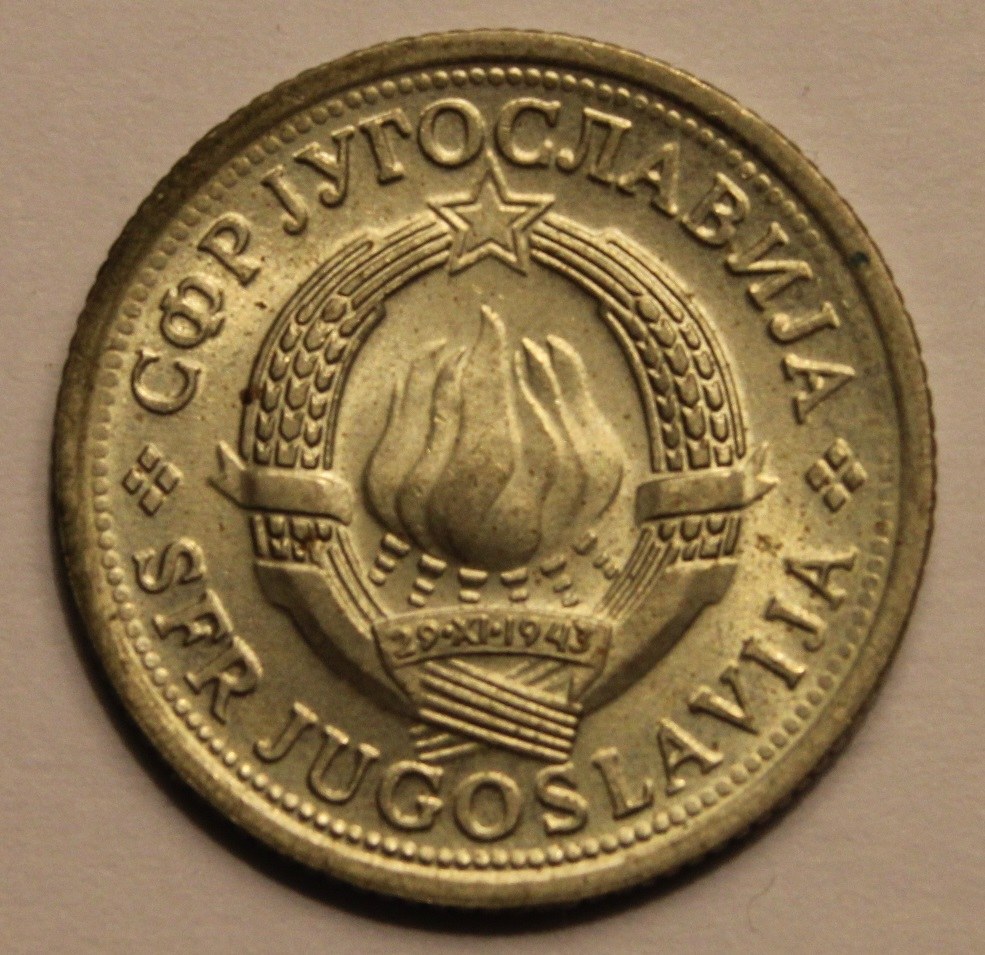
Read the Cyrillic Legend First
Start with the country name. A genuine coin of this type is inscribed СФР ЈУГОСЛАВИЈА in Cyrillic, standing for the Socialist Federal Republic of Yugoslavia. That exact legend, rather than KRALJEVINA (kingdom) wording or a later Serbian or Bosnian name, is the fastest way to place the coin in the socialist 1963-1992 era.
Confirm Both Sides Match the Type
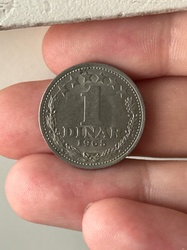
One face should carry a prominent five-pointed star, the socialist emblem, together with the SFRJ legend. The opposite face should show the state emblem of Yugoslavia: a cluster of flaming torches bound together and framed by a wreath of grain ears, alongside the value 1 DINAR and the date. If your coin lacks the star or the torch emblem, or shows a royal portrait, it is a different Yugoslav issue.
Check Size, Metal, and Date
This is a small, light circulation coin roughly 21 to 22 mm across, struck in a base-metal alloy with a brassy or pale metallic tone rather than the bright white and heft of silver. Confirm the 1978 date in the design. A large, heavy, or clearly silver-colored dense coin of similar motifs is a different denomination or type, so use size and weight together with the date to narrow it down.
Rule Out Look-Alikes
Socialist Yugoslavia struck a whole family of star-and-emblem coins, including 5, 10, 20, and 50 para and higher dinar values, that share the same symbolism but differ in size and stated value; always read the denomination and measure the diameter. Also distinguish this from the pre-war Kingdom of Yugoslavia dinars, which use Latin or royal imagery, and from post-1992 dinars of the rump Yugoslavia and Serbia, which drop the socialist star and SFRJ legend.
Authentication Cautions
Because it is a common, low-value base-metal coin, counterfeiting is not a real concern; there is little incentive to fake it. The practical cautions are correct attribution and grade. Verify the exact date and denomination rather than assuming, since many similar-looking years and values exist, and judge condition by the sharpness of the star points and torch flames. Avoid cleaning, which harms even inexpensive coins, and match all cues, legend, star, emblem, denomination, size, and metal, before finalizing the identification.
Frequently asked questions
How do I tell this from a Kingdom of Yugoslavia dinar?
Look for the socialist five-pointed star and the СФР ЈУГОСЛАВИЈА legend with the torch emblem. Kingdom-era coins instead use royal portraits and different wording, without the communist star and state emblem.
What size and metal should it be?
Expect a small base-metal coin about 21 to 22 mm across with a light weight and a brassy or pale metallic tone. It is not silver, so a heavy, bright-white dense coin of similar design is a different type.
How do I separate the 1 dinar from other denominations?
Read the stated value and measure the coin. Yugoslavia struck many star-and-emblem para and dinar coins that look similar; the denomination text and the diameter distinguish the 1 dinar from its neighbors.
Is it worth authenticating?
Generally no. As a common, low-value circulation coin it is rarely faked, so effort is better spent confirming the exact date, denomination, and grade than on formal authentication.
1 Dinar identified by the community
Recent 1 Dinar coins identified with Coin Identifier.