
How to Identify the 5 Roubles (Alexander III)
A collector's guide to confirming the Imperial Russian gold 5 Roubles of Alexander III by its bearded portrait, crowned eagle, Cyrillic value, and small gold format.
Read the full 5 Roubles (Alexander III) encyclopedia entry →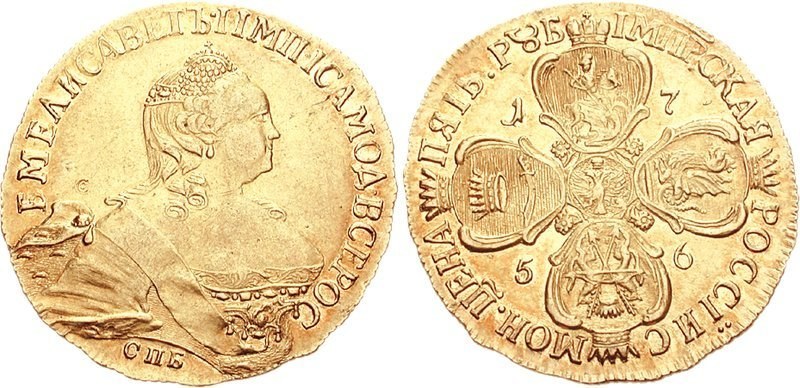
Read the Portrait and Legend First
Start with the obverse. A genuine coin of this type shows a bearded male head in profile facing right, surrounded by a Cyrillic legend naming Alexander III as emperor and autocrat. The realistic bearded portrait is the fastest way to place the coin in this reign, since earlier Russian gold typically carried no ruler's likeness. If the face is beardless or the legend names a different tsar, you have a different type.
Confirm the Reverse Eagle and Value
The reverse must show the crowned double-headed imperial eagle with wings spread, the central shield of Saint George, and the arms of the empire's territories arrayed on the wings. Below or around the eagle you should find the value written in Cyrillic as 5 РУБЛЕЙ together with the date, such as 1888. The presence of 5 РУБЛЕЙ, not a higher figure, distinguishes it from the larger 10 Roubles gold of the same era.
Check Size, Weight, and Metal
This is a small but dense gold coin, roughly 21 to 22 mm across and about 6.4 to 6.5 grams on the pre-1897 standard, with a reeded edge. It should feel surprisingly heavy for its diameter and show the warm, rich color of high-fineness gold. A light, pale, or magnetic piece of this design is an immediate warning sign, since the genuine coin is non-magnetic gold.
Rule Out Look-Alikes and Later Issues
Do not confuse it with the larger imperial 10 Roubles of Alexander III, which shares the portrait-and-eagle format but is bigger and states a higher value, or with the lighter post-1897 gold introduced under Nicholas II after the Witte reform. Modern restrikes, jewelry copies, and gold-plated fakes also circulate. Reading the exact denomination, date, and portrait together is what pins down this specific type.
Authentication Cautions
Because it is a sought-after gold coin, this type attracts counterfeits, altered dates, and cast copies. Weigh and measure the piece precisely and compare the portrait, eagle, and lettering to trusted reference images, watching for mushy detail, wrong weight, incorrect diameter, or edge seams. Mount marks, solder traces, and polishing all reduce value, so favor original surfaces, and for any coin bought at a real gold premium consider third-party authentication.
Frequently asked questions
How do I know it is Alexander III and not another tsar?
Look for a bearded profile facing right and a Cyrillic obverse legend naming Alexander III. Nicholas II, who followed him, is also bearded but is named differently in the legend and later used a lighter gold standard.
What size and weight should it be?
Expect a small dense gold coin about 21 to 22 mm in diameter and roughly 6.4 to 6.5 grams on the pre-1897 standard, with a reeded edge. It should feel heavy for its size and be non-magnetic.
How can I tell the 5 Roubles from the 10 Roubles?
Read the Cyrillic value on the reverse. This coin states 5 РУБЛЕЙ; the imperial 10 Roubles of the same era shares the portrait-and-eagle design but is larger, heavier, and states a higher denomination.
Is it worth authenticating?
For anything paid at a gold or numismatic premium, yes. As a desirable gold type it is faked and altered, so verifying weight, diameter, and design detail, or using third-party certification, guards against counterfeits.